Tag Archives: Austin

Minnesota follows Austin with Value of Solar Tariff: better than net metering, or not?

Yes, it’s better than the unequal “net metering” Georgia has now,
where your one-and-only utility pays you a rate they determine,
typically their “avoided” rate of not generating energy by some
other means, which is usually a lot less than what you pay your utility.
Is it better than real one-to-one net metering?
That’s a harder question, because even if it pays more now, it’s
less predictable.
In any case VOST has spread

from Austin
to Minnesota.

Herman K. Trabish, GreenTechMedia, 10 April 2014,

A Rising Tension: ‘Value-of-Solar’ Tariff Versus Net Metering
,


Source: Institute for Local Self Reliance

The Alliance for Solar Choice, a group made up of Continue reading

AT&T can do gigabit when competing with Google Fiber


A challenge gets the
incumbents beyond selling slow and expensive as long as they can.
Both these networks will use fiber optics, and that plus fast wireless to
reach everybody else would be very interesting.

Roger Cheng wrote for Cnet yesterday,

AT&T attempts to out-Google Google in Austin fiber race:
The telco says it will begin offering its “GigaPower” service to Austin and surrounding areas this year, with further expansion and a 1-gigabit connection planned in 2014. But how much will it cost?

The company said on late Monday that it would launch its “GigaPower”
super-fast home Internet service on December 1 in Austin, a city
that Google has said it would deploy its own speedy Google Fiber
service.

GigaPower would start with speeds of 300 megabit per second, or
roughly 40 times the speed of the average U.S. Internet home
connection, before upgrading customers to 1 gigabit per second next
year. Google also plans to offer its own 1-gigabit connection some
time next year.

By moving first Continue reading

Valdosta Vimeo

I've been nagging Valdosta for years about putting some of their
cable TV station content on the web.
Turns out they are already doing some of that,
which is a step towards acting like a modern metropolitan area.
Received Wednesday via Tim Carroll;
I added the links and the [clarification].


From: Sementha Mathews

Sent: Wednesday, March 13, 2013 11:48 AM

To: Tim Carroll

Subject: RE: "The rest of the story"

Councilman Carroll,

Thank you for the recent phone call. As a result, I will research
the Austin, Tx media practices to see if they can be implemented in
any way here at Metro 17. We used to include a council wrap segment
in each show, and I'll ask

Shemeeka [Johnson, Valdosta Channel 17 Media Coordinator]

why we took that out. But we
can easily add that back in.

City of Austin posts

Continue reading

Speakupaustin: a major MSA and local government transparency

The

Austin reporting program
is in addition to
the posting a City Council agenda more than a week in advance


(here’s the 28 Feb 2013 agenda already on 16 Feb 2013)
and
including the entire board packets

with working papers and other backup documentation

with the minutes.
Austin

televises and webcasts its meetings live,

with close captioning and transcripts online.
They don’t limit the number of citizens who can speak,
or the subjects they can speak on, and they televise and webcast
all of them as well.
Plus citizens can speak on specific agenda issues,
and Austin

has an online forum for citizen suggestions on which citizens can vote
on the ones they like.

Is there still back-door politics in Austin? For sure.
But you can see a lot more of what is going on in Austin
than they can about the local governments here,
and citizens have a lot more input.

If Valdosta and Lowndes County
(and Hahira and Lake Park and Dasher and Remerton)
want to be treated like a major MSA,
they might consider following Austin’s lead.
Instead of decreasing citizen input by exiling
all citizen speakers to the end of a meeting and limiting the number
who can speak, while not even putting board packets online,
consider continually increasing local government
transparency and citizen input.

-jsq

Energy efficiency rebates, Austin, Texas


The central city of a major MSA,
Austin, Texas, publishes its own video reporting on
local issues, like this one on local energy efficiency.

AustinEnergy has brought back its best offer ever deal,
which allows customers to receive both rebates and a loan
to make energy efficiency improvements.
The rebates can total as much as $3200,
and can cover as much as a third of the cost of the improvements,
including the air conditioning unit.
Remaining costs after the rebates can be financed through a
low interest loan through the Austin Credit Union.

The best offer ever is financed in part by a $10 million
better buildings grant from the U.S. Department of Energy….

Here’s

the video:

Continue reading

Rooftop solar: the most direct route to clean energy industries


Austin vs. San Antonio in solar power

Around here I hear local leaders say “we’ll never be Austin.”
Well, Austin may be letting San Antonio pass Austin as far as rooftop solar
and the jobs that generates.
It’s not a matter of size or pre-existing advantages.
It’s a matter of political will.
Do we have that will here?

TexasVox
wrote a white paper in February 2012,

Solar Austin: Rooftop Solar & Job Creation,

…the most direct route to attracting and encouraging the
development of clean energy industries is through the


the scale of future development will be orders of
magnitude greater than what has occurred to date.

mass deployment of local rooftop solar, which is probably why solar has
by far the most significant presence of any clean energy generation
technology in Austin.

But the paper’s point is that Austin is falling short.
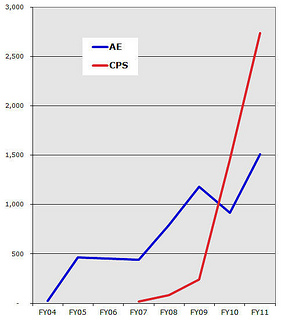
Look at the graph:
Austin seems to have settled for linear growth in solar power,
while San Antonio gets it about
compound growth.

As San Antonio Mayor Julian Castro
said in 2011, solar power is in

Continue reading

Fake fracking reports: professor and institute head quit, other institute disbanded

From Austin to Buffalo, fake science for fracking is increasingly being exposed,

Frack U

with academic consequences: lead professor resigns,
institute head quits, another institute disbanded.
The image on the right (Frack U) is not a reputation any university wants to see.
At least academia takes conflicts of interest seriously;
now if government and the voters would do the same….
Or energy companies.
Remember, shale gas (plus nuclear) is what Georgia Power and
Southern Company are shifting to from coal,
while shading us from the finances that would enable solar power
for jobs and energy independence in south Georgia.

Terrence Henry
wrote for NPR 6 December 2012,

Review of UT Fracking Study Finds Failure to Disclose Conflict of Interest (Updated)

The original report by UT Austin’s Energy Institute,


‘Fact-Based Regulation for Environmental Protection in the Shale Gas
Development,’
was released early this year, and claimed that there
was no link between fracking and water contamination. But this
summer, the

Public Accountability Initiative
, a watchdog group,
reported that the head of the study, UT professor Chip Groat, had
been sitting on the board of a drilling company the entire time. His
compensation totaled over $1.5 million over the last five years.
That prompted the University to announce an independent review of
the study a month later, which was released today.

The review finds many problems with the original study, chief among
them that Groat did not disclose what it calls a “clear
conflict of interest,” which “severely diminished”
the study. The study was originally commissioned as a way to correct
what it called “controversies” over fracking because of
media reports, but ironically ended up as a lightning rod itself for
failing to disclose conflicts of interest and for lacking scientific
rigor.

Unrepentant
as recently as July,
Professor Groat resigned in November.
Plus this:

Raymond Orbach of UT’s Energy Institute has resigned after the group
became engulfed in controversy over a study of fracking.

And elsewhere even more drastic results have ensued:

Continue reading

West Point aiming for net zero energy use

U.S. Army is serious about solar, installing solar panels as a
“very visible and a very recognizable part of
our renewable energy initiative that can immediately click with the
general public”
as it makes its military academy net zero, while
encouraging cadets to become renewable energy leaders.
Hm, sounds like

Decatur County with its solar industrial park

and what we could do here with

solar Lowndes High.

Mike Strasser wrote Army PR 29 November 2012,

Solar panels deliver new energy to West Point’s Net Zero initiative,


The installation of solar panels on the roof of the Lichtenberg
Tennis Center—780 panels, to be exact—in recent weeks
represents West Point’s continuing efforts to achieve energy
sustainability.

Since becoming a Net Zero Energy pilot installation last April, West
Point has been making strides toward the ultimate goal of producing
as much energy as it uses by 2020. According to an environmental
assessment for the U.S. Army Environmental Command and West Point
Garrison, the installation currently generates less than .02 percent
of the energy it consumes from renewable sources. Matt Talaber,
Department of Public Works engineer and director, said the solar
panels will be a step in the right direction.

“The solar panels are very visible and a very recognizable part of
our renewable energy initiative that can immediately click with the
general public,” Talaber said. “It’s a positive image that shows
West Point is interested in renewable energy and is working on its
Net Zero energy goals.”

And they’re also improving conservation and efficiency.
Plus this:

Continue reading

Austin Energy changed from anti-solar to pro-solar in one year

At the end of 2003, Austin Energy (AE) suddenly went from very anti-solar to very pro-solar.
Formerly coal-smoking Cobb EMC
is doing it right now.

If AE and Cobb EMC can do it, so can Georgia Power: change in one year from opposed to aggressively promoting solar power.

Mike Clark-Madison wrote for the Austin Chronicle 5 December 2003, AE drops a solar bomb,

In a near-complete turnaround from its public position just a week ago, Austin Energy has announced plans to adopt specific, highly ambitious, and undeniably expensive goals for adding solar energy to the Austin electric and economic mix. At a town hall meeting held Tuesday night to discuss the AE plan — also the subject of a public hearing at City Council today (Thursday) — AE’s Roger Duncan announced the utility’s commitment to develop 15 megawatts of solar generating capacity by 2007, escalating to 100 megawatts by 2020. The AE plan also calls for a study of the “comprehensive value” of solar power — putting a dollar amount on the economic and environmental benefits to Austin, in addition to the cost of solar-generated electricity itself. This would determine the price Austin Energy would pay for electricity generated by privately owned solar installations, just as AE now buys wind power from third parties.

Georgians tend to think Georgia Power’s foot-dragging and disinformation campaign about solar is so entrenched it will never change. But I’ve seen it happen, and it happened despite people’s expectations set by the power utility, and it happened very quickly and very big:

Continue reading

Austin solar sunflowers

What does a city with clean industry and clean energy do to attract more of it?
One such city planted a solar sunflower array along its
main interstate corridor.

Ariel Schwartz wrote for Inhabitant.com 17 August 2009,

Solar Sunflower Field Energizes Austin, Texas

A retail lot in Austin, Texas recently sprouted a stunning field of


solar sunflowers that soak up the sun’s rays to provide shade while
generating a steady stream of renewable energy. Designed by public
art team Harries/Heder, the installation consists of 15 flower-like
solar photovoltaic panels located on a pedestrian and bike path
between the village of Mueller and Austin’s highway I-35. According
to Harries/Heder, the flowers are “an icon for the
sustainable, LEED certified Mueller Development and a highly visible
metaphor for the energy conscious City of Austin.”


View Larger Map

Are these solar sunflowers practically profitable?
Perhaps:

In addition to providing shade for walkers and bikers, the solar
flowers collect energy during the day to power the installation’s
blue LED lights at night. Leftover power is sent to the grid to
offset the cost of maintaining the installation.

But practicality of this particular field of solar flowers is not the point.

This is the point:

Continue reading