Author Archives: admin

Hearing on Biomass Plant

Update: Seth says Eric Cornwell says earliest March 15 and latest probably May 1.

Update 2: Contact information:

Environmental Protection Division, Air Branch
4244 International Parkway, Suite 120
Atlanta, Georgia 30354
Subject: Docket 19407
Or folks can email Eric Cornwell, the director of the Air Branch Division: Eric.Cornwell@dnr.state.ga.us

Seth Gunning tells us:

I received word from the EPD Air Branch Manager, Eric Cornwell, that they have decided that they *WILL*, now, be working to host a public hearing in Valdosta (and possibly a Q & A session prior to a hearing).

They expect the public hearing to take place sometime at the end of March (law requires a 30 day notice before a meeting takes place). Eric informed me that he would reply to all the emails he has received with the hearing information, and as well would be putting an ad in the Valdosta Daily Times.

The plant’s air quality application is supposed to be online at EPD. I can’t find it there, but here it is hosted on the LAKE site.

More as it develops.

Tommy Willis thanks Ken Sherrill for being Planning Chair

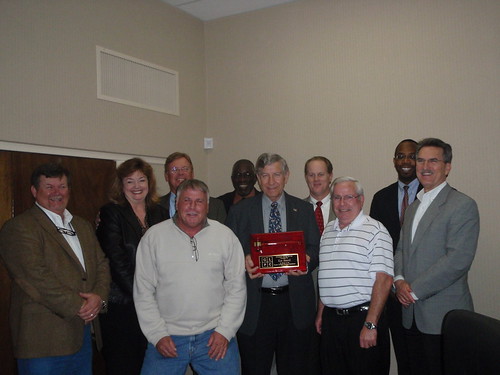
Has it been two years? Ken Sherrill has served his time as Chairman of the Greater Lowndes Planning Commission. New Chairman Tommy Willis gave him a plaque of appreciation:

Retiring Chair with Planning Commission

Tommy Willis says the plaque is real purty: Continue reading

Anne-Marie Wolff: Not Ornery

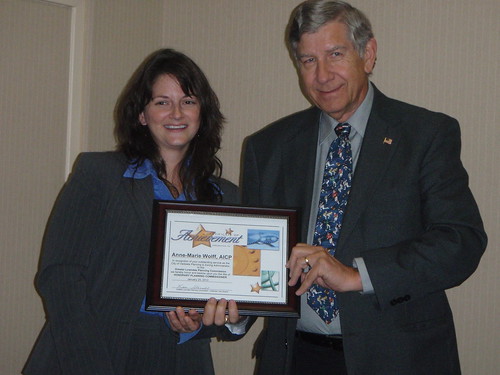
Anne-Marie Wolff is retiring from her job as Valdosta Planning and Zoning Coordinator and moving to Montana. Chairman Ken Sherrill on behalf of the Greater Lowndes Planning Commission awarded her the title of Honorary Commissioner.

Honorary Planning Commissioner

Ken Sherrill reminds us she’s not ornery: Continue reading

CHANCE: Changing Homes and Neighborhoods, Challenging Everyone

Many people have talked about the recidivism problem, but here’s a group trying to do something about it. Helping people right out of jail to learn how to get a job, convincing employers to hire them, mentoring them longterm with life coaches, lawyers, and accountants, and with some helping them start their own businesses and employ others. Jimmy Boyd is the principal organizer, and Steve Johnson is the outreach coordinator. They have some more people already signed up in a core team, and are looking for additional people, not to mention grants.

CHANCE had an organizational meeting 7 Jan 2010 at Floyd Rose’s Serenity Church. Here’s a playlist.


Videos by Gretchen Quarterman for LAKE.

Help give some people a needed push? Take responsibility and help solve a problem what will reduce crime by increasing employment? Here’s a chance to do that.

Valdosta Civic Round Table, 3 December 2009

Jane Osborn organizes a monthly Valdosta Civic Roundtable, which brings together all sorts of local organizations, ranging from the Rotary Club to the Historical Museum to the Red Cross to LAMP to LAKE. At this particular meeting, on 3 Dec 2009, Sidney Morris accepted the Louie Peeples White Award for Outstanding Community Service. Here’s playlist of the 3 Dec 2009 meeting:

Meeting notes for the past year or so are are on the LAKE web pages.

If you’re looking for something to do, like Jane says, all of our nonprofit boards are in need of board members….

Videos by Gretchen Quarterman for LAKE.

New Members, Valdosta City Council, 7 Jan 2010

The Valdosta City Council inducted three members: Deidra White (first time), Alvin Payton Jr. (re-elected), and Robert Yost (re-elected). The Council then elected John Eunice Mayor Pro-Tem. Here’s a playlist for the whole thing:

City Manager Larry Hanson read the election results.

Deidra White was elected for the first time, to District 2. Here she organizes the news photographers, gets sworn in, and gets a standing ovation. The Valdosta Daily Times doesn’t appear to have posted a story about this meeting afterwards, but it did post a story beforehand, spelling her first name wrong, and concluding: Continue reading

Backyard Gardens for Community Self-Sufficiency

If they can do this in Silicon Valley, we can do it here. Joe Rodriguez writes in the San Jose Mercury News that “Latino theater director quits the limelight to help poor people grow food at home”:
Sugar peas, butter lettuce, red and white Spanish onions, cauliflower and other veggies filled the 4-by-8-foot planter boxes, which Lozano gave them. With four children of their own, the Lopezes live in a small house with two other families, 14 people in all.

The modest harvest won’t eliminate Lopez’s trips to the food pantry, but it does save the family the cost of fresh vegetables it would otherwise have to buy at the market.

“This is saving us quite a bit of money,” said Arturo Lopez, a wall-framer who hasn’t worked since injuring his back last year. “Our children are eating better. They come back here and eat a leaf of lettuce like candy.”

Who will be the Raul Lozano of Lowndes County? Continue reading

Prison Population on Decline in U.S.

The Associated Press reported 20 Dec 2009 that U.S. prison population headed for first decline in decades. Why?
…the economic crisis forced states to reconsider who they put behind bars and how long they keep them there, said Kim English, research director for the Colorado Division of Criminal Justice.

In Texas, parole rates were once among the lowest in the nation, with as few as 15% of inmates being granted release as recently as five years ago. Now, the parole rate is more than 30% after Texas began identifying low-risk candidates for parole.

In Mississippi, a truth-in-sentencing law required drug offenders to serve 85% of their sentences. That’s been reduced to less than 25%.

California’s budget problems are expected to result in the release of 37,000 inmates in the next two years. The state also is under a federal court order to shed 40,000 inmates because its prisons are so overcrowded that they are no longer constitutional, Austin said.

Some states even try not to lock up as many people in the first place:

States also are looking at ways to keep people from ever entering prison. A nationwide system of drug courts takes first-time felony offenders caught with less than a gram of illegal drugs and sets up a monitoring team to help with case management and therapy.

Studies have touted significant savings with drug courts, saying they cost 10% to 30% less than it costs to send someone to prison.

“I don’t think they work — I know so,” said Judge John Creuzot, a state district judge in Dallas.

Maybe Georgia could stop locking up so many people for drug and other minor offenses, not keep them in as long, and do something to integrate them back into the community instead of locking them up again.

How to Reduce Recidivism

Sometimes Atlanta has data which can be applied to the rest of Georgia. An Emory University press release of 26 Mar 2009 says Study Focuses on Barriers to Successful Prisoner Re-Entry Into Atlanta Communities:
Gaining employment was hindered by multiple obstacles: In addition to low levels of education and work experience, and the reluctance of employers to hire someone who has served time in prison, they also lacked the personal networks to help them identify and secure jobs. Those findings echoed the experiences of government and community-based reentry service providers.

However, “housing was identified as the most central issue and need people faced immediately upon their return or move to Atlanta,” said Owens. “For those released from prison without obtaining a guaranteed bed at a transitional house or shelter, and possessing only their $25 in ‘gate money,’ finding a place to stay that was secure, decent and accessible was often impossible.”

So it’s a difficult problem, but the first step is obvious.

And there’s a basic reason for doing something:

“In many ways, the success or recidivism of former inmates has a tremendous impact on the communities where they settle, but given the stigma attached, it hasn’t exactly been a cause championed by many. But, positive reentry is a necessity, not an option, when it comes to public safety, preserving families and the development and stability of neighborhoods,” said assistant professor of political science Michael Leo Owens, coauthor of the study “Prisoner Reentry in Atlanta: Understanding the Challenges of Transition from Prison to Community.” View the prisoner reentry study (PDF).
Helping prisoners re-enter the community reduces crime and increases employment, so it would seem like something everyone would want.

Prisoner Re-Entry

Prisoners have to be released from prison or the county jail into the same community, and can’t get a job because they’re ex-cons, and often not even an apartment. Result? Homeless ex-cons turning to crime. A New York Times editorial suggests Smart Answers to Recidivism:
Faced with soaring prison costs, states are finally focusing on policies that would help former prisoners stay out of jail after they are released. Some legislatures are reshaping laws that land parolees back inside for technical violations that should be dealt with on the outside. More than a dozen cities and counties have taken steps that make it easier for qualified ex-offenders to land government jobs, except in education and law enforcement and other sensitive areas from which people with convictions are normally barred by law.

Still, the nation as a whole needs to do much more about laws that marginalize former offenders — and often drive them back to jail — by denying them voting rights, parental rights, drivers licenses and access to public housing, welfare and food stamps, even in cases where they have led blameless lives after prison.

The specific example they consider is New Jersey, but Texas has also led in throwing people into jail and now is starting to try to do something about ex-prisoners once they get out. Paying as much per prisoner as would cost to send them to college, in a time of chronic budget shortfalls, is not very attractive. Georgia could also make changes to reduce recidivism, and reduce its prison population.