Tag Archives: Politics

Bees in the library —VDT

As its closing argument for SPLOST VII, library bookshelves the VDT argued that the library has bees in its brick walls. Sure and we need a new library. But they didn’t address any of the questions about the Five Points out-of-state architect plan for a new library or about the process by which that plan was produced.

Jason Schaefer write for the VDT 14 October 2012, SPLOST to solve aging library’s problems with modern building,

Plainly speaking, the South Georgia Regional Library is in bad shape. Half of the red-brick building was constructed in 1966, and the other in 1995.

Walking in, the atmosphere seems stuffy and archaic — stained ceiling tiles and old carpet, color-neutral walls and little decoration.

The wiring intended to service the computers is buried in the floor and unable to meet current internet standards, and the machines—35 to process 7,000 logins a month—are all clustered together in one area.

The HVAC system is antiquated, riddled with patches and still slowly disintegrating, and replacement of the system would cost upward of $2 million.

This and their other points are all true, and although I haven’t seen them, I have no doubt this is true, too:

Continue reading

Elect Georgia Public Service Commissioners to represent you

GA PSC The Georgia Public Service Commission decides how much you pay for energy. If you’re tired of Georgia Power’s three-legged nuclear regulatory-capture stool and Georgia lagging far behind other states in solar and wind energy, or you just want PSC members who will represent you and who do not accept massive campaign contributions from the utilities they regulate or their employees or lawyers like the incumbents do; the incumbents who can’t even be bothered to show up for debates or to answer questionnaires.

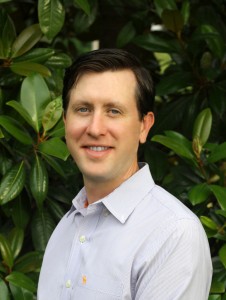
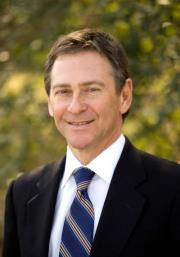
David Staples for GA PSC Steve Oppenheimer for GA PSC Here are two GA PSC challengers who did answer a questionnaire: Democrat Steve Oppenheimer and Libertarian David Staples. Early voting has already started: you can vote for them today.

let the sun shine on Georgia While you’re at it, you can vote for statehouse legislators who will let the sun shine on Georgia.

-jsq

Wall Street’s next big thing: privatizing public education

What’s really behind the charter school amendment referendum? Corporate greed.

Jeff Faux wrote for AlterNet 15 October 2012, Education Profiteering: Wall Street’s Next Big Thing? Wall Street’s involvement in the charter school movement is presented as an act of philanthropy, but it’s really about greed. He reviews some of the evidence that charter schools don’t improve education, especially when forced on states. Then he gets into why so much money is flowing into charter schools anyway.

Education privatization would not, per se, create a net new stimulus Wall Street greed for the economy. But by diverting large existing flows of money from the public to the private sector it would create new profit-making ventures that could be capitalized and transformed into stocks, derivatives and leveraged securities. The pot has been sweetened by a 39 percent federal tax credit for financing charter school construction that can double an investor’s return in seven years. The prospect of new speculative opportunities could well recharge the animal spirits upon which Wall Street depends.

Some “liberal” privatization promoters claim that charter schools should not be considered private. But that’s an argument the management companies that run the schools only use when they are asking for more government funding. At the same time they argue in courts and to legislatures that as private enterprises they should not be subject to government audits, labor laws and other restrictions.

These companies rent, buy, and sell buildings; make contracts for consulting, accounting and legal services, food concessions, and transportation; and pay their managers far more than public school principals earn. In cases where city governments have given land to charter schools, for profit real estate companies have ended up owning the subsidized land and buildings. In states where charter schools are required to be nonprofit, profit-making companies can still set them up and then organize a board of neighborhood residents who will give them the right to manage the school with little or no interference.

In 2008 Dennis Bakke, CEO of Imagine Schools, a private company that managed 71 schools in eleven states, sent an email to the firm’s senior staff. It reminded his managers not to give school boards the “misconception” that they were “responsible for making decisions about budget matters, school policies, hiring of the principal, and dozens of other matters.” The memo suggested that the community board members be required to sign undated letters of resignation. “It is our school, our money, and our risk,” he wrote, “not theirs.”

Yet in Georgia it’s our tax money they want to use to fund those “public” private charter schools. That’s the “large existing flows of money” they want to divert into their profiteering pockets. No wonder ALEC is so big into charter schools! And look who else:

Continue reading

GA PSC questionnaire answers: Steve Oppenheimer

Steve Oppenheimer The Georgia Sierra Club sent a questionnaire to all candidates for Georgia Public Service Commission. None of the incumbents answered. The two challengers did. Here’s the one from Steve Oppenheimer for District 3. -jsq

  1. As a Candidate for Public Service Commission, what is your campaign strategy for achieving 50% +1 of the votes cast?

    [I’m omitting the answers to this question. -jsq]

  2. How should the Public Service Commission consider and weight the impacts to community health (asthma, cancer rates, etc.) and on Georgia’s environmental (water quantity, air quality etc.) when making decisions about a utility’s generation portfolio?

    The PSC has a major role shaping energy policy for Georgia. I would like to schedule PSC hearings on the relationship of power production and our air, water, morbidity and mortality and our general quality of life. My professional background in dentistry & health care provides a keen understanding of the relationship of power generation and health. Dr David Satcher, former US Surgeon General and Executive Director Satcher Health Leadership Institute at Morehouse University has become a friend and part of my professional network during the campaign. I would like to see PSC convene hearings on the topic. Georgians for a Healthy Future, a relatively new, broad based, organization would provide another forum for discussion of these issues. Membership in Georgians for a Healthy Future includes Georgia Legislators on both sides of the aisle. The PSC must be a leader on these issues—as the legislature as a body will likely not be progressive on these issues.

Continue reading

See Gretchen Quarterman on the radio

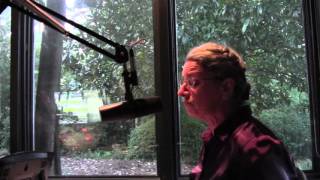
Gretchen Quarterman on Chris Beckham's radio show 11 October 2012 “I think people would be more interested in government if they could see it going on,” said Gretchen Quarterman, candidate for Chairman of the Lowndes County Commission, on the Chris Beckham drive-time radio show 11 October 2012, 105.9, WVGA. Here’s video of that interview, followed by some excerpts.

A few excerpts:

Our county government does a lot of stuff really great… but one of the things they don’t do very well don’t advertise themselves; not very transparent; they don’t say what a great job they’re doing; so I thought we could improve in that area.

The County Commission a couple of years ago had two different studies commissioned about growth and planning, and one of them was… Sprawl to ruin, by Prof. Dorfman growth close to existing services. The county already has an urban service area, like how far the water line goes, how far the sewer line goes. And that growth should be infilled, and not expand outside of that area, because that saves resources in terms of how far you have to send the sheriff, how far the school bus has to go. And they also gave an average house price, what it costs in terms of property taxes to support the services that are sent to them, to a development. So I would say close in to existing services is the way to go.

We need to actively seek out manufacturing jobs,

Continue reading

Score high on ALEC policy, score low on education


According to ALEC’s own website, states that score high on ALEC’s education policies score low on education. Remember, ALEC is behind the Georgia charter school amendment on the November ballot. If you didn’t believe Stanford Credo’s study that showed adding a charter school authorizer, as that amendment would do, reduces academic learning, how about ALEC’s own data?

Bill Simon write for The Political Vine today, Charter Schools and ALEC: The Facts ALEC Doesn’t Want You To Know,

If you take the state performance rankings and match them up to each state’s education policy rankings, you come-up with an entirely different picture of how little (if any at all) a state’s degree of conservative education “policy” translates into actual education performance.

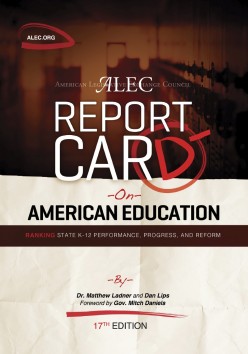
I did this ( PDF copy available here) and this is what the 2012 Top 10 states in Performance looks like, and their corresponding Policy ranks:

2012 Performance/Policy Rank

ALEC's 17th Report Card on American Education
  1. Massachusetts / B-
  2. Vermont / D+
  3. New Jersey / B-
  4. Colorado / B
  5. Pennsylvania / C+
  6. Rhode Island / C
  7. North Carolina / C
  8. Kansas / C-
  9. New Hampshire / C+
  10. New York / C-

The numbers are ALEC’s performance rankings, and the letters are ALEC’s policy grades.

Continue reading

GA PSC questionnaire: David Staples

David Staples The Georgia Sierra Club sent a questionnaire to all candidates for Georgia Public Service Commission. None of the incumbents answered. The two challengers did. Here’s the one from David A. Staples for District 5. -jsq

  1. As a Candidate for Public Service Commission, what is your campaign strategy for achieving 50% +1 of the votes cast?

    [I’m omitting the answers to this question. -jsq]

  2. How should the Public Service Commission consider and weight the impacts to community health (asthma, cancer rates, etc.) and on Georgia’s environmental (water quantity, air quality etc.) when making decisions about a utility’s generation portfolio?

    Impacts to community health and the environment have to be considered very carefully. I know there are a number of different ways of viewing the situation but the explanation I’ve found that works best with Republicans in trying to get their support is that it comes down to a private property matter. The right to swing ones fist ends at the other person’s nose. Does anyone have the right to pollute the air that I breathe or the water that I drink?

    If I buy a piece of property for instance along the Savannah River or Ogeechee River, does someone upstream from me have the right to pollute the water that then flows onto my land, carrying those pollutants with it?

    Absolutely not.

Continue reading

WCTV on LCC Chair Candidates

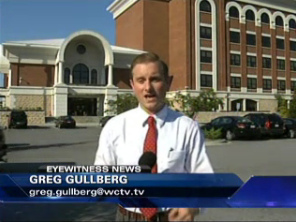
Greg Gullberg at the Lowndes County Palace Greg Gullberg wrote for WCTV today, Lowndes County Commission Chair Candidates Polar Opposites,

The Chairman of a County Commission can have great impact on the lives of residents. And in one local county, the candidates couldn’t be more different.

She wants to make it easier to see what the Commission is doing; he worries ordinances make it too difficult for business.

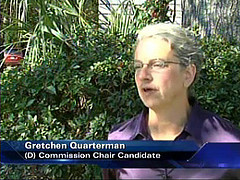
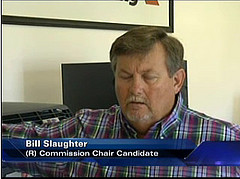
Gretchen Quarterman for Lowndes County Chairwoman Bill Slaughter for Lowndes County Chairman

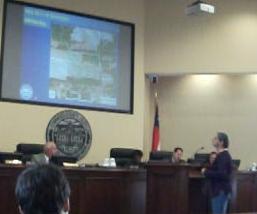
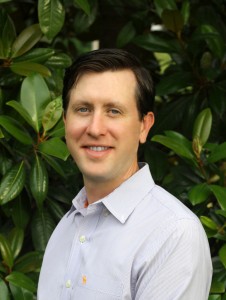
Gretchen Quarterman speaking to the Lowndes County Commission WCTV using LAKE video Here’s the WCTV video, which appears to start with outtakes from LAKE videos of Commission meetings. LAKE videos that were taken by… Gretchen Quarterman. The one of her speaking to the Commission? Camera on a tripod.

-jsq

“Great, big” SO is 1/10 Australia for solar farm deployment in Georgia

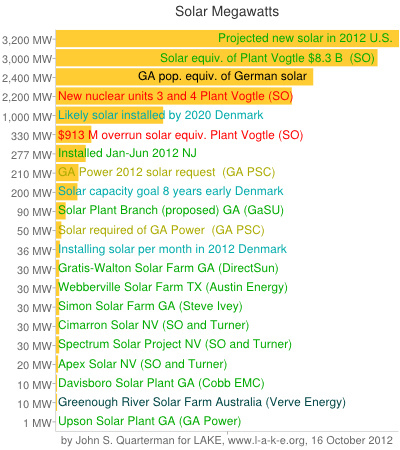
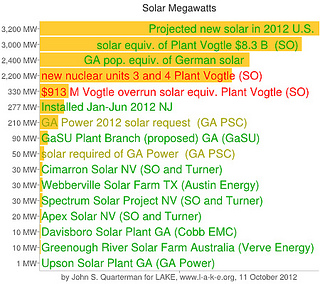
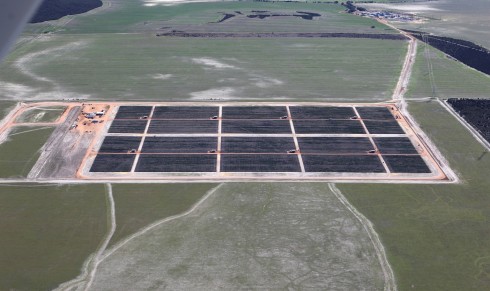
Solar Megawatts 2012-10-11 So if Southern Company is a “great, big company” similar to Australia, why did Australia just deploy a solar farm ten times the size of the biggest one SO has in Georgia?

Back in May, Southern Company (SO) CEO Thomas A. Fanning said:

From an energy standpoint, Southern Company is a little bit smaller, but similar to, the energy production profile of the nation of Australia. We are a great, big company from an energy production standpoint.

Meanwhile in Australia, Giles Parkinson wrote for Clean Technica 10 October 2012, Australia’s 1st Utility-Scale Solar Farm Now On!

At about 11am local time near the Western Australian town of Geraldton this morning, Australia’s first-utility scale solar farm was officially switched on.

It was a suitably sunny day (blighted by three million flies) and although just 10MW in size, and built courtesy of funding from the local government, a state-owned utility and by one of the wealthiest companies on the planet, it may presage a dramatic change in the way this country produces energy.

So what’s SO or Georgia Power’s biggest solar plant in Georgia? You remember, 1 MW in Upson.

OK, to be fair, that’s just Georgia Power. SO does have larger solar farms elsewhere, including

Now I know Georgia Power’s party line is that solar is only good in the U.S. southwest. But I don’t know how that explains Continue reading

Library process transparency —John S. Quarterman

John S. Quarterman videoing SPLOST VII Kickoff Speeches It’s good to see that someone responsible for allocating millions of dollars of taxpayer money is willing to answer questions about related decisions, as Kay Harris is doing! It would be even better if there were a regular process by which the taxpaying and voting and library-using public could ask such questions and get answers.

If there were such a process, it’s pretty likely Ms. Harris or the Library Board or the County Commission would have been asked about the architect selection, considering I wasn’t even involved in that selection and my ear was scorched with complaints as soon as it was announced. Maybe Ms. Harris can suggest a way to produce such a process.

Let me take Ms. Harris’ points in order.

“First, they were the only one of the four finalists who did a full cost evaluation of the project, estimating $16 million while others were more than content to use the state’s estimate of $21 million.”

That’s very interesting news, which clarifies for me what she was getting at in the VDT writeup on that selection:

Continue reading