On the same day as SB 401
revived as SB 459 gets a hearing in a better committee,
Georgia Power trots out the same old tired disinformation it’s been peddling
for years.
As if we didn’t already know that almost all solar installations in Georgia
are installed by certified solar installers.
Or that pretty much every inverter these days comes with built-in
automatic cutoff if the grid goes down to which installers add
air-gap cutoff knife switches plus breakers.
And as if Georgia Power didn’t know
it and EMCs could charge a percentage on electricity arbitraged
across their networks,
which gapower could use to finance any needed grid improvements, while
retaining a hefty profit for doing not much of anything else.
Meanwhile, those of us who chose to participate in solar electricity arbitrage
would get lower rates for customers.
We do know all that,
but maybe your state senator doesn’t, so maybe you should call your
senator today and tell them you want to be able to buy and sell solar
power without having to get it from the utility monopoly.
Greg Roberts, Vice President of Pricing and Planning for Georgia Power
in Atlanta, wrote for the Savannah Morning News today,
The solar sleight of hand.
I’ll only quote part of his concluding paragraph.
Georgia Power is involved in many efforts to expand the use solar energy
Dr. Smith’s electric meters enable a commodity market
in solar power, with billing from generators to customers.
And EMCs can take 1% or so for carrying the power,
plus they can get advertising rights that could be
worth more than selling electricity!
If
SB 459 or something like it gets out of committee and into law.
Dr. Sidney Smith explained how the electric meter he’s developed
uses cellular technology to facilitate direct billing from
solar generator and customer.
Gretchen asked him what if they generate more than they use.
Dr. Smith said they wouldn’t.
I asked what if they added more panels.
He said they could, but there are trees in the back.
Enabling a commodity market in solar power: Dr. Smith’s electric meters Part 1 of 5:
South Eastern Pathology Associates,
Selling Power, Lower Rates for Customers LLC (LRCLLC),
Richmond Hill, Bryan County, Georgia, 17 February 2012.
Videos by Gretchen Quarterman for LAKE, the Lowndes Area Knowledge Exchange.
Dr. Smith said the best places for solar are where there is no shade
and near power poles.
Gretchen asked how do you finance?
Dr. Smith answered,
Continue reading →
Drs. Sidney Smith and Pat Godbey and their customer
cut the solar ribbon in Richmond Hill, Georgia,
17 Febuary 2012:
To commemorate the future of power in Georgia
and the future for our children.
I didn’t get the customer’s name; sorry.
You, too, could be a customer or a seller of distributed solar power
if SB 459 gets
out of committee and through the Georgia Senate and legislature
into law.
Contact your state senator today!
Cutting the solar ribbon in Richmond Hill 2012 02 17
South Eastern Pathology Associates,
Selling Power, Lower Rates for Customers LLC (LRCLLC),
Richmond Hill, Bryan County, Georgia, 17 February 2012.
Videos by Gretchen Quarterman for LAKE, the Lowndes Area Knowledge Exchange.
SB 401 got tabled in the Natural Resources Committee.
46 other states already let people generate solar power and sell it to
a third party.
Yet in only four states — Georgia, Florida, North Carolina and
Kentucky Mdash; are third party power purchase agreements disallowed,
according to the U.S. Department of Energy.
But Georgia Power convinced that committee that it would raise
rates for everybody else.
Which is pretty rich coming from the same gapower that is
already charging customers Construction Work in Progress
for its nuke boondoggle.
So SB 401 sponsor Sen. Buddy Carter found another way.
To revive his bill, Carter tacked it onto to one already sent to the
Regulated Industries Committee — SB 459, which would allow
consumers to opt-out of smart meters like the ones Georgia Power is
currently installing in Savannah. The committee held a hearing on
the bill Thursday, ultimately tabling it, and saying they wanted
more information about how power purchase agreements work in other
states.
Carter was elated.
“It’s out there now and people are aware of it,” he
said. It’s getting media attention. I feel good about it.”
Help him feel even better about it.
Contact the committee chair and tell him we want solar cogeneration:
Senator William Ligon
404-656-0045
william.ligon@senate.ga.gov
Oh, regarding the meter opt-out in the main body of the bill,
why let gapower charge people for that?
You can mention to Sen. Ligon that people should be able to opt out for free.
CCA is the leading participant in, and in many ways the embodiment
of, one of the most controversial industries ever created—the
incarceration of people for profit. While the company is looking
back through rose-colored glasses, there is a need for a critical
analysis of what CCA has brought to the world of corrections. That
is the purpose of this report.
Even by its own standards, CCA has not been a success. Rather than
taking the industry by storm, it still manages only about three
percent of prison and jail beds in the United States, and its global
aspirations had to be abandoned.
Only a few years ago, CCA was being widely vilified
Just a quick recap of a meeting I had yesterday with VLCIA’s Andrea
Schruijer. When asked where we were with the private prison issue, she
responded, “we contractually agreed to a 3rd extension with a term of
365 and CCA has until March 13, 2012 to request that extension.” So I
asked,” if CCA doesn’t request a
3rd extension, then the issue is over,
right?” She replied, “If there’s no response from CCA, then it is up to
the board to determine how to move forward.” When I asked her why they
would even consider honoring a contract extension to CCA knowing some
of the controversy over CCA’s business practices, she replied, “because
there is a partnership between the VLCIA and CCA and we are
contractually bound to a 3rd extension.”
I pointed out that the private prison industry wasn’t interested in
public safety and rehabilitation they simply wanted to make a quick
buck off the lives of others. I informed her of the chronic employee
turnover, understaffing, high rates of violence and extreme cost
cutting which all have been attributed to CCA.
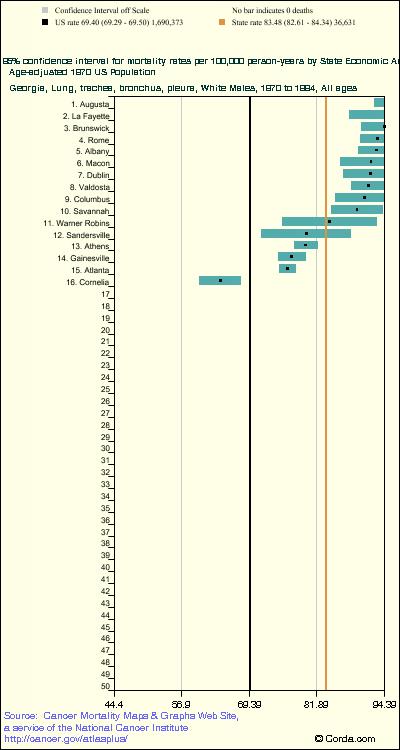
I told her that Lowndes County already had its own share of air
pollution and that amount of air pollution here is directly
proportionate to the amount of lung and bronchial caner in our area. I
encouraged her to consider sustainable businesses for the future
economic growth of our community, not smoke stack business. Her reply,
“so what you are saying is that you think the industrial should just
close its doors?” I actually hadn’t thought about that but the
question did make me ponder.
I left her with
a 91 page research report which takes a critical look
at the first twenty years of CCA’s operations. I requested an email
response of her thoughts about the report and am currently awaiting the
response…
Biomass did come up in the conversation and Mrs. Schruijer was quick to
assert that
Actor Ossie Davis delivered the eulogy at the funeral of Malcolm X
on Feb. 27, 1965. It was a strong statement of support for the life
of a man whom controversy followed until his assassination at the
age of 39. So why did Davis potentially risk his career to pay
tribute to Malcolm X? A letter, written by Davis, explains his
decision. The letter will be on public display this weekend.
Davis’ letter will join dozens of other historic artifacts for a
special Black History Month observation, sponsored by the 100 Black
Men of Valdosta Inc. The Sixth Annual African-American Artifacts
exhibit will be on display noon to 5 p.m. Saturday and Sunday, Feb.
25 and 26.
Kind of weird phrasing there, Ms. Editor, given that Ossie Davis’ tribute
was after Malcolm X was assassinated….
Valdosta City Council and Mayor, who may not have been following the private prison issue,
now know about it and are aware that they are all implicated in the private prison
decision, due to events at the Industrial Authority board meeting
and the Valdosta City Council meeting, both Thursday 23 February 2012.
After remarking that I’d rather be talking about the additional solar panels
recently installed on my farm workshop up here in the north end of the county,
I recapped the
case against a private prison
and referred the Valdosta City Council to
my LTE in the VDT of that morning
(Thursday 23 February 2012).
I remarked that I was disappointed the Industrial Authority
hadn’t done anything to stop the prison at its meeting earlier that same day.
Since they might be wondering what all this had to do with them, I pointed out that,
if I could use the word,
they were all implicated as mayor and council
in the private prison decision because
Jay Hollis, CCA’s Manager of Site Acquisition, in his Valdosta-Lowndes County, GA / CCA Partnership: Prepared Remarks of August 2010,
lavishly praised the Lowndes County Commission and Chairman and the
Valdosta City Council and mayor.
Although the mayor was different now, and maybe some of the council,
nonetheless it was the same offices of council and mayor, still implicated.
I asked for their opinions on that subject.
Per their custom, they did not offer any at that time.
So, maybe we’ll hear from them later.
Or maybe the Industrial Authority board will hear from them….
Valdosta Mayor and Council are implicated in the private prison —John S. Quarterman @ VCC 2012 02 23
VSEB, employment,
Regular Session, Valdosta City Council (VCC),
Valdosta, Lowndes County, Georgia, 23 February 2012.
Videos by George Boston Rhynes for K.V.C.I., the bostongbr on YouTube.
Hundreds of protesters from across Georgia descend on Quitman in
Brooks County.
They gathered at area restaurants like the Wiregrass Restaurant &
Bar Friday night. They’re gearing up for a weekend long rally
against what they call voter intimidation.
The “Quitman 12” is the focus of the march Saturday at the Quitman
court house. The 12 include three Brooks County School Board
members, along with nine other defendants who were indicted for
charges of voter fraud.
WCTV quoted George Rhynes, and also:
Latoya Hamilton is a Quitman resident and also a Protester.
“To me, being a small city like this, it’s the first time something
like this is being held in Quitman. It’s an honor being a part of
this. It’s pretty much history in the making,” Hamilton tells
Gullberg.
Appearances are expected by Rev. Dr. Joseph E. Lowery, Rep. Tyrone
Brooks and many more. Events start Saturday morning at 9:00 a.m. The
march starts at 3:00 p.m.
I agree with her and with George, that it’s a historic event.
John Robinson told the Valdosta City Council that he thought the
application for the
Valdosta Small Emerging Business (VSEB) Program
was too long and complicated compared to the one-page
application to do major construction work.
VSEB application is too long — John Robinson @ VCC 2012 02 23
VSEB, employment,
Regular Session, Valdosta City Council (VCC),
Valdosta, Lowndes County, Georgia, 23 February 2012.
Videos by George Boston Rhynes for K.V.C.I., the bostongbr on YouTube.