Alex Rowell, Lowndes High School student, said he’s been
volunteering at S.L. Mason, and:
I’ve been told, “you work better with black students because you’re black”.
These kids are working with each other, playing with each other.
…
Especially in these lower students,
I don’t see a separation.
I want to know if CUEE…
When I saw your graph…
You have Lowndes predominately white,
Valdosta predominately black.
Is one of your goals to integrate that?
Is the goal to have a more integrated racial system,
or what exactly do you propose to do?
I think the graph was
this one
supplied by Dr. George.
The question remains.
George Boston Rhynes wants to know where was the Chamber of Commerce
and CUEE when a judge was locking up people?
George provided text for much of what he said
in his previous post.
Where was the Chamber and CUEE? —George Rhynes on CUEE @ LCDP 2 May 2011
Debate between proponents of school system unification (CUEE) and opponents,
at Lowndes County Democratic Party (LCDP), Gretchen Quarterman chair,
Videos by George Rhynes, Jim Parker, John S. Quarterman, and Gretchen Quarterman
for LAKE, the Lowndes Area Knowledge Exchange, Valdosta, Lowndes County, Georgia, 2 May 2011.
We need to come up with some strategies whereby we get more
parental involvement.
He made several other suggestions for improving education,
and then he said:
It takes money to do that.
And that’s why I’m looking at CUEE.
It seems pretty clear from what several of the speakers said
that CUEE’s unification proposal is about getting financial
resources from the county.
Money’s still no use unless there’s a plan for improving education.
Rev. Floyd Rose quizzed Mrs. Ruth Council whether black students
got a better education in black schools.
She said she has taught in all sorts of schools, black and white.
He clarified:
…we were told about the world, where we came from, how we got here.
Mrs. Ruth Council said CUEE needs “parents, administrators, business people,
everybody, city and county”.
Whether we unify or not, we need to improve our educational offerings
for our boys and girls.
…
Will you please come to the meeting on the seventh
and provide information that you think will benefit.
Speakers pro and con school unification assembled up front
to talk about procedures, and a listener took exception to that.
Dr. Lee Allen said the important thing was “the simple idea of what we want to do”
and then talked about the 1960s and what he didn’t want to hear about that.
He never did say what he wanted to do now.
We have complaints that some people couldn’t understand
what Dr. Mark George was saying in
the previous post of his remarks at Monday’s Lowndes County Democratic Party meeting,
so here’s another version from a different camera.
Feedback, please.
He said the Chamber of Commerce said schools were not its issue.
Dr. George pointed out that it was the Chamber and the
real estate industry that largely produced the current situation
by funelling people to the county schools.
He said the unification project started with a request from
the Industrial Authority, who said it didn’t look good when
potential industry saw there was a black school system and
a white school system.
(The timing of this is interesting, because it comes after
Brad Lofton was hired as VLCIA Executive Director,
and other people formerly associated with VLCIA say they
were never asked by any potential industry how many school
systems we have.)
Dr. George discussed many other interesting points, such as CUEE’s
terminology drift from consolidation to integration to unification.
Camera 2: Dr. Mark George about CUEE @ LCDP 2 May 2011 Part 1 of 2:
Debate between proponents of school system unification (CUEE) and opponents,
at Lowndes County Democratic Party (LCDP), Gretchen Quarterman chair,
Videos by George Rhynes, Jim Parker, John S. Quarterman, and Gretchen Quarterman
for LAKE, the Lowndes Area Knowledge Exchange, Valdosta, Lowndes County, Georgia, 2 May 2011.
In this second video from camera 2,
Dr. George noted
that the Valdosta school system is internally segregated.
He said both he and Rev. Rose asked to have somebody put
on the CUEE council, and that that didn’t happen.
There’s more; you can watch it for yourself.
Here’s
Part 2 of 2:
Camera 2: Dr. Mark George about CUEE @ LCDP 2 May 2011 Part 2 of 2:
Debate between proponents of school system unification (CUEE) and opponents,
at Lowndes County Democratic Party (LCDP), Gretchen Quarterman chair,
Videos by George Rhynes, Jim Parker, John S. Quarterman, and Gretchen Quarterman
for LAKE, the Lowndes Area Knowledge Exchange, Valdosta, Lowndes County, Georgia, 2 May 2011.
Hm, so the ultimate big box would be
a private prison:
a literally captive audience paid for by captive tax dollars
and hirable at the lowest possible wages.
“Poorly fitted air conditioners cost New York City 130 to 180 million
dollars a year in extra energy consumption,” one of the strategists,
Capt. Wayne Porter of the Navy, said Tuesday. “They generate 370,525
extra tons of carbon dioxide.”
Suppose, he says, you fixed them. And then you got the 40 states
that waste the most electricity to match the 10 most efficient. The
likely benefits are no surprise — less foreign oil, cost savings,
job creation, decreased pollution.
Now follow that thread to
“A National Strategic Narrative,”
a paper
written by Captain Porter and Col. Mark Mykleby of the Marines, which
calls on the United States to see that it cannot continue to engage the
world primarily with military force, but must do so as a nation powered
by the strength of its educational system, social policies, international
development and diplomacy, and its commitment to sustainable practices
in energy and agriculture.
“We must recognize that security means more than defense,” they
write. After ending the 20th century as the world’s most powerful
country, “we failed to recognize that dominance, like fossil fuel,
is not a sustainable form of energy.”
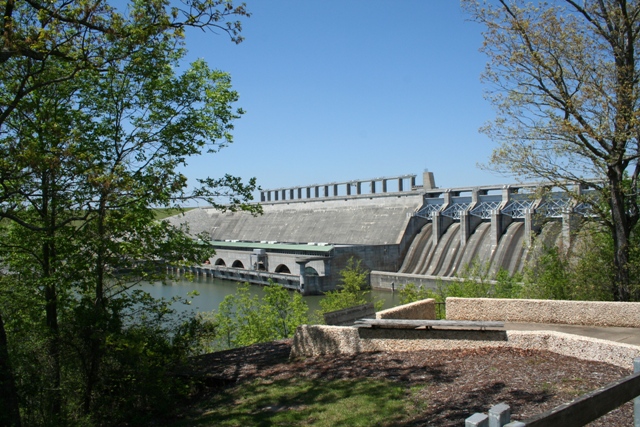
Partnerships between public authorities and private enterprise to build
new reservoirs are now legal in Georgia under legislation Gov. Nathan
Deal signed into law Monday.
Senate Bill 122 “is particularly useful at times such as these when budget
cutbacks hinder our ability to invest in new infrastructure,” Deal said
at a Georgia Chamber of Commerce luncheon in his honor. “This stretches
public dollars by attracting partners to move forward with public works
projects that will benefit the citizens of the state for generations.”
Lawmakers approved $46 million in bond money in the state budget
that takes effect July 1 to help facilitate the construction of new
reservoirs. Deal said he hopes to increase that to $300 million over
the next several years.
“Increasing our water supply in terms of holding that supply is critical
for meeting our future needs,” Deal said.
Yes, but trumping up a fake budget crisis by giving tax breaks to
people who don’t need them and then using it to privatize
public infrastructure for corporate profit at taxpayer expense
is not the way to do it.
 Alex Rowell, Lowndes High School student, said he’s been
volunteering at S.L. Mason, and:
Alex Rowell, Lowndes High School student, said he’s been
volunteering at S.L. Mason, and:
When I saw your graph… You have Lowndes predominately white, Valdosta predominately black. Is one of your goals to integrate that? Is the goal to have a more integrated racial system, or what exactly do you propose to do?