Tag Archives: Planning

2012 Drought more expensive than Hurricane Sandy


You thought Hurricane Sandy was bad?
You were right, but economically, the ongoing drought is worse economically.
But we already know a much brighter path.

Weather Underground founder Dr. Jeff Masters wrote 16 November 2012,

Lessons from 2012: Droughts, not Hurricanes, are the Greater Danger
,

Sandy’s damages of perhaps $50 billion will likely be overshadowed
by the huge costs of the great drought of 2012.
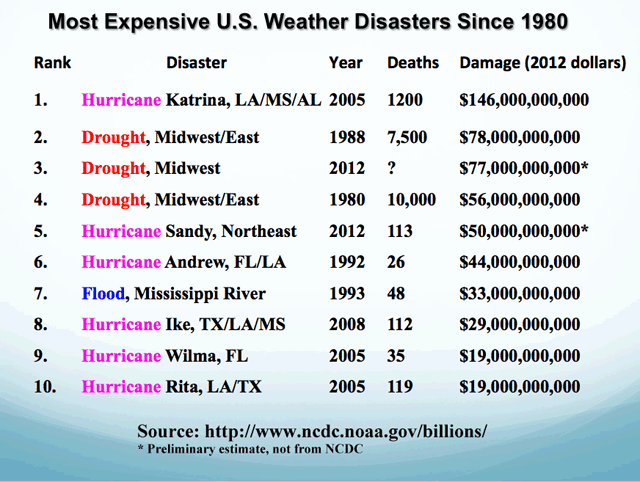

By Dr. Masters’ estimate, the 2012 drought will cost more than half again
as much as Hurricane Sandy.

Also notice Hurricane Katrina still at the top of that table, with almost
three times the economic damage and far more deaths than Hurricane Sandy.
We could have gotten the message back in 2005, but hey, those were only
poor southern people, so who, in for example New York City, really cared?
Yes, I know many of us did and many of you actively helped, but I’m
sure you see my point that when greater New York gets the storm,
suddenly the country pays attention and a lot more people want to find
out how to keep that from happening again.

What’s that drought look like for us here in Georgia at the moment,
according to

U.S. Drought Monitor?
Continue reading

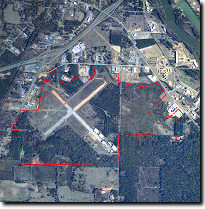
Decatur County already went from private prison to solar park

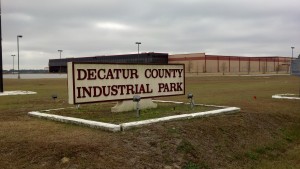
Decatur County, that’s

turning an industrial park into a solar park
;
why is that county familiar?


Because it’s

the other county that thought it was getting a CCA private prison last year!

Decatur County has already moved on from that boondoggle
that would
have prisoners competing with local workers

while

not increasing local employment
.
Decatur County is already well along towards a solar park that could bring

“400 hundred thousand a year in tax revenue”
.
Has our Industrial Authority got anything in negotiations for a solar park?
How about our Airport Authority?
And what is Georgia Power doing to help?

-jsq

West Point aiming for net zero energy use

U.S. Army is serious about solar, installing solar panels as a
“very visible and a very recognizable part of
our renewable energy initiative that can immediately click with the
general public”
as it makes its military academy net zero, while
encouraging cadets to become renewable energy leaders.
Hm, sounds like

Decatur County with its solar industrial park

and what we could do here with

solar Lowndes High.

Mike Strasser wrote Army PR 29 November 2012,

Solar panels deliver new energy to West Point’s Net Zero initiative,


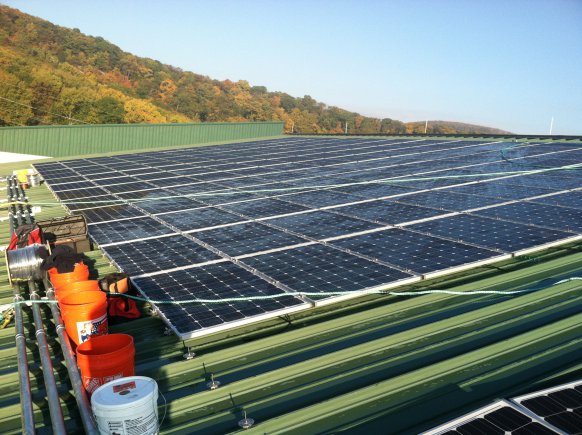
The installation of solar panels on the roof of the Lichtenberg
Tennis Center—780 panels, to be exact—in recent weeks
represents West Point’s continuing efforts to achieve energy
sustainability.

Since becoming a Net Zero Energy pilot installation last April, West
Point has been making strides toward the ultimate goal of producing
as much energy as it uses by 2020. According to an environmental
assessment for the U.S. Army Environmental Command and West Point
Garrison, the installation currently generates less than .02 percent
of the energy it consumes from renewable sources. Matt Talaber,
Department of Public Works engineer and director, said the solar
panels will be a step in the right direction.

“The solar panels are very visible and a very recognizable part of
our renewable energy initiative that can immediately click with the
general public,” Talaber said. “It’s a positive image that shows
West Point is interested in renewable energy and is working on its
Net Zero energy goals.”

And they’re also improving conservation and efficiency.
Plus this:

Continue reading

Renewables are Winning, Nukes are Dead, and Coal is Crashing


Somebody is willing to read the sunshine writing:

Renewables are Winning, Nukes are Dead and Coal is Crashing
, as
Kathleen Rogers and Danny Kennedy wrote for EcoWatch 14 Dec 2012.

As I wrote

back in April when formerly coal-plotting Cobb EMC went solar:

Coal is dead. Nuclear is going down.
Solar will eat the lunch of utilities that don’t start generating it.

Can Georgia Power and Southern Company (SO) read that handwriting on the wall?


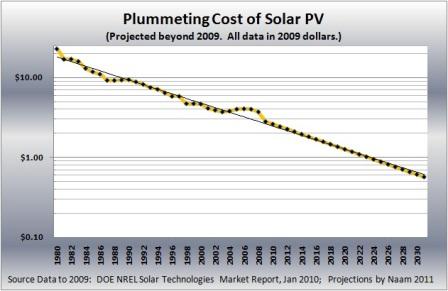
They can’t fight Moore’s Law, which has steadily brought the cost
of solar photovoltaic (PV) energy down for thirty years now, and
shows no signs of stopping.
This is the same Moore’s Law that has put a computer in your pocket
more powerful than a computer
that cost hundreds of thousands of dollars in 1982
and was used by an entire company.

Solar PV costs dropped 50% last year.

Already
all the new U.S. electric capacity installed this September
was solar and wind.

As this trend continues, solar will become so much more cost-effective
than any fossil or nuclear fuel power that nobody will be able to ignore it.

Rogers and Kennedy explained this phenomenon:

The seismic shift in how we all use cell phones and mobile technology to access the internet almost snuck up on the incumbent technologies and the monopolies that made money selling us landline telephones and a crappy service. Now, we’re all using apps on smartphones all of the time. So too, the shift to a scaled, solar-powered future built around the modular technology at the heart of solar power—the photovoltaic solar cell—will come as a surprise to many. We call it the solar ascent, and it is happening every day in a million ways.

Will SO and Georgia Power continue to prop up

that 1973 legal wall


that

inhibits solar financing in Georgia?

Companies and even economic development authorities are

starting to find ways around it,

and of course there’s

Georgia Solar Utilities (GaSU)
trying to

wedge into the law as a utility.

After Hurricane Sandy,

rooftop solar for grid outage independence

has suddenly hit the big time
(Austin Energy caught onto that back in 2003).
The

U.S. military got solar and renewable energy

back in Afghanistan and are now doing it bigtime everywhere.

SO and Georgia Power can try to ignore

Continue reading

Industrial park from green grass to a green solar future: Decatur County

Our Industrial Authority is

in favor of solar business now
;
what if they seeded some of

their industrial parks

with solar panels like Decatur County is doing?
They think it will make them look like a progressive county.
What do we think?

Ty Wilson wrote for WTXL 7 Dec 2012,

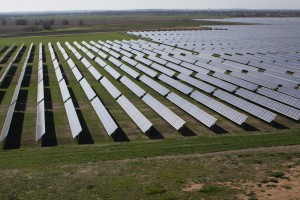
A solar park is coming to the Decatur County Industrial Park
,


The Decatur County Industrial park will go from having green grass
to having a green future.

A Lenexa, Kansas company is building a solar farm at the Decatur
County Industrial Park.

The Decatur County Industrial park will go from having green grass
to having a green future.

Keith Lyle is the chairman of the Bainbridge Decatur Development
Authority, he says, “We are just extremely excited to have this come
for the community.”


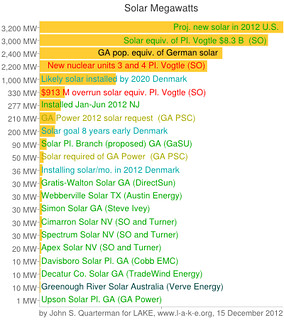
Decatur County Solar Park in solar Megawatt context

And, it’s private investment!


Trade Winds Energy
is leasing at least 100 acres to put in solar
panels at ten thousand dollars a year.

Company executives says they will invest 17 million dollars into the
project.

Lyle says, “This will add from the tax aspect a significant revenue
stream. When it is all said and done you are looking at a taxable
amount of 40 million is assets. On the project that is 400 hundred
thousand a year in tax revenue.”

Trade Wind Energy doesn’t list this project yet
(and all the projects they do list are wind projects),


but if we take a rule of thumb

Continue reading

Rooftop solar for grid outage independence

Solar power can bring for energy independence, not just from foreign countries,
also from the grid during storms and other outages.

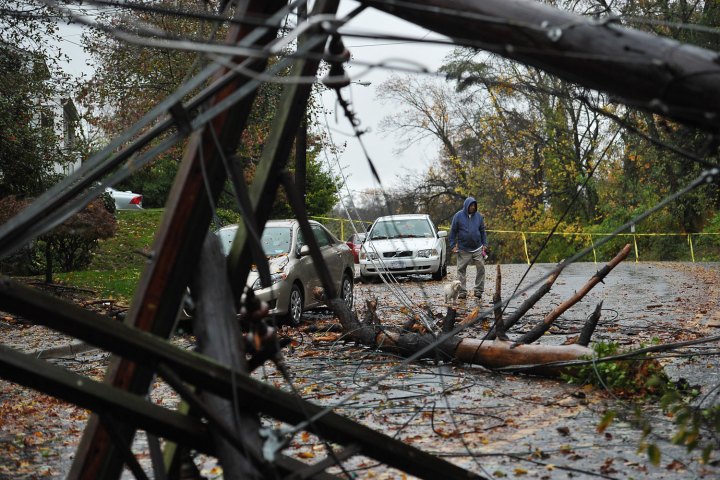
Inspired by the need to deal with downed power lines
in New York and New Jersey after Hurricane Sandy,
David Crane and Robert F. Kennedy Jr. wrote for NYTimes 12 Dec 2012,

Solar Panels for Every Home
,

Solar photovoltaic technology can significantly reduce our reliance


on fossil fuels and our dependence on the grid.
Electricity-producing photovoltaic panels installed on houses, on
the roofs of warehouses and big box stores and over parking lots can
be wired so that they deliver power when the grid fails.

Solar panels have dropped in price by 80 percent in the past five
years and can provide electricity at a cost that is at or below the
current retail cost of grid power in 20 states, including many of
the Northeast states. So why isn’t there more of a push for this
clean, affordable, safe and inexhaustible source of electricity?

First, the investor-owned utilities that depend on the existing
system for their profits have little economic interest in promoting
a technology that empowers customers to generate their own power.
Second, state regulatory agencies and local governments impose
burdensome permitting and siting requirements that unnecessarily
raise installation costs.

I can tell you by experience that solar panels on the roof
(with batteries) can supply power when the grid is out.

In regulatory-captured Georgia, the big impediment to solar is

financing, because of 1973 Territorial Electric Service Act.

When will Southern Company and Georgia Power admit their boondoogle
on the Savannah River has failed and get on with conservation,
efficiency, wind, and solar power?

-jsq

Augusta high tech job growth: second in the country

What is Augusta doing that attracts so many high tech jobs?

Orlando Montoya wrote for GPB News 7 December 2012,

Augusta High Tech Ranks Nationally
,


A national group working to promote entrepreneurship says Augusta
has the second highest growth rate of high tech jobs in the past
five years.

Only Boise, Idaho grew tech jobs faster.

San Francisco based Engine Advocacy says between 2006 and 2011,
Augusta increased its technology sector jobs by 81%.

City officials credit the area’s low cost of living.

If that was the only key,
Lowndes County and Valdosta MSA would lead the country….
What else?

Continue reading

Zero owed in 2010; why $8.9 million owed now on county palace? @ LCC 2012-12-11

If Lowndes County owed $0 (zero dollars) on the county palace in November 2010,
why are we paying on

$8,965,000 in bonds
for it in December 2012?
If that palace was “100% Paid by SPLOST” in 2010,
why in 2012 is the county pledging our property tax dollars to pay those bonds?


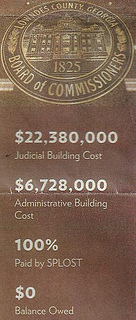
Zero balance on the county palace?

In November 2010:


$22,380,000


Judicial Building Cost


$6,728,000


Administrative Building Cost


100%


Paid by SPLOST


$0


Balance Owed

So says a double-page flyer about “the Lowndes County Judicial &
Administrative Complex”

Flyer from November 2010

produced by the Valdosta Daily Times for Lowndes
County in 2010 and signed “Highest regards, Joe Pritchard, County Manager”.
There’s no dateline, but it invites the public to a dedication of the Complex
“on Friday, November 12, 2010.”


Preliminary Official Statement Dated November 20, 2012

from Morgan Keegan about the $8,965,000 in Refunding Revenue Bonds
(Lowndes County Judicial/Administration Complex)
Series 2012, which says this:

The Bonds are payable solely from payments to be made by Lowndes County,
Georgia (the “County”) pursuant to an Intergovernmental Contract,
dated as of December 1, 2012 (the “Contract”), between the Issuer
and the County. Under the Contract, the County has agreed to levy and
collect an annual tax on all taxable property located within the County
as may be necessary to produce in each year revenues which are sufficient
to make the payments required by the Contract.

So which is it?

Continue reading

Videos @ LCC 2012-12-11


Moody and the Chamber won, rural residents got wasted,
and taxpayers still didn't get to see a single thing the Lowndes County Commission
voted on last night in 45 minutes (very long for them)
in front of the biggest audience I've ever seen there.

They

appointed John "Mac" McCall to ZBOA
.
They revised the

alcohol ordinance
with some unspecified "changes to the fee schedule",
and added another alcohol restriction to the
Lake Park rezoning
before approving it.

They approved the

solid waste ordinance
and granted a waste collection monopoly to

a company from New York City

despite all known public input being against it.
Two
more people
spoke
against it
in Citizens Wishing to Be Heard.

Gretchen Quarterman recommended adding
all the appointed Boards and Authorities
to the county's calendar.

Commissioners accepted applicant's withdrawal of

the rezoning request near Moody AFB

and tabled indefinitely the related

zoning code amendment
.
They
approved rezoning for the
Naylor Dollar General.

Commission approved four Decorative Lighting Special Tax Districts (forgetting it was supposed to be a
public hearing
),
and a refund for one that wasn't.

Danny Weeks got approved a new netclock
and new phones for the 911 center,
and he and his staff got an award.
The library railroad continues,
the bonds renegotation was approved with
about $2 million savings and some legal questions,
the Annex has asbestos but they'll deal with it,
and after Friday's demolition ceremony
there will be a going-away reception for Chairman Paulk,
and Bill Slaughter will be the new Chairman.

You missed all that and more at yesterday's Commission meeting.

Here's

a video playlist
of the Regular Session,
followed by the agenda with the videos linked into it.

Update 2014-04-09: Fixed embedded video link.


Regular Session, Lowndes County Commission (LCC),

Videos by Gretchen Quarterman for Lowndes Area Knowledge Exchange (LAKE),

Valdosta, Lowndes County, Georgia, 11 December 2012.

For reference here are the

videos of
yesterday morning's Work Session.

And here is

the agenda
with links to the videos and some notes.

Continue reading

Why did the county use bonds and not GEFA? @ LCC 2012-12-11

Regarding


the refinancing the county is bragging about to save a million dollars,

and that

they're going to vote on tonight at 5:30 PM,

a memory ping reminded me that

Hahira got a GEFA loan for $431,777 a water well this August,

at zero percent interest during construction, and then 1% during
the 20 year repayment period.
Is the county's bond deal better than that?

GEFA is the

Georgia Environmental Finance Authority
,
and it's not just Hahira that has gotten water project loans
through GEFA.
According to GEFA PR of 13 May 2011,

GEFA Approves Environmental Infrastructure Projects Totaling $60.7 Million for
Seven Georgia Communities
,
just this year others included
"Cobb, Cook and Newton Counties; Cusseta-Chattahoochee County; and the
cities of College Park, Ludowici and Valdosta."

The city of Valdosta was approved for a CWSRF loan of $18,500,000 to
finance phase two of the Mud Creek Water Pollution Control Plant
project, which includes increasing capacity from 3.2 million gallons
per day (GPD) to 5.7 million GPD, and additional improvements and
modifications to the facility. Valdosta will also design a new
solids treatment system. The city of Valdosta will pay 3 percent
interest on the 20-year loan for $18,500,000.

So why is the County of Lowndes having to float bonds?
And are bonds on the commercial
bond market really a better financial deal for the county?

For that matter, where's the public notice with agenda of the
4PM meeting today of the Lowndes County Public Facilities Authority?

-jsq