Tag Archives: Wind

Substandard fire protection at nuclear Plant Hatch?

Does Hatch nuclear Unit 1 have substandard fire protection, like
many reactors built before 1975?
Protection against fires that the NRC says cause about half
the core damage risk, such as at Fukushima, which is the same
design as Hatch?

According to Simplyfy.org 2 Jan 2012,

Fire Risk At Older Japan Reactors Shows Potential Worldwide Problem
,


The [Japanese Nuclear Regulatory Authority] NRA announced recently that
reactors built before 1975 likely have sub standard fire protection
designs. This includes having important cables coated in fire resistant
insulation, isolating and protecting cables and creating barriers to
prevent fires from spreading to other areas of critical equipment.


Source:
The Mainichi, 1 Jan 2013,

Over 10 nuclear plants in Japan have flawed fire-prevention equipment: sources
.


What else was built before 1975?
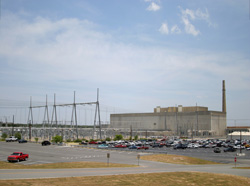
Plant Hatch Unit 1

“Operating License: Issued – 10/13/1974”
,
according to the U.S. NRC.

100 miles from here,

and the same design as Fukushima.

DOE also instituted upgrades and changes to their reactor facilities
which included facility modifications as a result of Browns Ferry
fire. Private sector nuclear power reactors in the US are not all
fully up to the newer rules. The NRC has issued a number of
exemptions that watchdog groups have criticized as being unsafe.
Browns Ferry still does not meet the NRC fire rules for cables. 47
of 52 reactors in the US still do not comply with the 1980 fire
regulations.

Plant Hatch is privately owned and operated.
Has it been upgraded?

Continue reading

Carbon bubble? Solar and wind erode coal, gas, and biomass credit quality —Moody’s


In Europe it’s already happening: solar and wind are causing
bond-rater Moody’s to warn of downgrades of energy companies
that depend on heat from burning coal, gas, or biomass.
Moody’s earlier even warned the Bank of England
of a potential carbon bubble developing.
If combustion energy plants are affected like this,
the credit effects will be even bigger on even-more-expensive
nuclear plants, which Moody’s called a

bet-the-farm risk
way back in 2009.

James Murray wrote for businessGreen 6 Nov 2012,

Moody’s: Renewables boom poses credit risk for coal and gas power plants:
Credit ratings agency warns increases in renewable power have had ‘a
profound negative impact’ on the competitiveness of thermal
generation companies
,

“Large increases in renewables have had a profound negative impact
on power prices and the competitiveness of thermal generation
companies in Europe,” said Scott Phillips, an assistant vice
president and analyst at Moody’s Infrastructure Finance Group, in a
statement.

“What were once considered stable companies have seen their business
models severely disrupted and we expect steadily rising levels of
renewable energy output to further affect European utilities’
creditworthiness.”

And not just rising, rising increasingly

Continue reading

Kewaunee nuke is shutting down; why are we building more at Vogtle?

Dominion Power is shutting down a nuke because it can’t compete economically.
Why are we letting Georgia Power charge us up front and load us up with
debt to build a nuke we already know can’t compete economically?
After all, if it could, it wouldn’t need

three-legged nuclear regulatory-capture stool

that we the rate-payers and taxpayers are already paying on, instead of getting on with
solar and wind power.

According to

22 October 2012 PR from Dominion Power:


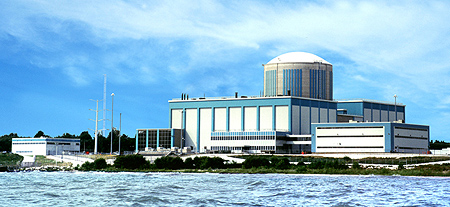
Dominion (NYSE: D) today said it plans to close and decommission its Kewaunee Power Station in Carlton, Wis., after the company was unable to find a buyer for the 556-megawatt nuclear facility.

According to Dominion:

Kewaunee, Dominion’s fourth nuclear station, generates 556 megawatts
of electricity from its single unit. That’s enough to meet the needs
of 140,000 homes.

The station began commercial operation in 1974…


1974?
That’s the same year as

Plant Hatch Unit 1
, on the Altamaha River

100 miles from here.
(Hatch Unit 2 came online
in 1978.)
But the Hatch reactors were relicensed in 2002

extending their lifetimes 20 years out to 2034 and 2038
, so
they won’t be closing, right?

Well, maybe they could.
Howard A. Learner wrote for JSOnline 30 October 2012,

Market has spoken in Kewaunee shutdown
,

Continue reading

2012 Drought more expensive than Hurricane Sandy


You thought Hurricane Sandy was bad?
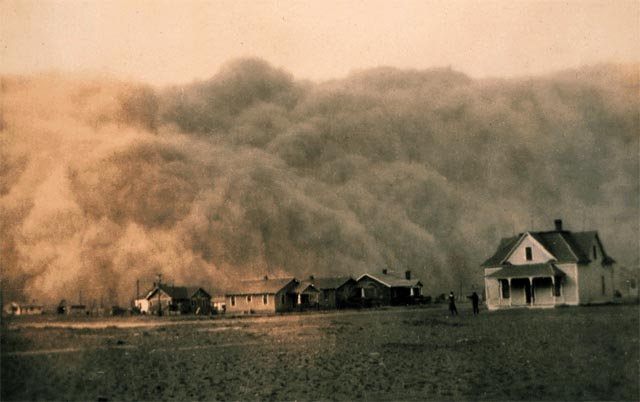
You were right, but economically, the ongoing drought is worse economically.
But we already know a much brighter path.

Weather Underground founder Dr. Jeff Masters wrote 16 November 2012,

Lessons from 2012: Droughts, not Hurricanes, are the Greater Danger
,

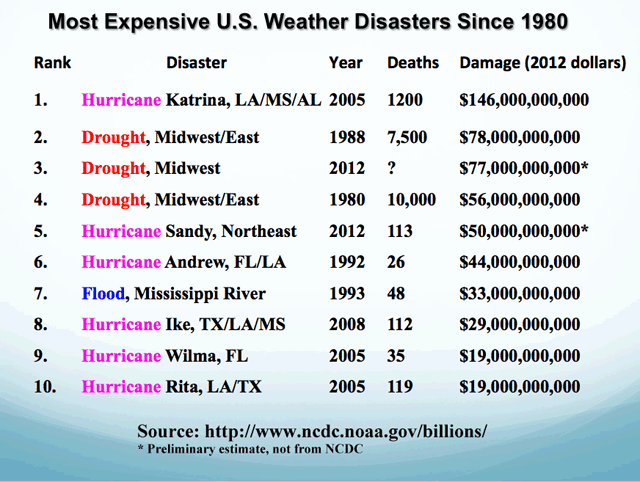
Sandy’s damages of perhaps $50 billion will likely be overshadowed
by the huge costs of the great drought of 2012.


By Dr. Masters’ estimate, the 2012 drought will cost more than half again
as much as Hurricane Sandy.

Also notice Hurricane Katrina still at the top of that table, with almost
three times the economic damage and far more deaths than Hurricane Sandy.
We could have gotten the message back in 2005, but hey, those were only
poor southern people, so who, in for example New York City, really cared?
Yes, I know many of us did and many of you actively helped, but I’m
sure you see my point that when greater New York gets the storm,
suddenly the country pays attention and a lot more people want to find
out how to keep that from happening again.

What’s that drought look like for us here in Georgia at the moment,
according to

U.S. Drought Monitor?

Continue reading

West Point aiming for net zero energy use

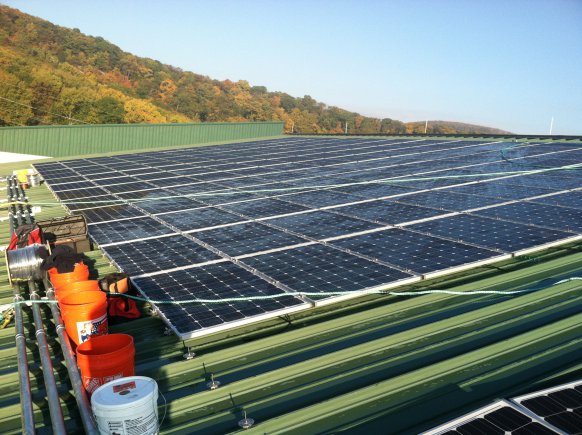
U.S. Army is serious about solar, installing solar panels as a
“very visible and a very recognizable part of
our renewable energy initiative that can immediately click with the
general public”
as it makes its military academy net zero, while
encouraging cadets to become renewable energy leaders.
Hm, sounds like

Decatur County with its solar industrial park

and what we could do here with

solar Lowndes High.

Mike Strasser wrote Army PR 29 November 2012,

Solar panels deliver new energy to West Point’s Net Zero initiative,


The installation of solar panels on the roof of the Lichtenberg
Tennis Center—780 panels, to be exact—in recent weeks
represents West Point’s continuing efforts to achieve energy
sustainability.

Since becoming a Net Zero Energy pilot installation last April, West
Point has been making strides toward the ultimate goal of producing
as much energy as it uses by 2020. According to an environmental
assessment for the U.S. Army Environmental Command and West Point
Garrison, the installation currently generates less than .02 percent
of the energy it consumes from renewable sources. Matt Talaber,
Department of Public Works engineer and director, said the solar
panels will be a step in the right direction.

“The solar panels are very visible and a very recognizable part of
our renewable energy initiative that can immediately click with the
general public,” Talaber said. “It’s a positive image that shows
West Point is interested in renewable energy and is working on its
Net Zero energy goals.”

And they’re also improving conservation and efficiency.
Plus this:

Continue reading

Renewables are Winning, Nukes are Dead, and Coal is Crashing


Somebody is willing to read the sunshine writing:

Renewables are Winning, Nukes are Dead and Coal is Crashing
, as
Kathleen Rogers and Danny Kennedy wrote for EcoWatch 14 Dec 2012.

As I wrote

back in April when formerly coal-plotting Cobb EMC went solar:

Coal is dead. Nuclear is going down.
Solar will eat the lunch of utilities that don’t start generating it.

Can Georgia Power and Southern Company (SO) read that handwriting on the wall?


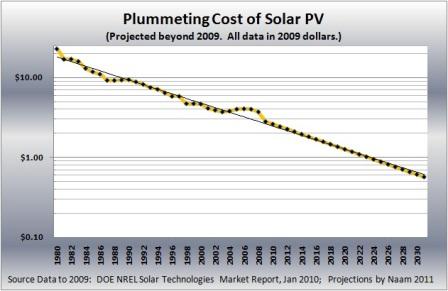
They can’t fight Moore’s Law, which has steadily brought the cost
of solar photovoltaic (PV) energy down for thirty years now, and
shows no signs of stopping.
This is the same Moore’s Law that has put a computer in your pocket
more powerful than a computer
that cost hundreds of thousands of dollars in 1982
and was used by an entire company.

Solar PV costs dropped 50% last year.

Already
all the new U.S. electric capacity installed this September
was solar and wind.

As this trend continues, solar will become so much more cost-effective
than any fossil or nuclear fuel power that nobody will be able to ignore it.

Rogers and Kennedy explained this phenomenon:

The seismic shift in how we all use cell phones and mobile technology to access the internet almost snuck up on the incumbent technologies and the monopolies that made money selling us landline telephones and a crappy service. Now, we’re all using apps on smartphones all of the time. So too, the shift to a scaled, solar-powered future built around the modular technology at the heart of solar power—the photovoltaic solar cell—will come as a surprise to many. We call it the solar ascent, and it is happening every day in a million ways.

Will SO and Georgia Power continue to prop up

that 1973 legal wall


that

inhibits solar financing in Georgia?

Companies and even economic development authorities are

starting to find ways around it,

and of course there’s

Georgia Solar Utilities (GaSU)
trying to

wedge into the law as a utility.

After Hurricane Sandy,

rooftop solar for grid outage independence

has suddenly hit the big time
(Austin Energy caught onto that back in 2003).
The

U.S. military got solar and renewable energy

back in Afghanistan and are now doing it bigtime everywhere.

SO and Georgia Power can try to ignore

Continue reading

Rooftop solar for grid outage independence

Solar power can bring for energy independence, not just from foreign countries,
also from the grid during storms and other outages.

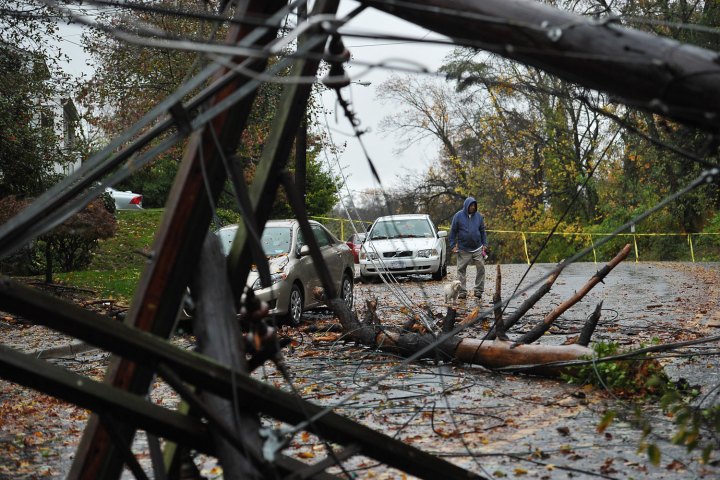
Inspired by the need to deal with downed power lines
in New York and New Jersey after Hurricane Sandy,
David Crane and Robert F. Kennedy Jr. wrote for NYTimes 12 Dec 2012,

Solar Panels for Every Home
,

Solar photovoltaic technology can significantly reduce our reliance


on fossil fuels and our dependence on the grid.
Electricity-producing photovoltaic panels installed on houses, on
the roofs of warehouses and big box stores and over parking lots can
be wired so that they deliver power when the grid fails.

Solar panels have dropped in price by 80 percent in the past five
years and can provide electricity at a cost that is at or below the
current retail cost of grid power in 20 states, including many of
the Northeast states. So why isn’t there more of a push for this
clean, affordable, safe and inexhaustible source of electricity?

First, the investor-owned utilities that depend on the existing
system for their profits have little economic interest in promoting
a technology that empowers customers to generate their own power.
Second, state regulatory agencies and local governments impose
burdensome permitting and siting requirements that unnecessarily
raise installation costs.

I can tell you by experience that solar panels on the roof
(with batteries) can supply power when the grid is out.

In regulatory-captured Georgia, the big impediment to solar is

financing, because of 1973 Territorial Electric Service Act.

When will Southern Company and Georgia Power admit their boondoogle
on the Savannah River has failed and get on with conservation,
efficiency, wind, and solar power?

-jsq

Financing solar energy: Georgia’s special problem

In most states, financing solar energy is largely a matter of learning
all the local ropes.
In Georgia, there’s a bigger problem.

Michael Mendelsohn
wrote for RMI 5 December 2012,

How Do We Lower Solar Installation Costs and Open the Market to Securitized Portfolios: Standardize and Harmonize
,

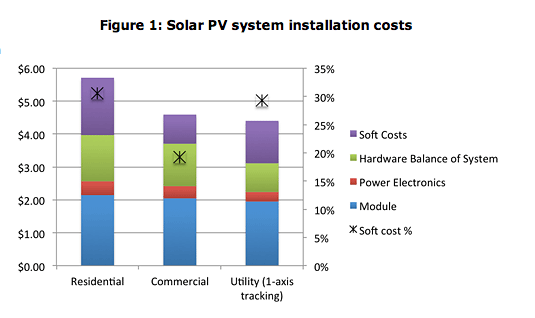
Soft costs can be pretty tough. The cost of solar installations can
be generally separated into “hard” costs — representing
primary components such as modules, racking, inverters — and
soft costs including legal, permitting, and financing. While the
former group — particularly modules — have dropped
dramatically over the last several years, the latter have not.
According to a recent NREL analysis, these costs represent roughly
30% of both residential and utility installations (slightly less for
commercial-host systems). See Figure 1.


In fact, soft costs are so critical to the overall success of solar
adoption, their reduction is a primary focus of the Department of
Energy’s SunShot Initiative to make solar energy cost-competitive.
In order to reduce the cost of financing, NREL recently completed
and continues to work on various efforts to tap public capital
markets and enable other vehicles that securitize project
portfolios.

We’ll come back to tapping public capital markets and the like,
because that’s the key to what

Georgia Solar Utilities (GaSU) is trying to do.

But there’s a special problem in Georgia, buried in the next paragraph:

Continue reading

GaSU wins at GA PSC, but will GaSU help all of us win in the legislature?

GA PSC Stan Wise’s 2009 nuclear CWIP lobbying points eerily matched Southern Company’s,
but suddenly he’s got separation-of-powers religion about Georgia Solar Utilities (GaSU).
The PSC recommended GaSU’s utility bid anyway.
When the legislature takes that up in a month or so, will GaSU CEO Robert Green,
unlike SO or Georgia Power or Stan Wise, help the rest of us little people
fix the 1973 Territoriality law so we can sell our solar electricity
on a free market?

Dave Williams wrote for the Atlanta Business Chronicle yesterday,

Georgia Public Service Commission moves ahead on solar energy
,


Georgia Power logo

The Georgia Public Service Commission approved a plan by Georgia
Power Co. Tuesday to acquire an additional 210 megawatts of solar
generating capacity, more than tripling its investment in solar
energy.


GA PSC PR about 20 November 2012 decisions

But a sharply divided PSC also gave a potential competitor to
Georgia Power its blessing to appeal to the General Assembly to
amend a 39-year-old law that gives the Atlanta-based utility the
exclusive right to continue serving existing customers.

Under Georgia Power’s Advanced Solar Initiative, the company will
buy solar power produced by both large “utility-scale”
solar farms and from smaller projects operated by residential and
commercial property owners.

Right, that’s actually

only 10 Megawatts from “smaller projects”,

maintaining Georgia Power’s monopoly while throwing throwing
a bone to the rest of us.

While the PSC supported Georgia Power’s plan unanimously, a
subsequent motion by McDonald encouraging other solar utilities
interested in serving Georgia to pursue their plans with the
legislature passed by the narrow margin of 3-2.

Georgia Solar Utilities Inc., a company launched in Macon, Ga.,
earlier this year, filed an application with the PSC in September
for authority to generate solar energy in Georgia on a utility
scale.

The two Nay votes were from the two recently-reelected PSC members,
apparently now thoroughly in the pocket of the incumbent utilities.
Here’s one of them now:

Continue reading

Help the military stop climate change through sustainable renewable energy

In memory of Armistice Day, the eleventh hour of the eleventh day of the
eleventh month, when World War I ended,
let’s help the military get us off of oil
and to deal with climate change so fewer people will die in wars.

John M. Broder wrote for NYTimes 9 November 2012,

Climate Change Report Outlines Perils for U.S. Military
,

Climate change is accelerating, and it will place unparalleled strains on


American military and intelligence agencies in coming years
by causing ever more disruptive events around the globe,
the nation’s top scientific research group said in a
report
issued Friday.

The group, the National
Research Council
, says in a study commissioned by the
C.I.A. and other intelligence agencies that
clusters of apparently unrelated events exacerbated by a warming climate
will create more frequent but unpredictable crises in water supplies,
food markets, energy supply chains and public health systems.


Hurricane Sandy provided a foretaste
of what can be expected more often in the near future, the report’s
lead author, John D. Steinbruner, said in an interview.

“This is the sort of thing we were talking about,” said
Mr. Steinbruner, a longtime authority on national security. “You
can debate the specific contribution of global warming to that storm. But
we’re saying climate extremes are going to be more frequent, and
this was an example of what they could mean. We’re also saying it
could get a whole lot worse than that.”

Climate-driven crises could lead to internal instability or international
conflict and might force the United States to provide humanitarian
assistance or, in some cases, military force to protect vital energy,
economic or other interests, the study said.


This is in addition to the even more obvious
connection between war and U.S. dependence on foreign oil

which the veterans in Operation Free want to fix

by helping us shift to clean renewable energy.

“In Iraq… the lines would stretch up to ten miles long under
the hot sun, under constant risk of attack by extremists. I realized
then just how vulnerable it makes any country to be dependent on
oil, especially the United States, which uses nearly a quarter of
the world’s supply.”

We also heard last year from

Col. Dan Nolan (U.S. Army ret.) that the Marines in Afghanistan
realized

Continue reading