Category Archives: Health Care

$30,000 saved by library furloughs, $millions for building construction —Idelle Dear @ LCC 2013-01-08

Idelle Dear noted we’re up to 12 library furlough days, and reported a flaw in that picture to the 8 January 2013 Lowndes County Commission Regular Session.

I looked across the street and there are millions of dollars being spent on the construction of the hospital, construction of the VSU Health Sciences building. And yet what is happening, because this is a mandatory furlough for all employees, is that people who are employed by the South Georgia Regional Library, most of whom are minimum wage, work part time, rely on the income: they are going to lose out….

We’d heard about these state-mandated furlough closings at a library board meeting. Idelle Dear spelled out some of the consequences, and made some telling comparisons.

Something is wrong with this picture, and I realize there are different kinds of money, but something is wrong with this picture if we can spend millions and millions of dollars on construction of these buildings and yet shut down the library and the employees who are in low income are going to be affected.

She said she wasn’t sure most people even knew about all this. And she heard somebody had said most people have Internet at home, but

Continue reading

Help Sierra Club send a message to Georgia Power CEO Bowers

Georgia Sierra Club’s Beyond Coal campaign probably contributed to Georgia Power’s recent decision to shut down some coal plants. Now Sierra Club offers a petition to ask Georgia Power CEO Paul Bowers to go farther, and replace those coal plants with solar offshore wind power for jobs and health for Georgia.

Dirty Coal is Out, Help Usher Clean Energy In!

Georgia Power recently announced their plans to retire three of their oldest and dirtiest coal fired power plants. Now, we must send a clear message to Georgia Power’s leadership that we want to keep Georgia Jobs by investing in homegrown clean energy and energy efficiency to power our homes and businesses.

Send a message to Georgia Power CEO Paul Bowers telling him to replace dirty coal with investments in homegrown clean energy and energy efficiency that can produce thousands of lasting Georgia jobs.

It’s a petition; details here.

Seth Gunning explained why in Sierra Club PR:

Continue reading

Renewables are Winning, Nukes are Dead, and Coal is Crashing

Somebody is willing to read the sunshine writing: Renewables are Winning, Nukes are Dead and Coal is Crashing, as Kathleen Rogers and Danny Kennedy wrote for EcoWatch 14 Dec 2012.

As I wrote back in April when formerly coal-plotting Cobb EMC went solar:

Coal is dead. Nuclear is going down. Solar will eat the lunch of utilities that don’t start generating it.

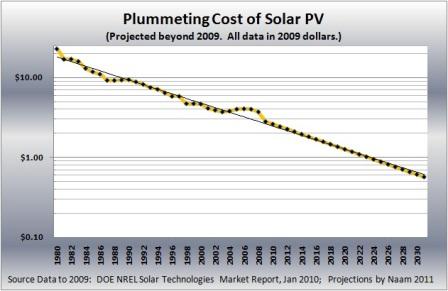
Can Georgia Power and Southern Company (SO) read that handwriting on the wall? They can’t fight Moore’s Law, which has steadily brought the cost of solar photovoltaic (PV) energy down for thirty years now, and shows no signs of stopping. This is the same Moore’s Law that has put a computer in your pocket more powerful than a computer that cost hundreds of thousands of dollars in 1982 and was used by an entire company. Solar PV costs dropped 50% last year. Already all the new U.S. electric capacity installed this September was solar and wind. As this trend continues, solar will become so much more cost-effective than any fossil or nuclear fuel power that nobody will be able to ignore it.

Rogers and Kennedy explained this phenomenon:

The seismic shift in how we all use cell phones and mobile technology to access the internet almost snuck up on the incumbent technologies and the monopolies that made money selling us landline telephones and a crappy service. Now, we’re all using apps on smartphones all of the time. So too, the shift to a scaled, solar-powered future built around the modular technology at the heart of solar power—the photovoltaic solar cell—will come as a surprise to many. We call it the solar ascent, and it is happening every day in a million ways.

Will SO and Georgia Power continue to prop up that 1973 legal wall that inhibits solar financing in Georgia? Companies and even economic development authorities are starting to find ways around it, and of course there’s Georgia Solar Utilities (GaSU) trying to wedge into the law as a utility. After Hurricane Sandy, rooftop solar for grid outage independence has suddenly hit the big time (Austin Energy caught onto that back in 2003). The U.S. military got solar and renewable energy back in Afghanistan and are now doing it bigtime everywhere.

SO and Georgia Power can try to ignore Continue reading

Augusta high tech job growth: second in the country

What is Augusta doing that attracts so many high tech jobs?

Orlando Montoya wrote for GPB News 7 December 2012, Augusta High Tech Ranks Nationally,

A national group working to promote entrepreneurship says Augusta has the second highest growth rate of high tech jobs in the past five years.

Only Boise, Idaho grew tech jobs faster.

San Francisco based Engine Advocacy says between 2006 and 2011, Augusta increased its technology sector jobs by 81%.

City officials credit the area’s low cost of living.

If that was the only key, Lowndes County and Valdosta MSA would lead the country…. What else?

Continue reading

How to implement trash, health, and safety?

Disposal of solid waste (trash/garbage) is a matter of community public health and safety and providing such service is the responsibilty of the local governing bodies. How should trash health and safety responsibly be implemented?

We cannot be left in a situation where residents are either “forced to buy” service from a provider, or have no option but to burn their trash. The government can levy a tax, but they cannot say that residents are forbidden to buy a service from an independent provider.

Such a ruling is

  • unfriendly to those who currently own, or want to start a waste collection business in our county,
  • unfriendly to the residents who are counting on the government to follow the state-legislated goals to
    “protect the health safety, and well-being of its citizens and to protect and enhance the quality of its environment” ,
  • unfriendly to the environment as trash ends up on the side of the road or polluting the air by being burned and leaves us to face a new problem on a different day.

Residents in the unincorporated areas of the county who want curb side collection, for the most part, already purchase it. Those of us using the collection centers do so because it is our preference.

The county should (in my opinion) create a special tax district for waste disposal (it already makes special lighting districts) and tax the residents for the maintenance of the collection centers.

-gretchen

Board of Health members

Here is a list of the members of the Lowndes County Board of Health:

Board Members

William R. Grow, MD, FACP
District Health Director
Mark Eanes, MD
Chair, Physician
Mary Margaret Richardson, EdD
Vice Chair, Licensed Nurse
Randy Smith, DDS
Secretary, Consumer Advocate
Sheila Warren
Advocate for Needy,
Underprivileged or Elderly
Richard Raines
Lowndes County Commissioner
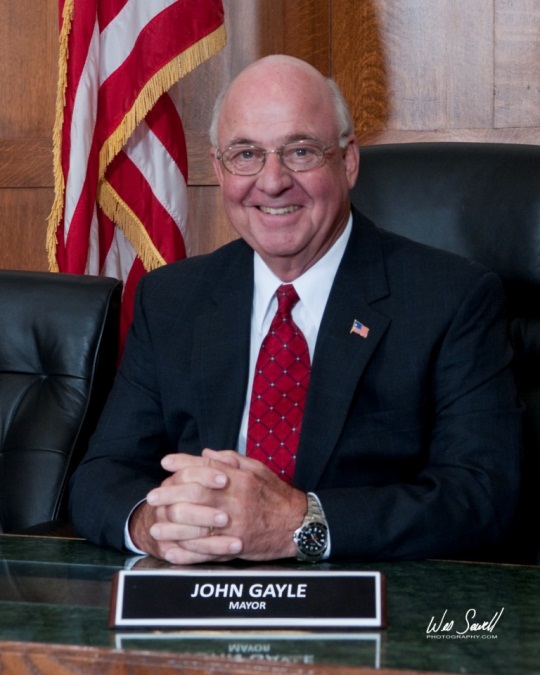
John Gayle
City of Valdosta Mayor
Wes Taylor
Lowndes County Schools
Superintendent
Continue reading

Who implements trash, health, and safety?

As we’ve seen, solid waste is a matter of public health, safety, well-being, and the environment, according to Georgia state law. Whose responsibility is it to protect the environment and the public health, safety, and well-being from solid waste?

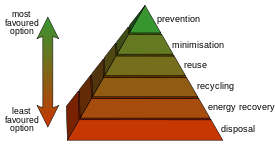
Many health and safety issues are handled through the health department, Diagram of the waste hierarchy including the Georgia Department of Public Health, and the South Health District (Ben Hill, Berrien, Brooks, Cook, Echols, Irwin, Lanier, Lowndes, Tift and Turner Counties). Particularly, water quality (septic tanks, well water), food safety, cleanliness of hotels, motels, restaurants, swimming pools and so on are the responsibility of the local health department, such as the Lowndes County Health Department.

However, disposal of solid waste (trash/garbage) is handled by the local municipality or governmental body (county).

The EPA has a variety of documents available about solid waste.

So does the state EPD, as enabled through Georgia Legislation: Existing Rules and Corresponding Laws.

So, where does this leave us? See next post.

-gretchen

Trash, health, and safety

Solid waste is a health and safety issue, according to Georgia law.

According to the Georgia Department of Natural Resources copy of the GEORGIA COMPREHENSIVE SOLID WASTE MANAGEMENT ACT OF 1990 AS AMENDED THROUGH 2004,

O.C.G.A. § 12-8-21. Declaration of policy; legislative intent

a) It is declared to be the policy of the State of Georgia, in furtherance of its responsibility to protect the public health, safety, and well-being of its citizens and to protect and enhance the quality of its environment, to institute and maintain a comprehensive state-wide program for solid waste management and to prevent and abate litter, so as to assure that solid waste does not adversely affect the health, safety, and well-being of the public and that solid waste facilities, whether publicly or privately owned, do not degrade the quality of the environment by reason of their location, design, method of operation, or other means and which, to the extent feasible and practical, makes maximum utilization of the resources contained in solid waste.

Emphasis added on the parts about health, safety, well-being, and the environment. Those are the goals of this legislation, stated twice in the first paragraph. Georgia being a home rule state, the implementation of these goals is now left to the local governing bodies. More on that next.

-gretchen

Grant funding opportunities: deadlines very soon

Received today from Bryan Zulko of USDA. -jsq

Community Food Projects Competitive Grants Program – Application deadline: Nov 28, 2012
Grants to plan or implement food projects designed to meet the needs of low-income individuals and increase community self-reliance concerning food and nutrition.

Great American Main Street Awards (GAMSA) – Application deadline: Dec 3, 2012
Grants to recognize exemplary and innovative revitalization achievements in revitalization of historic and older neighborhood commercial districts using a community-driven, historic-preservation based approach.

Continue reading

Wiregrass Alley for local agricultural knowledge-based jobs

What jobs and businesses can we build out of local agriculture and VSU and Wiregrass Tech and GMC and SGMC and Moody? Build like the way Silicon Valley grew out of Stanford and HP and Intel, but different, drawing on our local strengths? Various things, no doubt, but the companies the VDT listed in its agricultural heartland article suggest maybe Wiregrass Alley:

When you factor in businesses such as South Georgia Pecan, PCA, the Langdale Company, Shiloh Farms, Dupont, Arizona Chemical, ERCO Worldwide, Coggins Farms, Carter and Sons, and the additional farmers represented by Farmer Browns, the impact of agriculture in Lowndes County alone is one of the largest private, non-governmental industries. Across the region, ag and forestry sustain the economies of a number of counties.
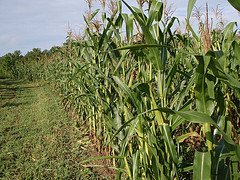
Many of those are obviously agricultural, but Dupont, Arizona Chemical, and ERCO? OK, I’ll buy Arizona Chemical which turns pine products into adhesives and smells. But DuPont? Sure, they make chemical fertilizer, but that’s like listing Chevron as a home heating company.

And what’s this ERCO Worldwide, which provides chemicals like caustic soda for PCA? ERCO Worldwide’s other name hereabouts is Sterling Pulp Chemicals. That’s right, the VDT listed Sterling Chemicals as an agricultural company! Well, that’s hard to deny, because, according to FundingUniverse, Sterling Chemicals “was founded in 1986 to acquire and operate Monsanto Co.’s petrochemical plant in Texas City, Texas.” Nobody can say Monsanto isn’t agricultural, when 90+% of corn, soybeans, cotton, and peanuts grown hereabouts are grown from Monsanto seeds. Which is why we have so many chemical fertilizers and poisonous pesticides being used around here. Is that really the direction we want to go?

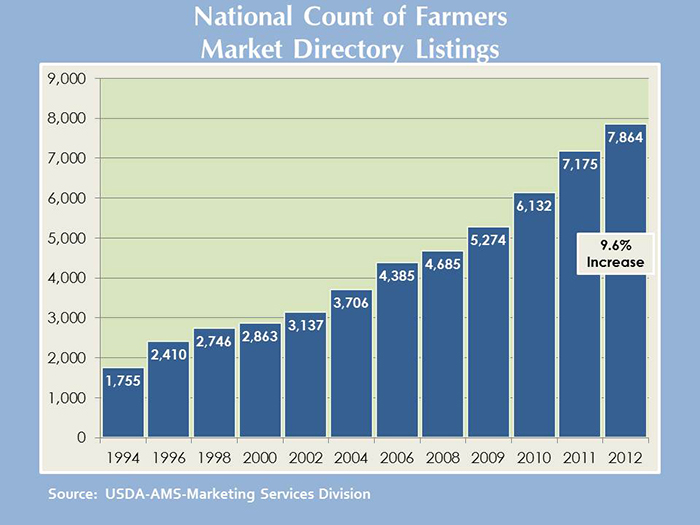
What if we turn the VDT’s list around, and start with the “additional farmers” represented by Farmer Brown and Carters? You know, the ones who sell at Valdosta Farm Days? Farmers markets have increased 6% on average for the past decade. Why is that? Partly because of the conversations and community at a farmers market. Anybody who has gone to Valdosta Farm Days or Hahira Farm Days can attest to that. And it’s not just anecdotal: there is research to demonstrate that in farmers markets compared to supermarkets:
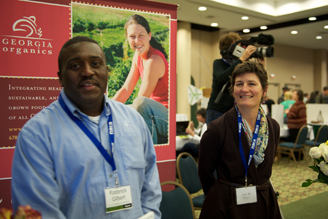
On average, the sociologists found, people were having ten times as many conversations per visit.

Another reason farmers markets are spreading so fast is people are paying attention to the increasing number of scientific reports that “conventional” agriculture is poisoning us, such as the recent one that demonstrates that even the inert ingredients in Roundup are poisonous or the one that links the active ingredient, glyphosate, to Parkinson’s disease. Maybe they’ve heard about Monsanto being sued for “devastating birth defects” and chemical poisoning. And most farmers market customers seem to like fresh local foods that taste good and that support local farmers.
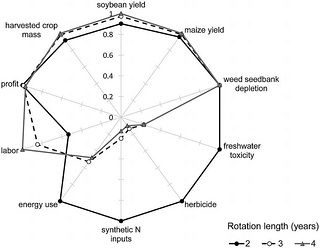
So what if we started with those “additional farmers” that sell at Farmer Brown and Carters and Valdosta Farm Days? They are the ones already starting in a different direction. A direction that is actually more profitable, in addition to healthier (and less flooding and more wildlife). Crop rotation takes more thought and more labor (more jobs!) than just spraying, but it also takes a lot less expense on patented seeds and chemicals, for a net financial profit.

Which could help explain why the USDA says:

Consumer demand for organically produced goods has shown double-digit growth for well over a decade, providing market incentives for U.S. farmers across a broad range of products.

The USDA is talking certified organic, which has so many hoops to jump through that most local producers are not certified, yet many also aren’t using a lot of chemical inputs and are using crop rotation and other organic techniques. Techniques which many old-timers around here will recognize, because they used to use them a half century ago, but with new wrinkles such as computerized records and recent research that may make them even more effective. That’s right: modern organic and local agriculture is a knowledge-based industry.
What has all this got to do with the colleges and SGMC and Moody? Moody could be a big customer for local agricultural produce, as could the local K-12 schools; VSU already is. Wiregrass Tech can (and already is) help teach people how to grow organic or with fewer manufactured inputs. VSU and GMC can study how that’s working out, in conjunction with SGMC, which eventually will have fewer cases of some kinds of diseases to deal with. How many cases, of what kinds of diseases? There’s a field of research we could lead, along with the agricultural industry to cause such improvements in health: healthy jobs from planting to PhDs!
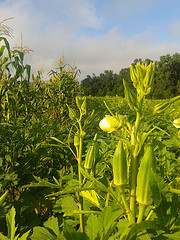
And if we do want other kinds of knowledge-based businesses and workers (which is where Silicon Valley usually gets mentioned), I think we’ll find they like a place that produces local healthy foods.

-jsq