Category Archives: Renewable Energy

Company to build 90 MW solar and become a utility

What to do if you can’t interest Georgia Power in building solar?
Do it yourself, and do enough so you can be a utility yourself.
That’s the loophole in the 1973

Electric Territorial Act

that FPL and JEA use to burn coal at Plant Scherer in Georgia and export the power to Florida.
Now Georgia Solar Utilities Inc. is using the loophole for a better purpose:
building almost twice as much solar generation
as Georgia Power’s meager 50 MW.


Georgia Solar Utilities

Dave Williams wrote for the Atlanta Business Chronicle yesterday

New Georgia utility pitches solar plant:
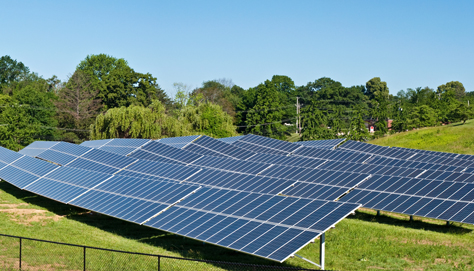
A new utility is planning to build a $320 million solar power plant on 2,200 acres adjacent to Georgia Power Co’s coal-burning Plant Branch near Milledgeville, Ga.

Georgia Solar Utilities Inc. initially approached Georgia Power, a
unit of Southern Co. (NYSE: SO), with a proposal to build the plant
and sell it to Georgia Power through a power-purchasing agreement.

Georgia Power is retiring two coal-fired units at Plant Branch, part
of a move to reduce the Atlanta-based utility’s reliance on coal.

But when Georgia Power officials declined to take part in the
project last May, Georgia Solar Utilities executives decided to
build the plant on their own and operate it as a new utility
independent of Georgia Power.

Once cost prohibitive, solar energy has become competitive with
fossil fuels because of the rising costs of coal and tighter
government regulation of coal emissions, said Robert Green, founder
of Georgia Solar Utilities.

“When you don’t have to buy coal or worry about environmental
hangovers, it overwhelms the costs of fossil fuels, Green said
Thursday after presenting the proposal to the Georgia Public Service
Commission’s Energy Committee.

Some say the PSC can’t approve such a utility because of that 1973 law.
I suspect that if they don’t approve this proposal, the next one
will be even harder to turn down, and the next one,
as they become even more competitive.

How competitive?

Continue reading

Phase 2 Solar Power for the Wisenbaker Building —Ron Jackson

Phase 2 after
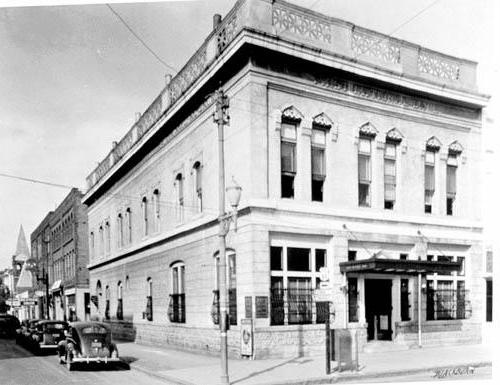
South GA Solar Power, LLC remediated the historic Wisenbaker Building
is solar generation, according to Ron Jackson.

We wanted to … remediate some of the problems first to reduce the load,
to reduce the energy consumption.


Phase 2 Solar Power for the Wisenbaker Building --Ron Jackson

Once we’ve done that, phase 2 kicks in, which is the solar power application.
If we’d done that first, we probably would have put on a 20KW system
to handle this load.
But because we’ve done the phase 1 project and reduced the energy load,
now we only need an 8-10 KW system,
so the prices have been reduced.
Next year hopefully it will be a fully green, fully functioned
solar power application.

Right in downtown Valdosta!


The

historic Wisenbaker Building
,
100 North Patterson Street, is at the corner of West Hill Avenue.
It was

purchased by Gino Fina in 2006,

and is now used as

Valdosta Shared Office Space.

Here’s

the video.


Phase 2 Solar Power for the Wisenbaker Building –Ron Jackson

Pictures and video by John S. Quarterman for Lowndes Area Knowledge Exchange (LAKE), Valdosta, Lowndes County, Georgia, 5 May 2012.

-jsq

Green from the Grassroots —Elinor Ostrom


On the day she died, Nobel Prize-winning economist Elinor
Ostrom published
her last article, in Project Syndicate, 12 June 2012,

Green from the Grassroots
,

This grassroots diversity in “green policymaking” makes
economic sense. “Sustainable cities” attract the
creative, educated people who want to live in a pollution-free,
modern urban environment that suits their lifestyles. This is where
future growth lies. Like upgrading a mobile phone, when people see
the benefits, they will discard old models in a flash.

Of course, true sustainability goes further than pollution control.
City planners must look beyond municipal limits and analyze flows of
resources —

energy
,

food
,

water
, and

people


into
and

out of
their cities.

Worldwide, we are seeing a heterogeneous collection of cities
interacting in a way that could have far-reaching influence on how
Earth's entire life-support system evolves. These cities are
learning from one another, building on good ideas and jettisoning
poorer ones. Los Angeles took decades to implement pollution
controls, but other cities, like Beijing, converted rapidly when
they saw the benefits. In the coming decades, we may see a global
system of interconnected sustainable cities emerging. If successful,
everyone will want to join the club.


And counties, and regions, and watersheds, of course.
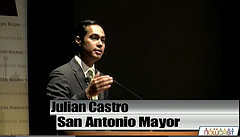
As Mayor Julian Castro of San Antonio said, there is a

"nexus between sustainability and job creation."

We don't have to wait for San Antonio or Los Angeles or Beijing or
Atlanta to lead the way:

we can get on with it right here where we are.

-jsq

Industrial Authority has to be congratulated —Michael G. Noll

Received yesterday on

WCTV on biomass site VLCIA v. Sterling Planet
. -jsq

Wiregrass Activists for Clean Energy (WACE) have made it clear from


the start that biomass plants have a number of issues: 1) biomass
plants bear significant health risks; 2) biomass plants waste
enormous amounts of water; 3) biomass plants are risky investments
in an increasingly competitive energy sector; and 4) biomass plants
contribute to global warming.

In the light of rising global temperatures, worsening drought
conditions, and dropping prices for solar panels, an increasing
number of people are understanding these simple truths.

The Industrial Authority has to be congratulated for the courage to
admit that energy from biomass plants is indeed more expensive than
energy from solar plants, and we have not even figured in the costs
associated with the consequences of air pollution coming from
biomass plants.

(For more information on biomass plants, here a testimony I recently
gave:

http://www.bredl.org/pdf3/120828_WACE-Comments-Docket_NO-E-100_SUB113.pdf
)

Although this point has already been made earlier, note again that
solar plants are much better alternatives, economically and
environmentally: they do not pollute our air, they do not need any
water, and a huge spill of solar energy is simply called a sunny day
… of which we have plenty here in the south.

-Michael G. Noll

-jsq


Remediating a building in downtown Valdosta –Ron Jackson of South GA Solar Power, LLC

Ron Jackson told LAKE about
how South GA Solar Power, LLC remediated the historic Wisenbaker Building
in downtown Valdosta for
increased air flow and reduced energy consumption.


Ron Jackson at the Wisenbaker Building

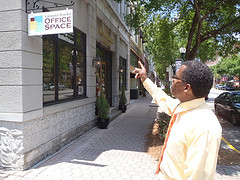
Valdosta Shared Office Space, Downtown Valdosta,
is in the Wisenbaker Building, built in 1884:
the owner hired South GA Solar Power, LLC as an engineer consultant
to bring down the energy this building was using.
Ron Jackson says they examined air flow, average load,
and other factors,
bringing $12,000/year electric bill down to $3,000,
120 amps/day down to 17 amps/day.


“Consider us as your next consultant for your green energy product.”

Here’s
the video.


Picture and video by John S. Quarterman for Lowndes Area Knowledge Exchange (LAKE), Valdosta, Lowndes County, Georgia, 5 May 2012.

Tomorrow: Phase 2.

-jsq

Self-contained solar attic fan –Ron Jackson of South GA Solar Power, LLC

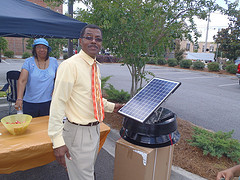
At Cinco de Mayo,

Ron Jackson explained
a self-contained solar attic fan

Self-contained solar attic fan

sold by
South GA Solar Power, LLC.
He was assisted by mechanical engineer Danielle, and isn’t that Business Manager Sharon Jackson?

It’s actually an exhaust fan powered by the sun.
What it does is it simply takes the hot air,
125-150° heat, exhausts it out
down to 90°, which
makes the house cooler, which makes the air conditioner stop running.
Which makes the electric bill reduce, go down, 50%.
My bill was $345 a month now it’s $120 a month.
By a simple application!
If you need any more information, call

Ron Jackson at South GA Solar Power, LLC.


Self-contained solar attic fan

Pictures and video by John S. Quarterman for Lowndes Area Knowledge Exchange (LAKE), Valdosta, Lowndes County, Georgia, 5 May 2012.

-jsq

WCTV on biomass site VLCIA v. Sterling Planet


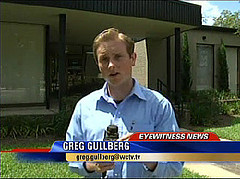
Greg Gullberg

WCTV does what VDT dares not:
Greg Gullberg mentioned last year’s biomass protests in the first sentence of this
story about the Industrial Authority threatening to sue Sterling Planet

to get clear title to the former proposed biomass plant site.

Greg Gullberg reported for WCTV yesterday,

Dispute Over Land For Proposed Biomass Plant
,


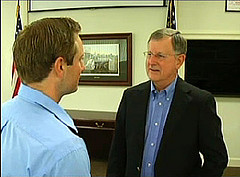
Gullberg and Ricketts

The vocal protests in Valdosta are long gone, but the controversy
over the proposed Biomass plant lingers. This time not for concerns
of health safety, but over the land.

The Valdosta-Lowndes County Industrial Authority plans to sue
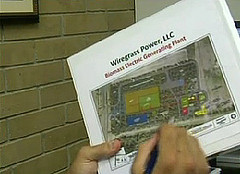
Wiregrass Power LLC to end its contract.


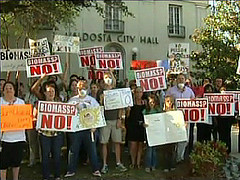
Protesters at City Hall


Ban the Burn Go 100% Solar


Ban the Burn Go 100% Solar.

The proposed Biomass Plant was supposed to be a low-cost source of
efficient energy. Supporters say it would have created hundreds of
jobs. But opponents say the health risks include cancer, lung
disease and respiratory disease.


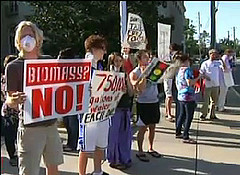
750,000 gallons of water each day


Biomass site plan


750,000 gallons of water each day

Tell me, Col. Ricketts, doesn’t it feel better to be visibly on the side
of the people, instead of having to defend a bad business deal?

Continue reading

1.5MW solar field near Philadelphia

Far to the north of here, a botanical garden installed
more than a megawatt of solar power a year ago.
Maybe Georgia Power should ask them how it’s done.

PR of 16 June 2011,

LONGWOOD GARDENS COMMISSIONS 10-ACRE SOLAR FIELD:
Installation first step of goal to achieve 3 MW of solar energy by 2018


June 16, 2011, Kennett Square, PA — Longwood Gardens today
commissioned a new, ground-mounted solar field spanning more than 10
acres at the horticultural showplace in Kennett Square,
Pennsylvania.

One of the largest examples of clean emission-free energy in the
region, the solar field produces 1.2 MW (megawatts) of power and
will produce 1.5 MW when the final panels are installed in the
coming weeks. The fixed-tilt, 1.5 MW solar installation will produce
enough electricity to offset the usage of approximately 138 average
Pennsylvania homes and reduce Longwood’s annual carbon dioxide
emissions by 1,367 tons.

“We are always looking for ways to advance our sustainable
practices,” said Paul Redman, Longwood Gardens Director.
“It is integral to Longwood’s mission to decrease our
dependence on fossil fuels.” We want to establish best
practices and lead the way in showing communities how to live
responsibly,” said Redman.

Imagine if Georgia Power and Southern Company acted responsibly
and led the way in solar power!

Continue reading

Nuclear plant shut for two weeks in Connecticut due to heat

Ever heard of solar panels or windmills shutting down due to heat?
Me, neither.
Nuclear plants, yes, such as Millstone unit 2 in Connecticut,
closed for two weeks.

AP wrote today,

Conn. nuclear plant unit reopens with cooler water

Connecticut's nuclear power plant has returned to full service


nearly two weeks after one of its two units was forced to shut down
because seawater used to cool it down was too warm.


Millstone Power Station
spokesman Ken Holt said Monday that Unit 2
returned to 100 percent power Saturday. It shuttered Aug. 12 after
record heat in July contributed to overheated water from Long Island
Sound.

Water is used to cool key components of the plant and is discharged
back into the sound. The water's temperature was averaging 1.7
degrees above the 75-degree limit.

The temperature has since dropped to 72 degrees, Holt said.

"The water temperature cooled sufficiently to support operations and
that, combined with the weather forecast, has given us the
confidence to restart," he said.

Wait, wasn't the whole point of big distributed baseload power plants
supposed to be reliable dependable power?

Millstone provides half of all power in Connecticut and 12 percent
in New England.

Some scientists believe the partial Millstone shutdown was the first
involving a nuclear plant pulling water from an open body of water.
A few nuclear plants that draw water from inland sources have
powered down because of excessively warm water.

Time to think again!
Distributed solar and wind power doesn't have this problem,
and a smart grid can get their power where it's needed.

-jsq

VLCIA to sue Sterling Power about biomass site?

I’d heard a rumor that some sort of lawsuit about the biomass site
was the subject of some of the Industrial Authority executive
sessions for real estate discussions.
VLCIA has finally said in public what their position is.

Jason Schaefer wrote for the VDT today,

Authority weighs suit for biomass land:
Slow progress leads to default, contract argument


The Valdosta-Lowndes County Industrial Authority plans to send a
petition to Lowndes County Superior Court to sue Wiregrass Power,
LLC, for a clear title on the land purchased for the development of
a biomass energy plant.

The Authority believes Wiregrass defaulted on a lease agreement to
build the plant, placing ownership of the 22.22-acre tract back in
their hands, but Wiregrass denies the allegations. This denial casts
“a cloud” of suspicion on the Authority that may prevent
it from re-marketing the property, according to the petition,
leading to the suit.

Sounds like they’re publicizing their intent
to try to scare Sterling off without having to sue.
I’m for that.

This may explain

a flurry of special called meetings they had in May and June 2011.

Continue reading