Category Archives: Renewable Energy

Financing solar energy: Georgia’s special problem

In most states, financing solar energy is largely a matter of learning
all the local ropes.
In Georgia, there’s a bigger problem.

Michael Mendelsohn
wrote for RMI 5 December 2012,

How Do We Lower Solar Installation Costs and Open the Market to Securitized Portfolios: Standardize and Harmonize
,

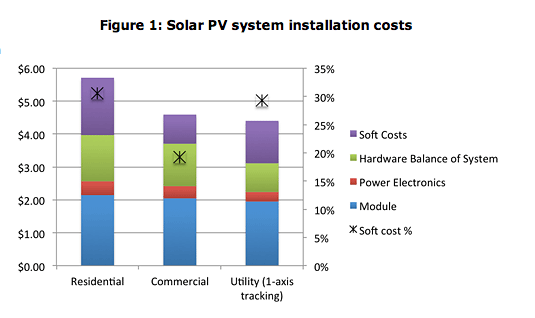
Soft costs can be pretty tough. The cost of solar installations can
be generally separated into “hard” costs — representing
primary components such as modules, racking, inverters — and
soft costs including legal, permitting, and financing. While the
former group — particularly modules — have dropped
dramatically over the last several years, the latter have not.
According to a recent NREL analysis, these costs represent roughly
30% of both residential and utility installations (slightly less for
commercial-host systems). See Figure 1.


In fact, soft costs are so critical to the overall success of solar
adoption, their reduction is a primary focus of the Department of
Energy’s SunShot Initiative to make solar energy cost-competitive.
In order to reduce the cost of financing, NREL recently completed
and continues to work on various efforts to tap public capital
markets and enable other vehicles that securitize project
portfolios.
We’ll come back to tapping public capital markets and the like,
because that’s the key to what

Georgia Solar Utilities (GaSU) is trying to do.

But there’s a special problem in Georgia, buried in the next paragraph:
Continue reading

Videos, Solar Energy Forum @ CSC 2012-12-01


Solar Energy Forum at Center for a Sustainable Coast, Savannah, Chatham County, Georgia, 1 December 2012

Here are videos of Saturday’s

Solar Energy Forum

at the

Center for a Sustainable Coast
(CSC)
in Savannah,
with

We will probably post more later on the presentations by Paul Wolff
and Robert Green, and the ensuing questions and answers.
Meanwhile,
here’s

a video playlist

of the entire event:


Videos, Solar Energy Forum

Solar Energy Forum, Center for a Sustainable Coast (CSC),

Videos by Gretchen Quarterman for Lowndes Area Knowledge Exchange (LAKE),

Savannah, Chatham County, Georgia, 1 December 2012.

-jsq

Georgia statehouse and the anti-sustainability astroturf talking points (aka “Agenda 21”)

Somebody wrote me a week or two ago:


I saw in todays paper Chip Rogers and other Senate leadership was changed yesterday.
Thank goodness!

Well, don't cheer too soon.
According to Jim Galloway in the AJC

15 November 2012,

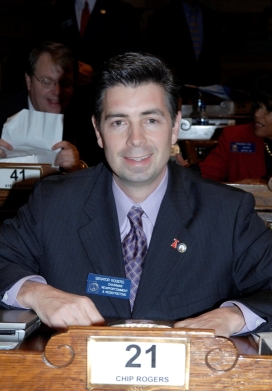
"Senate Majority Leader Chip Rogers of Woodstock withdrew his re-election
bid and endorsed Ronnie Chance of Tyrone, the governor's floor leader,
for the position."


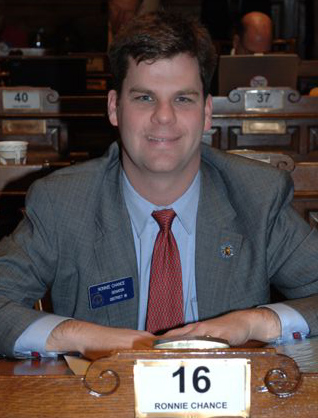
Ronnie Chance is not only

also ALEC,

Chance is

the other ALEC state Senator

who put both the charter school amendment
and the multi-year amendment on the ballot.
Is this leadership "change" improvement?
Meet the new boss; same as the old boss.

Why must we get fooled again?
When will the people of the state of Georgia get tired of government
by astroturf and elect some legislators who will represent the people?

-jsq

Who’s behind the anti-sustainability astroturf talking points (aka “Agenda 21”)


ALEC’s “our state legislators” are promoting
the
anti-sustainability astroturf talking points
at the Georgia
state capitol. But ALEC doesn’t seem to be the source of those
talking points. Who is? Follow the money: who stands to benefit the
most by obstructing public transportation, fuel efficiency, and
renewable energy? The fossil fuel companies, especially big
oil.

Lloyd Alter wrote for Treehugger 29 June 2012,
Exposing the Influence Behind the Anti-Agenda 21
Anti-Sustainability Agenda
, first pointing out that most people
never even heard of Agenda 21:

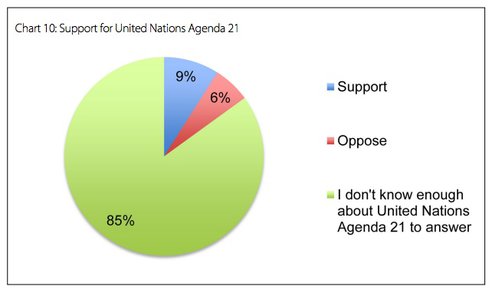
…a recent survey showed that most people never heard of it and

Few have heard of Agenda 21 and only 6% oppose it
only 6% say they are against it. so why are politicians from
State governments up to the National Republican Party and
Presidential candidates like Newt Gingrich make such a big deal of
it?

“People don’t wake up in the morning sweating bullets about the
United Nations.”-Robin Rather

Robin Rather of Collective Strength, who commissioned the
survey, says “I genuinely believe the Agenda 21 phenomenon is
highly manufactured. It’s not out there in the mainstream.”

There are a number of leads back to big oil, starting with one
of the main conduits of the talking points, the John Birch Society,
one of whose founders was Fred Koch, founder of Koch industries,
a diversified multinational that has large fossil fuel components.
His sons David and Charles founded Americans for Prosperity.

When he is not out on the public speaking circuit, Tom DeWeese
is President of the American Policy Center, the loudest mouthpiece
of the anti-Agenda 21 crowd.

Alter digs into APC board connects to big oil,

Continue reading

TV station gets it: Territoriality Law prevents solar in Georgia

Local TV is getting it about solar in Georgia,
and what’s holding it back!

WSBTV.com posted 20 November 2012,

Georgia law keeps power customers from saving with solar energy


Supporters say it could save some people big on their electric
bills, but leasing solar panels in Georgia isn’t worth it because of
a current state law.

Critics believe it gives Georgia Power a solar monopoly and prevents
consumers from saving money.

Jeff Sain installed solar panels on his Dunwoody house because his
electric bill was nearly $600 a month in the summer. With solar his
Georgia Power bill plummeted.

“The first month’s power bill, I saved 91 percent on my power bill,”
Sain said.

Purchasing solar panels required a big outlay of cash. Sain spent
$32,000.

But companies in 14 states now offer systems that can be leased with
no upfront costs. However, you get less in savings because you have
split it with the leasing company providing the equipment.

“Typical savings if you lease panels as people do in other states
will be 30 to 50 percent of your power bill,” Consumer advocate
Clark Howard said.

The main law that prevents us getting financing for solar
like in

Continue reading

GaSU wins at GA PSC, but will GaSU help all of us win in the legislature?

GA PSC Stan Wise’s 2009 nuclear CWIP lobbying points eerily matched Southern Company’s,
but suddenly he’s got separation-of-powers religion about Georgia Solar Utilities (GaSU).
The PSC recommended GaSU’s utility bid anyway.
When the legislature takes that up in a month or so, will GaSU CEO Robert Green,
unlike SO or Georgia Power or Stan Wise, help the rest of us little people
fix the 1973 Territoriality law so we can sell our solar electricity
on a free market?

Dave Williams wrote for the Atlanta Business Chronicle yesterday,

Georgia Public Service Commission moves ahead on solar energy
,


Georgia Power logo

The Georgia Public Service Commission approved a plan by Georgia
Power Co. Tuesday to acquire an additional 210 megawatts of solar
generating capacity, more than tripling its investment in solar
energy.


GA PSC PR about 20 November 2012 decisions

But a sharply divided PSC also gave a potential competitor to
Georgia Power its blessing to appeal to the General Assembly to
amend a 39-year-old law that gives the Atlanta-based utility the
exclusive right to continue serving existing customers.

Under Georgia Power’s Advanced Solar Initiative, the company will
buy solar power produced by both large “utility-scale”
solar farms and from smaller projects operated by residential and
commercial property owners.

Right, that’s actually

only 10 Megawatts from “smaller projects”,

maintaining Georgia Power’s monopoly while throwing throwing
a bone to the rest of us.

While the PSC supported Georgia Power’s plan unanimously, a
subsequent motion by McDonald encouraging other solar utilities
interested in serving Georgia to pursue their plans with the
legislature passed by the narrow margin of 3-2.

Georgia Solar Utilities Inc., a company launched in Macon, Ga.,
earlier this year, filed an application with the PSC in September
for authority to generate solar energy in Georgia on a utility
scale.

The two Nay votes were from the two recently-reelected PSC members,
apparently now thoroughly in the pocket of the incumbent utilities.
Here’s one of them now:

Continue reading

The real U.N. Agenda 21

What is this Agenda 21 referred to by the

anti-sustainability astroturf talking points

movie shown at the Georgia statehouse?


The real Agenda 21
is a typical U.N. set of do-good wishful thinking


documents adopted at a U.N. conference in Rio de Janeiro in 1992.
If you think it’s been successful in actually implementing sustainability,
you haven’t paid attention this summer to the
U.N. Rio+20 successor conference from
activists actually interested in a sustainable economy.
Such pro-sustainability activists generally

bemoaned the lack of effective action in the intervening twenty years:

the climate continues to warm as almost every nation continues to burn
more fossil fuels.
The U.N.’s own Rio+20 document pretty much

relegates such concerns to a sideline to an expanding economy.

The U.N.’s intentions are good: this is a small planet with

Continue reading

Help the military stop climate change through sustainable renewable energy

In memory of Armistice Day, the eleventh hour of the eleventh day of the
eleventh month, when World War I ended,
let’s help the military get us off of oil
and to deal with climate change so fewer people will die in wars.

John M. Broder wrote for NYTimes 9 November 2012,

Climate Change Report Outlines Perils for U.S. Military
,

Climate change is accelerating, and it will place unparalleled strains on


American military and intelligence agencies in coming years
by causing ever more disruptive events around the globe,
the nation’s top scientific research group said in a
report
issued Friday.

The group, the National
Research Council
, says in a study commissioned by the
C.I.A. and other intelligence agencies that
clusters of apparently unrelated events exacerbated by a warming climate
will create more frequent but unpredictable crises in water supplies,
food markets, energy supply chains and public health systems.


Hurricane Sandy provided a foretaste
of what can be expected more often in the near future, the report’s
lead author, John D. Steinbruner, said in an interview.

“This is the sort of thing we were talking about,” said
Mr. Steinbruner, a longtime authority on national security. “You
can debate the specific contribution of global warming to that storm. But
we’re saying climate extremes are going to be more frequent, and
this was an example of what they could mean. We’re also saying it
could get a whole lot worse than that.”

Climate-driven crises could lead to internal instability or international
conflict and might force the United States to provide humanitarian
assistance or, in some cases, military force to protect vital energy,
economic or other interests, the study said.


This is in addition to the even more obvious
connection between war and U.S. dependence on foreign oil

which the veterans in Operation Free want to fix

by helping us shift to clean renewable energy.

“In Iraq… the lines would stretch up to ten miles long under
the hot sun, under constant risk of attack by extremists. I realized
then just how vulnerable it makes any country to be dependent on
oil, especially the United States, which uses nearly a quarter of
the world’s supply.”

We also heard last year from

Col. Dan Nolan (U.S. Army ret.) that the Marines in Afghanistan
realized

Continue reading

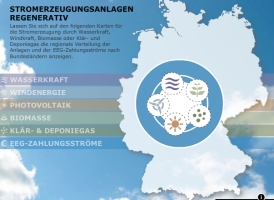
Solar up 50% over last year in Germany


July in Germany

wasn’t a fluke:
solar PV electricity production in Germany is up 50% over last year.
Maybe we hould consider a Feed-in Tariffs (FIT) in Georgia like that in Germany.
Unlike the Construction Work in Progress (CWIP) charge on Georgia Power
bills for nuclear power people won’t get for years, if ever, FIT charges
only apply after solar power is flowing.

Bloomberg Businessweek via AP 5 November 2012,

German solar power production up 50 pct on year
,


The German utilities’ industry association BDEW said Monday the
solar power output rose to 25,000 gigawatt hours in the January to
September period, from 16,500 gigawatt hours a year earlier.

It says solar power’s share in the country’s electricity production
rose to 6.1 percent from 4.1 percent. Wind power gained slightly to
8.6 percent from 8.0 percent. Biomass plants accounted for almost 6
percent.

It says all renewable energies combined accounted for about 26
percent of electricity production over the first nine months.

Germany decided last year to phase out nuclear power by 2022 and
replace it with renewable energies.


If you’re tired of Georgia Power and its parent Southern Company
pouring your customer and tax dollars down that nuclear pit near
the Savannah River, or if you’d just rather have solar or wind power,
you can send in your CWIP charge as a separate check, with a note on it.
Even if you’re not a Georgia Power customer, you can

contact them or Southern Company (or the GA PSC or the legislature)
about this.

-jsq

Georgia Power raising rates


Georgia Power is raising rates
in January, despite its recent announcement that it would lower
rates because of lower fuel bills.
Why raising?
Mostly the new nukes and for a new natural gas plant.
And 16% of the rise is for energy efficiency.
Does that seem like the right proportion to you?

Kristi Swartz wrote for the AJC 1 Nov 2012,

Georgia Power bills to increase
,

The average Georgia Power bill will increase about 44 cents a month
starting in January, not decrease as many might have expected when
the company announced last month its fuel costs had dropped.

The utility, which serves 2.4 million customers, notified state
regulators in October that it would be applying for a residential
rate reduction because the amount it pays for fuel has fallen 7
percent, saving $122 million. The utility cannot profit from lower
fuel costs and must pass those savings on to customers.

So why are customer rates going up?

About $1.05 of the typical residential bill will go toward paying
for a new natural gas unit at Plant McDonough-Atkinson in Smyrna.
That increase already was approved as part of a three-tiered rate
hike set in 2010.

Yep, that’s that

set-in-2010 and keep-rising-’till-2013 natural gas
rate hike

that Georgia Power got away with while complaining about
any potential solar subsidies.
The one
AJC complained would be “on autopilot”:

Continue reading