Author Archives: admin

Trash, health, and safety

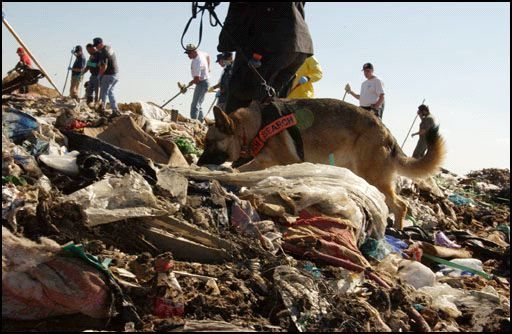
Solid waste is a health and safety issue,
according to Georgia law.

According to the
Georgia Department of Natural Resources
copy of the

GEORGIA COMPREHENSIVE SOLID WASTE MANAGEMENT ACT OF 1990
AS AMENDED THROUGH 2004
,

O.C.G.A. § 12-8-21. Declaration of policy; legislative intent


a) It is declared to be the policy of the State of Georgia, in
furtherance of

its responsibility to protect the

public health, safety, and well-being

of its citizens and to protect and enhance
the

quality of its environment,
to institute and maintain a
comprehensive state-wide program for solid waste management and

to prevent and abate litter,
so as to assure that solid waste does not
adversely affect the

health, safety, and well-being
of the public
and that solid waste facilities, whether publicly or privately
owned, do not degrade the quality of the environment

by reason of
their location, design, method of operation, or other means and
which, to the extent feasible and practical, makes maximum utilization
of the resources contained in solid waste.

Emphasis added on the parts about
health, safety, well-being, and the environment.
Those are the goals of this legislation, stated twice in the first paragraph.
Georgia being a home rule state, the implementation of these goals
is now left to the local governing bodies.
More on that next.

-gretchen
Savannah and Jacksonville most vulnerable to rising sea level

Savannah and Jacksonville are among the east coast cities most vulnerable
to rising sea levels due to climate change, a study finds.
Savannah, Georgia’s main seaport, with storm surges, hurricanes,
and waves on top:
what will that look like?

Suzanne Goldenberg wrote for the Guardian today,

US coastal cities in danger as sea levels rise faster than expected, study warns:
Satellite measurements show flooding from storms like Sandy will put low-lying population centres at risk sooner than projected
,

A

study published last March by Climate Central
found sea-level rise
due to global warming had already doubled the risk of extreme flood
events — so-called once in a century floods — for dozens
of locations up and down the Atlantic and Pacific coasts.

It singled out the California cities of Los Angeles and San Diego on
the Pacific coast and Jacksonville, Florida, and Savannah, Georgia,
on the Atlantic, as the most vulnerable to historic flooding due to
sea-level rise.

Sandy, which produced a 9ft storm surge at Battery Park in New York
City, produced one example of the dangerous combination of storm
surges and rising sea level. In New York, each additional foot of
water puts up to 100,000 additional people at risk, according to a
map published with the study.

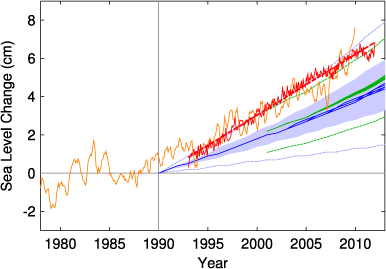
That study projected 6 inches rise at Fort Pulaski by 2030 (minimum 3 inches)
and 13 inches by 2050 (maximum 24 inches).
But projections have gotten worse since then:


Sea level changes measured and projected

The latest research,

published on Wednesday in Environmental Research Letters,

found global sea-levels rising at a rate of 3.2mm a year, compared to the best estimates by the IPCC of 2mm a year, or 60% faster.

So that would be more like 9 inches by 2030 and 20 inches by 2050.

Add to a higher base sea level bigger storms like Hurricane Sandy,
and Savannah and Jacksonville have a problem.
Sure, Savannah is

Continue reading

Who’s behind the anti-sustainability astroturf talking points (aka “Agenda 21”)


ALEC’s “our state legislators” are promoting
the
anti-sustainability astroturf talking points
at the Georgia
state capitol. But ALEC doesn’t seem to be the source of those
talking points. Who is? Follow the money: who stands to benefit the
most by obstructing public transportation, fuel efficiency, and
renewable energy? The fossil fuel companies, especially big
oil.

Lloyd Alter wrote for Treehugger 29 June 2012,
Exposing the Influence Behind the Anti-Agenda 21
Anti-Sustainability Agenda
, first pointing out that most people
never even heard of Agenda 21:

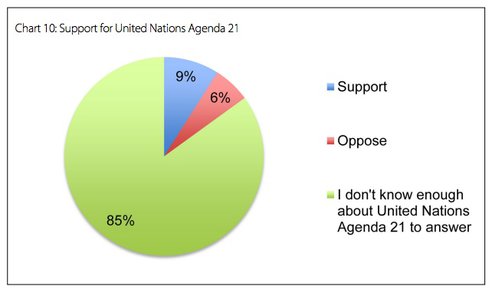
…a recent survey showed that most people never heard of it and

Few have heard of Agenda 21 and only 6% oppose it
only 6% say they are against it. so why are politicians from
State governments up to the National Republican Party and
Presidential candidates like Newt Gingrich make such a big deal of
it?

“People don’t wake up in the morning sweating bullets about the
United Nations.”-Robin Rather

Robin Rather of Collective Strength, who commissioned the
survey, says “I genuinely believe the Agenda 21 phenomenon is
highly manufactured. It’s not out there in the mainstream.”

There are a number of leads back to big oil, starting with one
of the main conduits of the talking points, the John Birch Society,
one of whose founders was Fred Koch, founder of Koch industries,
a diversified multinational that has large fossil fuel components.
His sons David and Charles founded Americans for Prosperity.

When he is not out on the public speaking circuit, Tom DeWeese
is President of the American Policy Center, the loudest mouthpiece
of the anti-Agenda 21 crowd.

Alter digs into APC board connects to big oil,

Continue reading

Grant funding opportunities: deadlines very soon

Received today from Bryan Zulko of USDA. -jsq


Community Food Projects Competitive Grants Program
– Application deadline:
Nov 28, 2012
Grants to plan or implement food projects designed to meet the needs of low-income individuals and increase community self-reliance concerning food and nutrition.

Great American Main Street Awards (GAMSA) – Application deadline: Dec 3, 2012
Grants to recognize exemplary and innovative revitalization achievements in revitalization of historic and older neighborhood commercial districts using a community-driven, historic-preservation based approach.

Continue reading

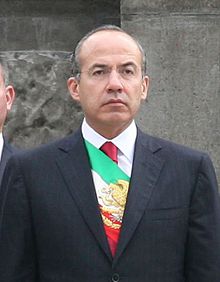
U.S. has “moral responsibility to reduce the flow of [drug] money towards Mexico” —Felipe Calderón, President of Mexico

The Mexican president who put the Mexican Army onto the streets
to stop the drug war, resulting in 40,000+ deaths, many
collateral damage like

the son of writer Carlos Fuentes
,
the Mexican president who

a year ago started hinting that that didn’t work and something else should be done
,
is already following the path of his predecessors
Ernesto Zedillo and

Vicente Fox,
in calling for the U.S.
to end the war on drugs.
Georgia can’t afford to continue spending a billion dollars a year to lock people up, especially while cutting education.
If we listen to the Mexican presidents, we can save much of that billion and spend much of the savings on education.

T.W. wrote for the Economist 23 November 2012,

“Impossible” to end drug trade, says Calderón,

In an interview recorded last month for this week’s special report

Felipe Calderon, President of Mexico

on Mexico, Mr Calderón said: “Are there still drugs in Juárez [a
violent northern border city]? Well of course, but it has never been
the objective…of the public-security strategy to end something
that it is impossible to end, namely the consumption of drugs or
their trafficking…

“[E]ither the United States and its society, its government and its
congress decide to drastically reduce their consumption of drugs, or
if they are not going to reduce it they at least have the moral
responsibility to reduce the flow of money towards Mexico, which
goes into the hands of criminals. They have to explore even market
mechanisms to see if that can allow the flow of money to reduce.

“If they want to take all the drugs they want, as far as I’m
concerned let them take them. I don’t agree with it but it’s their
decision, as consumers and as a society. What I do not accept is
that they continue passing their money to the hands of killers.”

The Economist article spelled out what Calderón still doesn’t quite say:

Continue reading

How to stop climate change: divest from fossil fuel companies

In response to a very downbeat

diatribe by Bill McKibben in Rolling Stone on the occasion
of the U.N.’s Rio+20 conference
being some sound and less fury accomplishing
not much about stopping climate change,
[Bill McKibben, Rolling Stone, 19 July 2012, “Global Warming’s Terrifying New Math: Three simple numbers that add up to global catastrophe – and that make clear who the real enemy is”]


Chloe Maxmin, Divest Harvard

Harvard student Chloe Maxmin

followed up McKibben’s problem statement with a plan for what to do:

divest from fossil fuel companies. [“In Honor of Kalamazoo: An Open Letter to Bill McKibben,” NextGenJournal, 25 July 2012, no longer online, referred to in a post the same day by Chloe Maxmin on First Here, Then Everywhere.]

Maxmin didn’t just wish, either,
she joined up with McKibben’s 350.org and helped organize
Harvard students to do something about it:
persuade Harvard to divest its shares of fossil fuel companies.
Students at the University of Georgia, or at Valdosta State University,
for that matter, could do the same.

Alli Welton wrote for 350.org 18 November 2012,

72% of Harvard Students Vote to Divest from Fossil Fuels
,

Last Friday night, the Harvard College Undergraduate Council
announced that the student body had voted 72% in favor of Harvard
University divesting its $30.7 billion endowment from fossil fuels.

Members of the Harvard chapter of Students for a Just and Stable
Future have been campaigning since September to divest Harvard’s
endowment from the top 200 publicly-traded fossil fuel corporations
that own the majority of the world’s oil, coal, and gas reserves.

Harvard actually already has divested its shares of one fossil fuel company
due to public pressure.

Continue reading

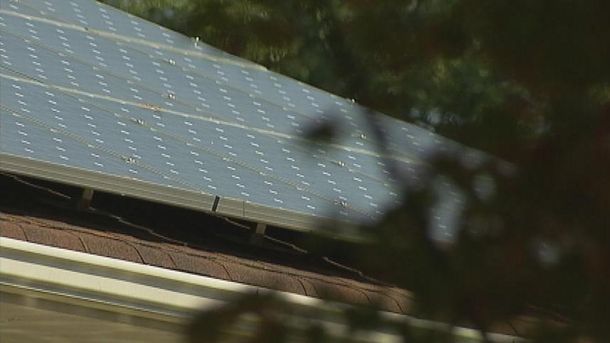
TV station gets it: Territoriality Law prevents solar in Georgia

Local TV is getting it about solar in Georgia,
and what’s holding it back!

WSBTV.com posted 20 November 2012,

Georgia law keeps power customers from saving with solar energy


Supporters say it could save some people big on their electric
bills, but leasing solar panels in Georgia isn’t worth it because of
a current state law.

Critics believe it gives Georgia Power a solar monopoly and prevents
consumers from saving money.

Jeff Sain installed solar panels on his Dunwoody house because his
electric bill was nearly $600 a month in the summer. With solar his
Georgia Power bill plummeted.

“The first month’s power bill, I saved 91 percent on my power bill,”
Sain said.

Purchasing solar panels required a big outlay of cash. Sain spent
$32,000.

But companies in 14 states now offer systems that can be leased with
no upfront costs. However, you get less in savings because you have
split it with the leasing company providing the equipment.

“Typical savings if you lease panels as people do in other states
will be 30 to 50 percent of your power bill,” Consumer advocate
Clark Howard said.

The main law that prevents us getting financing for solar
like in

Continue reading

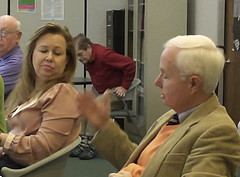
SPLOST, media, southside library: videos @ SGLB 2012-11-20

Here’s
a video playlist of the 20 November 2012 South Georgia Regional Library Board meeting.


And here’s

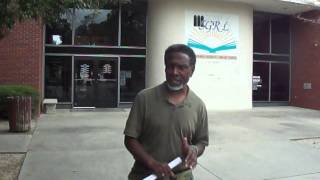
George Rhynes’ editorial
on what he saw, heard, and was asked at that meeting.
He’d prefer SPLOST being spent first on sidewalks
than on moving the library where people would have
to go farther to get to it.
Also, like many of us, he’s tired of a few people controlling
the purse-strings without input from the rest of us.
He gave an example:

Continue reading

SPLOST VII @ SGLB 2012-11-20


SPLOST on the ballot again? --Willis Miller @SGLB 2012-11-20

At

Tuesday’s South Georgia Library Board meeting.

a board member (his nameplate said Willis Miller)

wanted to know about SPLOST
:

How we know it’s going to come up next November or at another time?

Good question.


Here’s video of the discussion as

it resumed later in the meeting:


SPLOST VII discussion at Monthly Meeting, South Georgia Library Board (SGLB),

Video by George Boston Rhynes for K.V.C.I. and bostongbr on YouTube,

Valdosta, Lowndes County, Georgia, 20 November 2012.

Kay Harris said there had to be a
minimum of twelve months, so November 2013 would be the next possible time.
She said County Commissioner Richard Raines had expressed full support for the new library,
and she was talking to the other commissioners.
She was asked whether the SPLOST lists would be the same,
and said there might be some changes,
but she hadn’t heard anyone suggest that the Five Points property might be deleted.
That’s curious, because

she quoted Valdosta Mayor Gayle in the VDT 7 November 2012
as saying:

Continue reading

ALEC and the anti-sustainability astroturf talking points (aka “Agenda 21”)

Why do I keep associating the anti-sustainability astroturf talking points
with ALEC?
Because ALEC's "our state legislators" were promoting them at Georgia's Capitol.


ALEC logo


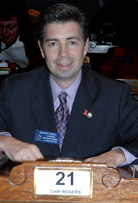
Chip Rogers

Two out of three of
the Georgia legislators Jim Galloway named in

Georgia's own 52-minute video on the ‘Agenda 21’ conspiracy
,
namely

Chip Rogers and Barry Loudermilk,
are associated with ALEC.

Senate Majority Leader (now former) Chip Rogers (R-21)
has been ALEC's State Chaimran for Georgia and received ALEC's
2011 State Chair of the year Award.
Surely you remember him!
Rogers

sponsored both misleading amendment 1 ("charter schools") and
misleading amendment 2 ("multi-year contracts")
on this year's ballot.


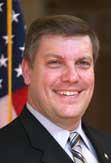
Barry Loudermilk

Rep. Barry D. Loudermilk (R-14) is on ALEC's
Telecommunications and Information Technology Task Force.
How convenient that Loudermilk is the

Secretary of the Georgia
Energy, Utilities & Telecommunications Committee
!

So there is at least a convergence of ALEC's "our state legislators"
and those pushing this anti-sustainability agenda.
This is not surprising, since ALEC is opposed to clean, sustainable energy,
as confirmed by

ALEC's own attempt to rebut that point.

A rebuttal that brought to light ALEC's phrase "our state legislators".

I see Loudermilk is a sponsor of a bill called the

Georgia Government Accountability Act
,

Continue reading