Category Archives: Climate change

The Lowndes-Lanier County EF3 Tornado —NOAA


The tornado was an F2 in Lowndes County and an F3 in Lanier.
It went west to east, wrote the NWS in Tallahassee.
The

pictures we posted that day

were apparently where it first touched down, and even then
it ripped limbs off of trees and broke some off and threw them.

According to the National Weather Service Weather Forecast Office in Tallahasse,

Severe Weather & Flooding Event of March 3, 2012; Lowndes-Lanier Co. EF3 Tornado
,

The most significant damage of the severe weather event in south
Georgia and north Florida was caused by a tornado that moved from
just northwest of Moody Air Force Base to near Lakeland, Georgia.
The damage was assessed by a survey team from the National Weather
Service in Tallahassee. Most of the damage was consistent with an
EF1 or EF2 tornado on the Enhanced Fujita Scale. However, the most
severe damage — near Boyette Road and Highway 122 — was consistent
with an EF3 rating on the Enhanced Fujita Scale. Maximum wind speeds
were estimated to be around 140 mph at that location.

As you can see by

NOAA’s map
,
the tornado was an EF0, EF1, and EF2 while it was in Lowndes County,
(as Ashley Tye told the Lowndes County Commission
this morning),
rising to an EF3 in Lanier County, peaking at 140 mph winds.


View Larger Map

-jsq

Southern Company has 3 biggest CO2 plants in U.S.

David Ibala wrote for the AJC 11 January 2012,

Study: Southern Company plants are 3 biggest greenhouse gas emitters

Two Southern Company coal-fired electric generating plants near


Atlanta are the biggest contributors to global greenhouse gases in
the United States, and a third Southern plant in Alabama is the
third-biggest emitter, an analysis of environmental data found
Wednesday.

The nation’s No. 1 producer of carbon dioxide — the
heat-trapping gas that is held chiefly responsible in models of
global warming — is Plant Scherer in Juliette, about 65 miles
southeast of downtown Atlanta, according to the Associated Press
analysis of data reported to the U.S. Environmental Protection
Agency for 2010.

That’s the plant that supplies most of our power in south Georgia,
whether you get it through Georgia Power or Colquitt EMC.

The No. 2 producer is Plant Bowen, just west of Cartersville, about
50 miles northwest of central Atlanta, and the third-largest is
Plant Miller in Quinton, Ala., about 165 miles west of Atlanta near
Birmingham, the AP said.

The story also notes (as a picture caption):

Georgia Power recently installed pollution-control equipment, called
baghouses, to curb mercury pollution at Plant Scherer. EPA rules
that will regulate mercury likely will lead to the utility to install
additional baghouses at other coal-fired plants

Hm, that’s exactly what Southern Company said

it was incompetent to do.

Apparently it figured out to do what other power companies already knew how to do.

Anyway, pumping out CO2 from coal plants is what Southern Company is doing
instead of solar and wind.

-jsq

To the people of Valdosta and South Georgia —Occupy Valdosta

Posted today in

Occupy Valdosta’s
facebook page:

To the people of Valdosta and South Georgia


We, the local citizens occupying Valdosta, urge you to assert your power.


Exercise your right to peaceably assemble;
to nonviolently occupy
public space;
to create an open process to address the problems we face, and to generate
solutions accessible to everyone.

Our issues are varied, yet related.

We seek

Continue reading

Walking Route of Occupy Valdosta


Both the
VDT

and the

Spectator

got the route backwards. Not their fault; although the route has been posted since last Saturday, it hasn’t been easy to find.

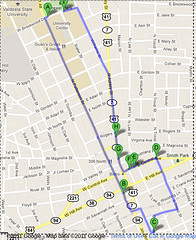
Here is

the actual route

of the

Friday noon 14 October sidewalk amble through Valdosta,
as confirmed last night at the organizational meeting:


View Larger Map

This is a peaceful nonviolent exercise in assembly for redress of grievances and celebration of community. Bring a sign or we’ll help you make one. Talking, chanting, singing, and music are encouraged. Stay on the sidewalk except in the parks; no littering; ask for help if you need water or assistance; feel free to discuss and agree or disagree, but please no name calling or the like.

Assemble: Gather 11AM-noon at Drexel Park

Start: Noon at Drexel Park

Continue reading

Solar for Georgia —Bill Branham @ LCC 12 September 2011


William Branham talked about solar initiatives he’s involved in
and a variety of public officials he’s talked to who are positive
on solar and renewable energy for generating jobs.
He pointed out that solar grew faster than any other energy source.
He mentioned the Chamber’s
Renewable and Sustainable Energy Network
(of which I am also a member).

After Branham spoke, Commissioner Raines cited one solar company that
had failed together with financing concerns and indicated he didn’t
think it was time for solar here.

I don’t agree with Commissioner Raines. What do you think?

Here’s

the video:


Solar for Georgia —Bill Branham @ LCC 12 September 2011

Work Session, Lowndes County Commission (LCC),

Valdosta, Lowndes County, Georgia, 12 September 2011.

Videos by John S. Quarterman for LAKE, the Lowndes Area Knowledge Exchange.

-jsq

Coal-planning Cobb EMC board to meet

Cobb EMC to hold first member meeting since spate of legal problems.
Its current directors still want to build a coal plant in Ben Hill County.

Kim Isaza wrote for MDJonline.com today,

Sides set for first EMC meeting: Date set for Sept. 17, but Cobb Superior court judge must first grant approval


Pending approval from Judge Stephen Schuster, the first meeting of Cobb
EMC members in nearly three years will convene at 10:15 a.m. Sept. 17.

At that meeting, members will decide two issues: whether to allow voting
by mail-in ballots at future elections, and whether to amend the electric
cooperative’s bylaws to limit director compensation to a daily rate
while also prohibiting future directors from being paid retirement
benefits. Previously vested benefits would not be affected.

And look which one the directors really don’t like:

Continue reading

“about as fruitful as trying to squeeze information out of the Kremlin”

Which organization was this judge referring to?


Schuster told the directors that he thought [that organization] was
supplying “vague” information and he directed that henceforth
the sides meet monthly in his office for updates on the liquidation
process. In short, Schuster is learning first hand — just like members,
the media and the public at large have learned — that prying information
out of [that organization] is usually about as fruitful as trying to
squeeze information out of the Kremlin.

No, not that city council!
No, not that county commission!
Not even the state board of corrections.
(Although some of them might want to try that bureaucratic shoe on to see
if it fits.) Here’s who:

Continue reading

Many small ponds for flood control and irrigation

So Valdosta’s ponds for flood control idea
is a good start on local water issues.
Rather than a few big antiseptic ponds, how about many small distributed
ponds, like the
Georgia Soil and Water Conservation Commission’s

Ponds Program:


Because of increased irrigation from existing ponds in Southeast Georgia
due to saltwater intrusion into groundwater aquifers and moratoriums on
well drillings along Georgia’s coast, GSWCC, in cooperation with NRCS,
developed the Ponds Program. By helping landowners to construct new and
renovate existing ponds for irrigation, the Ponds Program has been able
to take advantage of rain harvesting to increase landowners’ irrigation
capabilities while simultaneously reducing withdrawal from our aquifers,
protecting and improving water quality, capturing sediment to reduce
downstream transport, and providing wildlife habitats.

-jsq

Ponds for flood control and irrigation?


Build retaining ponds upriver to capture flood waters and use them for irrigation?
That would be a start on some of the
many water concerns.
Tim Carroll sent the appended to a long list of people Sunday.
-jsq

All,

Important news concerning storm water/flood water management in our
area. As noted below in Larry’s email, much work has been done to find
solutions. I made this presentation to both the local and state Chamber
Governmental Affairs Council’s soliciting their support. There have
also been numerous contacts with state and federal representatives
concerning this issue.

As always, please let me know if you have any questions or comments.

Happy Independence Day,

Tim Carroll

From: Larry Hanson

Sent: Wednesday, June 29, 2011 4:10 PM

To: Tim Carroll

Subject: FW: Suwannee-Satilla Regional Water Plan Comments

Mayor and Council;


Any and all Georgians have the opportunity to comment on the proposed
state water plan and specifically the Suwannee-Satilla Regional Water
Plan that covers our region. As you know, I made a presentation to the
regional water council late last year in Douglas regarding regional
stormwater and the need to address this issue as part of the state water
plan. The presentation was

Continue reading

Solar: jobs, leadership, grid, independence, and health

Peak power when you need it: solar.
Somebody has been studying it, and addressing problems
local decisionmakers right here in south Georgia have been raising.


Solar Power Generation in the US:
Too expensive, or a bargain?

by
Richard Perez, ASRC, University at Albany,
Ken Zweibel, GW Solar Institute, George Washington University,
Thomas E. Hoff, Clean Power Research.
That’s Albany, New York, but it applies even more to Albany, Georgia
and Lowndes County, Georgia, since we’re so much farther south,
with much more sun.

Let’s cut to the chase:


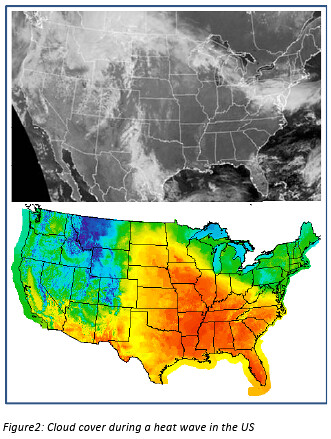
The fuel of heat waves is the sun; a heat wave cannot take place without a
massive local solar energy influx. The bottom part of Figure 2 illustrates
an example of a heat wave in the southeastern US in the spring of 2010
and the top part of the figure shows the cloud cover at the same time:
the qualitative agreement between solar availability and the regional
heat wave is striking. Quantitative evidence has also shown that the
mean availability of solar generation during the largest heat wave
driven rolling blackouts in the US was nearly 90% ideal (Letendre et
al. 2006). One of the most convincing examples, however, is the August
2003 Northeast blackout that lasted several days and cost nearly $8
billion region wide (Perez et al., 2004). The blackout was indirectly
caused by high demand, fueled by a regional heat wave3. As little as 500
MW of distributed PV region wide would have kept every single cascading
failure from feeding into one another and precipitating the outage. The
analysis of a similar subcontinental scale blackout in the Western US
a few years before that led to nearly identical conclusions (Perez et
al., 1997).

In essence, the peak load driver, the sun via heat waves and A/C demand,
is also the fuel powering solar electric technologies. Because of this
natural synergy, the solar technologies deliver hard wired peak shaving
capability for the locations/regions with the appropriate demand mix
peak loads driven by commercial/industrial A/C that is to say, much
of America. This capability remains significant up to 30% capacity
penetration (Perez et al., 2010), representing a deployment potential
of nearly 375 GW in the US.

The sun supplies solar power when you need it:
at the same time the sun drives heat waves.

The paper identifies the problem I’ve encountered talking to local
policy makers, especially ones associated with power companies:

Continue reading