Category Archives: Safety

Test program meeting at Plant Vogtle –NRC and Southern Company 9 October 2013


Safety at Plant Vogtle, this Wednesday, with call-in number, by
NRC and Georgia Power’s parent the Southern Company.
One hour from 1 to 2PM is the public part, then 3 more hours closed
“because the staff has determined that the
information is proprietary in nature.”
Why is nuclear testing affecting public safety proprietary?

It’s at Vogtle Training Center,
9034 River Road,
Waynesboro, GA 30830, which is

on the corner of the Plant Vogtle site
.
Do you get a tour of the construction if you appear in person?
Here’s what it looks like in
Georgia Power’s

Vogtle 3 and 4 Construction Photos
September 2013
, and on

google maps
:


View Larger Map

Here’s

the NRC meeting announcement
: Continue reading

From Seven Out in Waycross to CSX to Pecan Row Landfill in Lowndes County

CSX was involved directly in the

Seven Out contamination
,
storing hazardous water that leaked:
and then that water was apparently shipped to the Pecan Row Landfill in Lowndes County.
This is in addition to the

the CSX trichloroethylene groundwater contamination
dating back to 2000 and earlier.

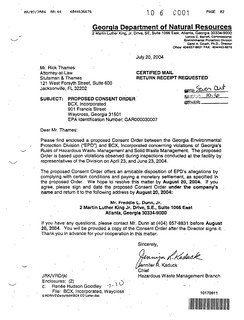
According to a letter from Georgia Department of Natural Resources
to BCX, Inc. of 20 July 2004,

EPA Identification Number: GAR000030007
,


  1. Twenty-seven tanks of wastewater were stored at the facility.
    Four portable tanks were storing the excess capacity of wastewater next door
    on property owned by CSX Transportation.
    These portable 10,000-gallon tanks were not labeled to indicate their contents;
  2. According to a BCX representative, one of the portable 10,000-gallon tanks
    had a gasket failure on the forward manhole which caused the release of an
    unknown substance onto the ground at the site owned by CSX
    Transportation;
  3. Dead vegetation was observed in a 15 feet by 30 feet area downgradient of the
    tank that caused the release;
  4. A yellowish-green substance was observed on the ground between the portable
    tank that had the release and another portable tank adjacent to it. There was
    also dead vegetation observed between these two tanks; and

And GA EPD tested the soil and found something the document doesn’t
specify, but whatever it was was enough that: Continue reading

CSX groundwater contamination in Waycross

The MCLG for
trichloroethylene
is zero.

Around the
Seven Out and CSX contamination areas in Waycross more than 100 people
have gotten sick or died,
most since 2000, with groundwater contamination
known since 1985, according to Joan Martin McNeal,
So the CSX problem long predates

the Seven Out problem
.
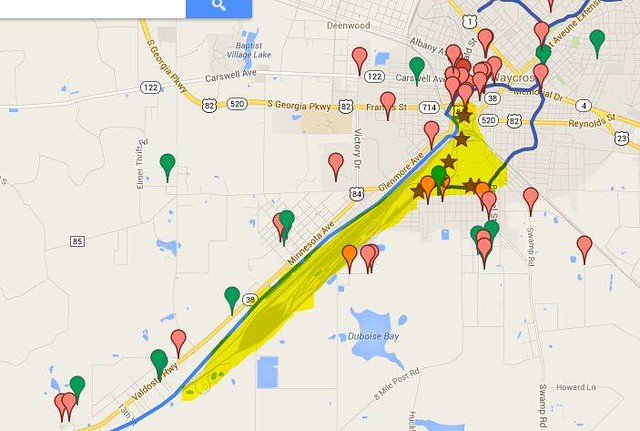
Here’s her map of the CSX property (in yellow) and contamination, sickness, and death:


brown stars: known contamination areas

red markers: confirmed deceased or confirmed cases of severe illness
mostly cancer (bone, lung, prostate, blood, colon, breast),
some severe neurological disorders, some heart failure,
with ages ranging from 4 to 85 years.

green markers: likely early stage cases of such problems

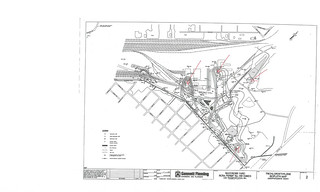
According to this February 2000


tricholoroethylene isopleth map
,

there was already extensive contamination in the CSX railyard by 2000,
extending across an internal drainage ditch that goes into the
Waycross Canal that become Tebeau Creek, running through downtown
Waycross into the Satilla River.

According to U.S. EPA,

Trichloroethylene 79-01-6 Hazard Summary-Created in April 1992; Revised in January 2000
, Continue reading

Jellyfish 1 Nuke 0


One of the world’s largest nuclear reactors was shut down Sunday by jellyfish.
Not a tsunami, not an earthquake, not a blizzard, not even hot water: jellyfish.
And it’s not the first time or the first reactor.
Tell me again how reliable centralized baseload power is?

AP reported yesterday,

Jellyfish force nuclear plant shutdown in Sweden:
Tonnes of jellyfish clog pipes that bring in cool water to the plant’s turbines


Operators of the Oskarshamn nuclear plant in southeastern Sweden had
to scramble reactor number three on Sunday after tonnes of jellyfish
clogged the pipes that bring in cool water to the plant’s turbines.

By Tuesday, the pipes had been cleaned of the jellyfish and
engineers were preparing to restart the reactor, which at 1,400
megawatts of output is the largest boiling-water reactor in the
world, said Anders Osterberg, a spokesman for OKG, the plant
operator.

All three Continue reading

Common Community Vision for Lowndes County


What do you the citizens want Lowndes County to be?
Here’s a chance to speak up, so when somebody asks where were you when
the decisions were being made, you don’t have to answer “lying on the couch
watching television.” (Thanks to Nolen Cox for that phrase.)

Corey Hull wrote on facebook today,

Help Spread the Word for the Future of Lowndes County
,

My office is conducting a survey and gathering public input on
Facebook (go to

www.facebook.com/valdostalowndesmpo
) about what they
want the Lowndes County Common Community Vision to be


(
www.bit.ly/LowndesCCV
). So far our participation has been low. I am
calling on all of you to encourage your friends, family and
colleagues to spread the word and let us know what you think about
the future of Lowndes County and its cities.

Over the next two months there will be future opportunities for
public input so stay tuned.

Thanks for your help.

On the Southern Georgia Regional Commission’s website,

Lowndes County Common Community Vision
, Continue reading

Spectra never bothered to check pipeline for corrosion –Spectra employee

So

“the pipe will be monitored 24/7”
?
That’s not Spectra’s actual practice, according to an employee
and according to a federal fine.

By fjgallagher for Natural Gas Watch 19 June 2013,

Spectra Energy Employee: We Never Bothered to Check Natural Gas Pipeline for Corrosion
,


A Spectra Energy employee acknowledged to federal inspectors that
the company never conducted key tests for corrosion on a natural gas
pipeline that was already operating at excess capacity, according to
documents recently obtained by NaturalGasWatch.org.

There’s much more in the article, including this:

Additionally, according to another May 2, 2013 letter sent under
separate cover from (PHMSA) to Holeman, Spectra failed to install
equipment to monitor whether or not the natural gas pipeline in
question was being affected by corrosion and could not produce any
records indicating that the pipeline had, in fact, ever been tested
for corrosion or that the pipeline was even structurally sound.

So that’s what
“the pipe will be monitored 24/7” means.
Good to know.

See Item 2 in that

Final Order

with fines
from the
Pipeline Hazardous Materials Safety Administration (PHMSA)
to Spectra Energy CEO Gregory L. Ebel: Continue reading

Spectra backtracks about pipeline incident

Spectra flip-flops on major safety events as well as on
whose houses are beautiful
and

whether Georgia cities can use gas

from its pipeline from

PCB-polluted Anniston, Alabama
to Orlando, Florida.
And Spectra was fined recently for violating both federal safety requirements
and its own operating procedures, including for pipeline monitoring.
Oh, and its natural gas comes from fracking.

Remember Spectra rep Andrea Grover,

quoted by the VDT
?
Well, she’s been quoted elsewhere, too.


Mike Benard wrote for
CSRHUB 5 April 2013,

Spectra Energy ‘Backtracks’ on Methane Incident:
First: “Nothing Released …. No Smoke …. No Incident”;
Then Admits: Methane & Hydrocarbons Released
,

Spectra Energy Corporation (SE, NYSE) was forced to backtrack on
dismissive assertions it made about a nighttime incident at its huge
natural gas compressor station in Bedford County, PA, after
persistent neighbors and a reporter kept pressing the company and
state regulators for facts.

A natural gas compressor station, like the ones

Spectra says will be along its proposed AL-GA-FL pipeline
,
maybe in Dougherty County, maybe in Lowndes County; we don’t know.

Now Spectra could say this was a different kind of compressor
because it’s a different kind of operation in Pennsylvania.
What kind?
Fracking: Continue reading

Waste from Superfund site in Waycross went to Lowndes County landfill

What was in that waste water
that went into landfill in an aquifer recharge zone,
with surface runoff into the Withlacoochee River?
The 44 shipments from the toxic waste site in Waycross to the Pecan Row
landfill in Lowndes County were
“Non RCRA Regulated Liquids”, but
“PCBs are not defined as hazardous wastes”
and
according to the U.S. Department of Energy,
“To be a hazardous waste, a material must first be a solid waste.”
So “Non RCRA Regulated Liquids” apparently says nothing about hazard
or toxicity.

Cover

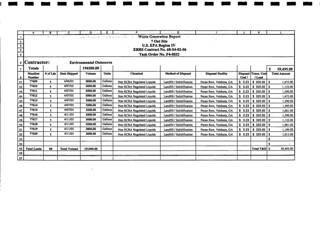
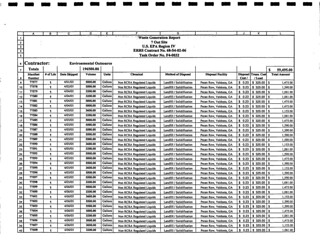
44 shipments went from the
“7 Out Site”
to “Pecan Row, Valdosta, GA” for $59,495.00 total
of your federal tax dollars paid to Veolia,
according to
pages 12 and 13
of

Final Report, Task Order # F-0032, Seven Out LLC Tank Site, Waycross, Georgia,
Contract No. 68S4-02-06

for
Emergency and Rapid Response Services, EPA Region 4,
Prepared By WRS Infrastructure & Environment, Inc.,
5555 Oakbrook Pkwy, Suite 175, Norcross, Georgia 30093,
May 2, 2006.

Is this where those
PCBs in the landfill came from?
EPA itself says,

Are polychlorinated biphenyls (PCBs) regulated under RCRA as a hazardous waste?

PCBs are not defined as hazardous wastes (Memo, Weddle to Verde; May 18, 1984 (RCRA Online #12235)).
However, it is possible that PCBs may be incidental contaminants in listed hazardous waste (e.g., solvent used to remove PCBs from transformers) or may be present in wastes that are characteristically hazardous. In these cases, wastes that otherwise meet a listing criteria or are characteristically hazardous are still subject to RCRA regulation regardless of PCB content.

Pecan Row, Valdosta, GA page 1

However, to avoid duplicative regulation with Toxic Substances Control Act (TSCA), certain PCB containing wastes that exhibit the toxicity characteristic are exempt from regulation under RCRA (Monthly Call Center Report Question; September 1996 (RCRA Online #14014)). Section 261.8 exempts from RCRA Subtitle C regulation PCB-containing dielectric fluid and the electric equipment which holds such fluid if they satisfy two criteria. First, these PCB wastes must be regulated under the TSCA standards of Part 761. Second, only the PCB wastes which exhibit the toxicity characteristic for an organic constituent (waste codes D018-43) may qualify for the exemption (§261.8).

Apparently any liquid wastes from a Superfund site would be
“Non RCRA Regulated Liquids”, according to
U.S. DoE EH-231-034/0593 (May 1993),

Exclusions and Exemptions from RCRA Hazardous Waste Regulation
,


Pecan Row, Valdosta, GA page 2

  • any solid or dissolved material introduced by a source
    into a federally owned treatment work (FOTW) if certain
    conditions, described in Sect. 108 of the FFCA of 1992,
    are met;

  • industrial wastewater discharges that are point source
    discharges regulated under section 402 of the Clean
    Water Act [§261.4(a)(2)]

If a Superfund site is not a federally owned treatment work,
what is?
And if the Seven Out site was not an industrial wastewater
point source, what is?
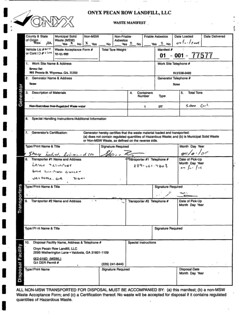

Sample waste manifest, Onyx Pecan Row, Valdosta, GA

The Onyx Waste Manifests on pages 75-120
say the materials were “Non-Hazardous Non-Regulated Waste water”.
(Onyx became Veolia Environmental Services in 2005,

according to Veolia
.)
As we’ve seen, “Non-Regulated” apparently means little.
We don’t know what was in that waste water
that went into a landfill
in a recharge zone for
the Floridan Aquifer
, the source of our drinking water,
and

with surface runoff into the Withlacoochee River
.

-jsq

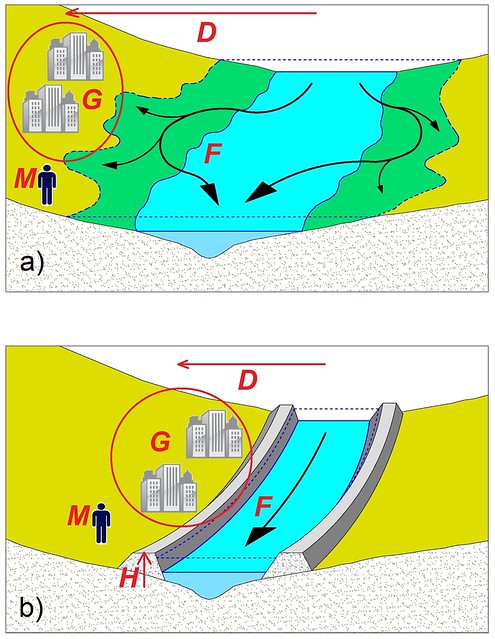
Flood control measures encourage settling too close and provoke severe flooding events


Flood control to keep water out of houses seems like a good idea,
but it turns out that it causes the flood control measures to keep
needing to be raised higher, and it encourages people to build
too close to flooding areas, plus
“rare and catastrophic events take place”.
Like the 2009 “700 year flood” and the

four or more floods this year

that have overflowed the Withlacoochee Wastewater Treatment Plant.
In our case, there are also the issues of widespread clearcutting
and buildings and streets with impervious cover.
The local runoff containment requirements in the various local government zoning codes may be
like levees: “flood control
structures might even increase flood risk as protection from
frequent flooding reduces perceptions of risk”.

This encourages human settlements in floodplain areas, which are then
vulnerable to high-consequence and low-probability events.

Much simpler just not to give out building permits for flood zones.
Or we could

put medical buildings right next to a creek
,
assuming

because it’s never flooded it never will
….


Socio-hydrology: conceptualising human-flood interactions
,
G. Di Baldassarre, A. Viglione, G. Carr, L. Kuil, J. L. Salinas, and G. Bloschl,

Hydrol. Earth Syst. Sci., 17, 3295–3303, 2013

doi:10.5194/hess-17-3295-2013,
© Author(s) 2013. CC Attribution 3.0 License.


Abstract.
Over history, humankind has tended to settle near streams Continue reading

Where is the Alapaha Water Treatment Plant?

Where is the Alapaha Water Treatment Plant
that has had

20 violations in the past 10 years
,
for which the Lowndes County Commission

had Lovell Engineering write a letter to GA EPD

and then

approved

a

no-bid contract to the same firm
?
April Huntley supplied this pictorial answer. -jsq

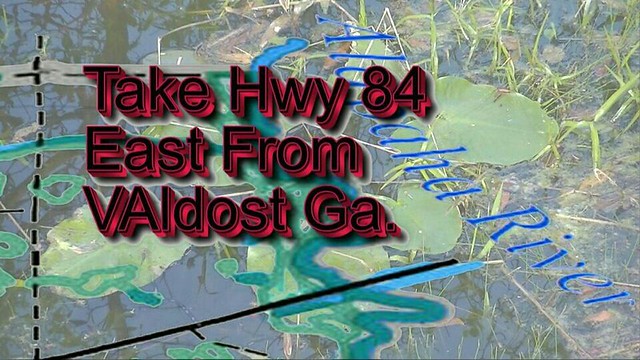
Take Highway 84 east from Valdosta GA:


Take Highway 84 east from Valdosta GA.

After passing through Naylor GA look for this neighborhood on your right (Lake Alapaha Hidden Cove):

Continue reading