Category Archives: Renewable Energy

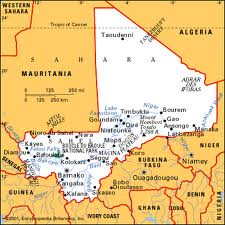
China, etc., mining uranium in Niger and Mali

A commenter on
Mali: a French War for Uranium
suggested that if "that zone" (presumably
the Sahara in Mali and Niger)
were such an El Dorado the U.S. and the Chinese would have long been interested.
Actually, it turns out numerous countries are involved, especially along
the
Uranium Highway in the Uranium Province in Niger.
Not the Americans so much, but definitely the Chinese.


According to

World Information Service on Energy Uranium Project
,
in

Mali
, it's the Canadians (Cascade Resources Ltd.,
Northern Canadian Uranium Inc., Rockgate Capital Corp.) and
the Australians (Oklo Uranium Ltd).:

The following companies are performing uranium prospection and/or exploration in Mali:


Cascade Resources Ltd. ,
Northern Canadian Uranium Inc. ,
Rockgate Capital Corp. ,
Oklo Uranium Ltd


Faléa uranium/silver project

> View deposit info
Opposition to uranium mining in Faléa: Association des ressortissants et
amis de la Commune de Faléa (ARACF)

Pre-Feasibility study on Faléa mine project started:


On Nov. 15, 2012, Rockgate Capital Corp. announced the commencement of a Pre-Feasibility study on its Faléa U-Ag-Cu project in south-west Mali. Rockgate has engaged the services of the DRA Group of Johannesburg, South Africa to complete the study.

Environmental and social baseline studies commissioned on Faléa mine project:
On April 26, 2010, Rockgate Capital Corp. announced that it has commissioned environmental and social baseline studies on the Faléa Project, Mali.

Apparently Niger has more recoverable Uranium than either the U.S. or Canada;
more than Kazakhstan; more than any country except Australia.


In Niger
, it's Russia, Korea, India, and here are a few notes
about Chinese involvement:


Areva ready to give Chinese access to Imouraren uranium mine:

French nuclear giant Areva is ready to open up to a Chinese partner the

Continue reading

Mali: a French War for Uranium


Google for Mali War in French, and it seems nobody in France is fooled:
France is going to war in Mali for oil, gas, gold and… uranium just across the border in Niger.
Have you ever heard of a war for sunshine or wind?
Let’s get on with solar and wind for energy independence,
including from wars for fuels.

Even Le Monde politely asks the question,

Pourquoi la France intervient-elle au Mali?

Why is France intervening in Mali?

matL : Quels sont les enjeux stratégiques majeurs que présente le Mali, non seulement pour la France mais pour la région entière ? matL : What are the important policy challenges posed by Mali, not only for France but for the entire region?
Les enjeux sur les ressources extractives, à savoir notamment le
pétrole et le gaz sur le site de Taoudenni qui se trouve à cheval sur
trois pays, Mauritanie, Mali et Algérie. Ensuite, l’uranium puisqu’il
en a été découvert dans l’Adar des Iforas. Mais ces trois ressources
extractives ne sont pas encore en état d’exploitation. En revanche,
le Mali est le troisième producteur d’or sur le continent africain. Ce
sont là les enjeux géostragégiques.
Issues of extractive resources, notably including oil and gas on the
site Taoudenni which straddles three countries, Mauritania, Mali
and Algeria. Then, since uranium has been discovered in the Adrar
des Iforas. But these three extractive resources are not yet ready to
use. However, Mali is the third largest gold producer in Africa. These
are the geostratigic issues.
S’il y avait implosion du Mali par la prise du pouvoir central par les
groupes armés djihadistes, il y aurait nécessairement des conséquences
négatives sur l’ensemble des pays de la sous-région.
If there was implosion of Mali by making the central government by armed
groups jihadists, there would have negative consequences for all countries
in the sub-region.
Visiteur : Bonjour, le gisement d’uranium exploité par Areva se trouve
au Niger à quelques centaines de kilomètres à l’est de la zone de
combats. Pensez-vous qu’il existe un lien entre l’intervention et la
protection éventuelle de cette source d’énergie vitale pour la France ?
Caller: Hello, the uranium deposit is operated by Areva in Niger a few
hundred kilometers east of the combat zone. Do you think there is a link
between the intervention and the possible protection of this vital energy
source for France?
En tout cas, l’hypothèse n’est pas du tout à écarter car il y aura
des conséquences sur l’ensemble de la sous-région.
In any case, the hypothesis is not at all ruled out
because there will be an impact on the entire sub-region.

Stéphane Lhomme was more blunt in Le nouvel Observateur yesterday,

Guerre au Mali : sécuriser notre approvisionnement en uranium
,
War in Mali: secure our provisions of uranium,

Continue reading

Failed concrete: the bane of nuclear reactors

Let’s not forget the failed concrete on which

Plant Vogtle’s unprotected stranded reactor vessel
is supposed to sit.

A week before

the reactor vessel train wreck,
news stories
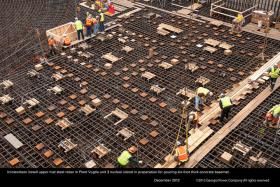
said concrete pouring was delayed due to “noncompliant rebar”.
Thomas Clements elaborated for the Aiken Leader 14 January 2013,

Vogtle AP1000 Nuclear Reactor Vessel Discovered Unprotected, Stranded in Savannah Port since December 15 Shipment Failure
,


Due to chronic delays in the pouring of “nuclear
concrete” for the basemat of the AP1000 units at Vogtle and VC
Summer, it remains unknown when or if any reactor vessels can
actually be placed into the excavated holes at the sites. A January
10 meeting of the NRC confirmed that another basemat-related
“license amendment request” (LAR) was soon to be filed
by SCE&G for its AP1000 project and that the target date for
granting of the LAR was March 18. It appears that the Vogtle project
has fallen behind the V.C. Summer project and no strategy for the
filing of a similar and necessary LAR by Southern Company is known.


Concrete, the long-time bane of

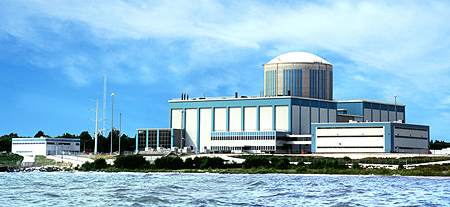
Seabrook Station

and also what’s keeping

Crystal River
shut down because nobody wants to pay the
billions of dollars it would take to fix it.


What say we call the whole thing off, like
Dominion Power did with its existing

Kewaunee nuke
,
and
TEPCO and NRG did

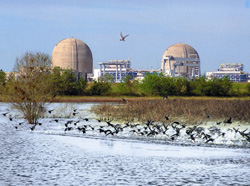
with their plans for new South Texas nukes
.


Maybe it’s a sign that meanwhile

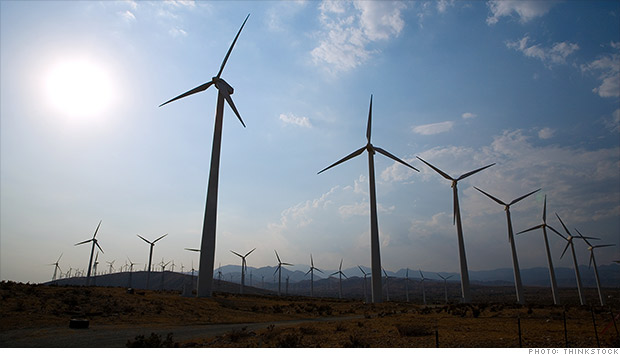
Google has invested a billion dollars in wind and solar
and gotten
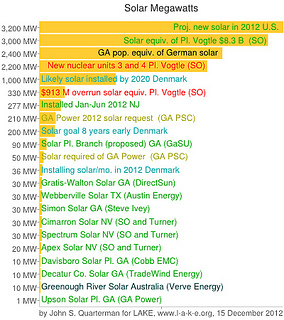
2 gigawatts of power, almost as much as the 2.2 GW the two new Vogtle nukes
were supposed to produce, except Google’s solar and wind projects
are online on time, and for less than just the cost overruns at Vogtle.

The Georgia legislature is in session.
You can contact

your legislator or the PSC
today
about

toppling Southern Company’s three-legged nuclear regulatory-capture stool

and

fixing that 1973 Territoriality Law

so we can get on with solar and wind in Georgia,
for jobs and energy independence, and oh by the way clean air and
plenty of clean

water
.

-jsq

Overwhelming majority of Americans want clean water and renewable energy –poll


A
new poll
says 94% want new energy balanced with clean air and water, 86% want to shift from coal and nuclear to wind and water power, and 79% are concerned about shale gas fracking affecting water quality.

A few excerpts from the PR

Water is High Priority for Bipartisan Majority of Americans
,
10 January 2013,

  • 92 percent of Americans think “U.S. energy planning and
    decision making” should be based on “a comprehensive
    understanding of what our national water resources are”
    — a national water roadmap that Congress asked for, but which
    was never produced. The national water roadmap attracts the support
    of 92 percent of Republicans, 89 percent of Independents, and 94
    percent of Democrats.
  • 86 percent of Americans want leadership on shifting from coal and
    nuclear energy to wind and solar. Support for this approach exists
    across party lines, including 72 percent of Republicans, 83 percent
    of Independents, and 97 percent of Democrats.
  • 86 percent of Americans “support more studies of the health
    and environmental consequences of the chemicals” used in
    fracking. Supporters of this approach include 81 percent of
    Republicans, 84 percent of Independents, and 89 percent of
    Democrats.
  • Three quarters of Americans have heard of fracking, with 51 percent
    saying they are very or somewhat familiar with it. 79 percent of
    Americans are concerned about fracking “as it relates to water
    quality.”

What is to be done?

Continue reading

The water is not lost. —Forrest H. Williams


Valdosta resident Forrest H. Williams replied in the VDT today to

my op-ed of 6 January.

His information seems a bit out of date.
For example, he cites

Progress Energy’s Crystal River nuke

as a good example, when it’s been

down since 2009

and is still

producing zero percent power
,
both according to the NRC.
Readers of this blog know that

the blog version of my op-ed

already links to sources for everything I said.
I may respond more later, but no doubt there are other people
who want to get involved in this discussion.
And I do thank Forrest H. Williams for airing the sort of disinformation
that is out there, so others can dispel it.

Oh, and saying water that is evaporated is not lost is like saying trees that are burned are not lost. Evaporated water is not available for agricultural or wildlife or drinking water use, and thus is indeed lost.

Continue reading

Google invests in wind and solar

While Southern Company and Georgia Power pour money
down that nuclear pit by the Savannah River and Progress Energy can’t
afford to fix its Crystal River nuke, Google’s
wind and solar projects are already online on time,
all for less than the cost overruns so far at Vogtle
or the fix-it price at Crystal River.

David Goldman wrote for CNN Money 10 January 2013,

Google invests $200 million in Texas wind farm
,


“We look for projects like Spinning Spur because, in addition to
creating more renewable energy and strengthening the local economy,
they also make for smart investments,” Kojo Ako-Asare, Google’s
senior manager of corporate finance, said in a

blog post
.

Ako-Asare added that wind farms offer “attractive returns relative
to the risks.”

Which is the opposite of nuclear’s

huge risks
relative to the

apparently negative returns.

So how much wind and solar energy does Google generate?

Continue reading

Crystal River nuke still can’t get insurance payoff


Nobody wants to pay to fix

Progress Energy's Crystal River nuke
:
not PGN, not its new owner Duke Energy, not
Nuclear Electric Insurance Ltd. (NEIL).
So maybe this nuke, only

160 miles from here
,
will be staying shut permanently?
What say we do the same for the new nukes at Plant Vogtle,
only

200 miles from here
,
before they even open?

John Downey
wrote for the Charlotte Business Journal,

Crystal River nuke plant stymies Duke Energy

Utility facing penalties, high costs for repairs,

After two mediation sessions, Progress Energy Florida and its
insurer haven't agreed how much of the potential repair costs for
the utility's crippled Crystal River nuclear unit are covered.

It appears all but certain that Progress — a Duke Energy Corp.
subsidiary — will have to pay millions of dollars as a penalty
for failing to make a timely decision on whether to repair the
plant.

Repair expenses have been calculated at between $1.5 billion and
$3.4 billion, plus what it costs to buy power to replace what
Crystal River would have produced while it is being repaired.

What kept shut Crystal River down from 2009 on was

a concrete containment separation.

Maybe those

errors in pouring concrete at Plant Vogtle

are

Continue reading

Fire in Texas nuclear reactor

Do

fires at nuclear plants like Plant Hatch
actually still occur?
Yep, at the South Texas Nuclear Project, just this week.
And that STP Unit 2 is

a different design and newer (1989)
than Hatch 1 or 2.
Austin has been trying to sell its share in that lemon since 1981.
Even TEPCO cancelled plans for new reactors there in 2011,
due to cost overruns and the Fukushima disaster.
What say we cancel our new nuclear lemons at Plant Vogtle?

According to the

NRC event report for 9 January 2013:

UNUSUAL EVENT DECLARED DUE TO MAIN TRANSFORMER FIRE


“Fire in Unit 2 main transformer 2A. Reactor trip. Two train of
offsite power lost to Unit 2.”

“An Unusual Event was declared based on EAL HU-2—Fire or
explosion in protected area or switchyard which affects normal plant
operations.”

At 1655 CST, South Texas Unit 2 declared an Unusual Event due to a
main transformer fire. Unit 2 tripped from 100% power and is
currently at 0% power in Mode 3. The transformer fire is out.


In
addition to the loss of the main transformer, several safety related
electrical busses and non-safety electrical busses lost offsite
power. The appropriate emergency diesel generators started and
powered the safety related busses. Unit 2 is currently stable and on
natural circulation due to the loss of power to the reactor coolant
pumps. Auxiliary feedwater is functioning as required and decay heat
is being removed through the steam generator atmospheric relief
valves. Unit 1 was unaffected by the event.

The licensee notified the NRC Resident Inspector.

Notified DHS SWO, FEMA, DHS NICC and NuclearSSA via email.

According to the NRC,

they still don’t know

Continue reading

Help Sierra Club send a message to Georgia Power CEO Bowers


Georgia Sierra Club’s Beyond Coal campaign probably contributed to

Georgia Power’s recent decision
to shut down some coal plants.
Now Sierra Club offers a petition to ask Georgia Power CEO Paul Bowers
to go farther, and replace those coal plants with solar offshore wind power
for jobs and health for Georgia.


Dirty Coal is Out, Help Usher Clean Energy In!

Georgia Power recently announced their plans to retire three of
their oldest and dirtiest coal fired power plants.


Now, we must send
a clear message to Georgia Power’s leadership that we want to keep
Georgia Jobs by investing in homegrown clean energy and energy
efficiency to power our homes and businesses.

Send a message to Georgia Power CEO Paul Bowers telling him to
replace dirty coal with investments in homegrown clean energy and
energy efficiency that can produce thousands of lasting Georgia
jobs.

It’s a petition; details here.

Seth Gunning
explained why

in Sierra Club PR:

Continue reading

Nukes economically hard to justify —GE CEO Immelt

The CEO of General Electric,
the company that designed the reactors

at Fukushima and Hatch 1 and 2,

said nukes are economically hard to justify.
And that was back in July, before
the first new nukes permitted in 30 years,
at Plant Vogtle on the Savannah River,

slipped 15 months.

What’s winning? Shale gas, temporarily, but that’s just a bump
in the road on the way to wind and solar power.

Pilita Clark wrote for Financial Times 30 July 2012,

Nuclear ‘hard to justify’, says GE chief
,


Nuclear power is so expensive compared with other forms of energy
that it has become “really hard” to justify, according
to the chief executive of General Electric, one of the world’s
largest suppliers of atomic equipment.

“It’s really a gas and wind world today,” said Jeff
Immelt, referring to two sources of electricity he said most
countries are shifting towards as natural gas becomes
“permanently cheap”.

“When I talk to the guys who run the oil companies they say
look, they’re finding more gas all the time. It’s just hard to
justify nuclear, really hard. Gas is so cheap and at some point,
really, economics rule,” Mr Immelt told the Financial Times in
an interview in London at the weekend. “So I think some
combination of gas, and either wind or solar … that’s where we see
most countries around the world going.”


GE CEO Immelt may also want to talk to GE’s own research director

Continue reading