Author Archives: admin

Airport, alcohol, taxes, road, jail @ LCC 2013-01-22

It's curious how the Lowndes County Commission can hold a public hearing


for a single beer, wine, and liquor license, but not for

doing away with the solid waste collection sites

that affect

5,000 county residents.

And what's this "Special Assessment Rate for 2013"?
At today's early morning work session maybe they'll say,
or perhaps at tonight's regular session, both on the same day
because of yesterday's holiday.

Here's

the agenda.

-jsq

LOWNDES COUNTY BOARD OF COMMISSIONERS

PROPOSED AGENDA

WORK SESSION, TUESDAY, JANUARY 22, 2013, 8:30 a.m.

REGULAR SESSION, TUESDAY, JANUARY 22, 2013, 5:30 p.m.

327 N. Ashley Street – 2nd Floor

  1. Call to Order
  2. Invocation
  3. Pledge of Allegiance to the Flag
  4. Minutes for Approval

    1. Work Session — January 7, 2013
    2. Regular Session — January 8, 2013
  5. Appointment — Valdosta/Lowndes County Airport Authority
  6. Public Hearing — Beer Wine & Liquor License — Rascal's — 4875 Hwy 41
  7. For Consideration

    1. Special Assessment Rate for 2013
    2. Abandonment of a portion of Old State Road (CR 16)
    3. Replacement of the Jail Fire Alarm System in Buildings 001 & 002
  8. Reports-County Manager
  9. Citizens Wishing to be Heard Please State Name And Address

Rural AIDS: poverty the cause, solar power part of the solution


Director Lisa Biagiotti
spent two years travelling around the South
interviewing people about AIDS to make a film,
deepsouth.
She found rural AIDS is a bigger and faster-growing problem
than AIDS in center cities,
yet most health and prevention funding goes to urban areas.
The root cause seemed clear to her: poverty.
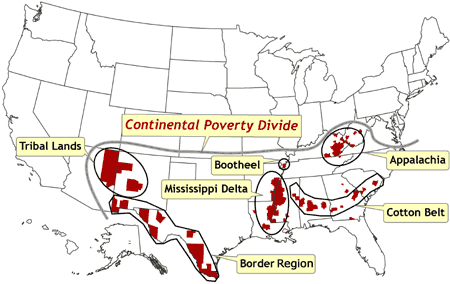
Here’s some deeper dirt (literally) on rural poverty in the U.S.,
and one thing we know can help with that: distributed solar power,
for jobs, for reduced electrical bills, and for energy independence.
What politician wouldn’t want jobs for their constituents?

The director said the screening at

VSU at the end of November
drew more people than the
day before in Little Rock.
There were clearly more than 150 in the audience in Valdosta.
It’s a topic very relevant to here, as

Dean Poling wrote in the VDT 26 November 2012,

Organizers note that Georgia is ranked sixth highest nationally for
its cumulative number of AIDS cases reported through December 2009.
More than 40,000 known HIV/AIDS cases were reported in Georgia as of
2010.

The South Health District’s 10 counties, which include Lowndes and


surrounding counties, report 950 confirmed cases of HIV/AIDS, while
many more are likely infected and risk becoming sick because they
are not being treated. More specifically, there are about 460
reported cases in Lowndes County.

In reporting these numbers, HIV is the virus (HIV disease) and AIDS
is the medical diagnosis made by a doctor of the symptoms, according
to South Health District.

It’s a great movie and I highly recommend it.
Director Biagiotti spent a substantial amount of her own money and two years to make
this film, yet there are aspects she could only note in passing,
such as incarceration.
She can’t be expected to have researched every aspect;
maybe somebody else can step up and help follow more threads.

The movie starts with some maps about poverty and AIDS in the South.
It did not, however, look outside the South for poverty.
Here are better
poverty maps, from the CDC:


Continue reading

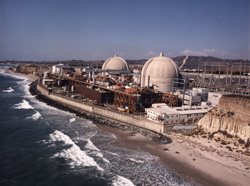
Shutdown at San Onofre: permanent this time?

California only has a couple of nuclear reactor locations (unlike the
32 reactors within 500 miles of here),
and one is in even worse shape than the other: San Onofre,
almost as bad as
Crystal River.
I’m sure Southern Company would never cut corners or have
design or

construction problems
at Plant Vogtle, right?

Harvey Wasserman wrote for AlterNet 7 January 2013,

Showdown at San Onofre: Why the Nuclear Industry May Be Dealt a Big Blow
,

Perched on an ocean cliff between Los Angeles and San Diego, the


reactors’ owners cut unconscionable corners in replacing their
multi-million-dollar steam generators. According to Russell Hoffman,
one of California’s leading experts on San Onofre, inferior metals
and major design failures turned what was meant to be an upgrade
into an utter fiasco.

Installed by Mitsubishi, the generators simply did not work. When
they were shut nearly a year ago, tubes were leaking, banging
together and overall rendering further operations impossible.

Southern California Edison and San Diego Gas & Electric have
unofficially thrown in the towel on Unit 3. But they’re lobbying
hard to get at least Unit 2 back up and running. Their technical
problems are so serious that they’ve asked the Nuclear Regulatory
Commission to let them run Unit 2 at 70% capacity. In essence, they
want to “see what happens” without daring to take the
reactor to full power.

The NRC has expressed serious doubts. On December 26 it demanded
answers to more than 30 questions about the plant’s technical realities.
There have been assertions that unless San Onofre can be shown as operable
at full power, its license should be negated.

It’s good the NRC got around to doing something, after

Continue reading

2 gigawatts of Wind Power off Fukushima, plus solar


Southern Company didn’t

do the renewable energy study for Georgia

when Mark Z. Jacobson’s study showed

All U.S. east coast electricity could come from offshore wind 3 seasons out of 4
.
Now somebody else has, including how to build offshore wind turbines
to withstand hurricanes.

Rob Gilhooly wrote for New Scientist 16 January 2013,

Japan to build world’s largest offshore wind farm
,

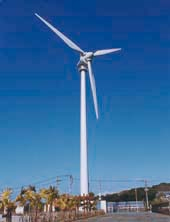
The wind farm, which will generate 1 gigawatt of power once
completed, is part of a national plan to increase renewable energy


resources following the post-tsunami shutdown of the nation’s 54
nuclear reactors. Only two have since come back online.

The project is part of Fukushima’s plan to become completely energy
self-sufficient by 2040, using renewable sources alone. The
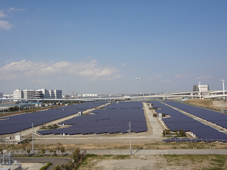
prefecture is also set to build the country’s biggest

solar park.


The wind farm will surpass the 504 megawatts generated by the 140
turbines at the Greater Gabbard farm off the coast of Suffolk, UK
— currently the world’s largest farm. This accolade will soon
pass to the London Array in the Thames Estuary, where 175 turbines
will produce 630 megawatts of power when it comes online later this
year. The Fukushima farm will beat this, too.

How will these wind turbines work?

Continue reading

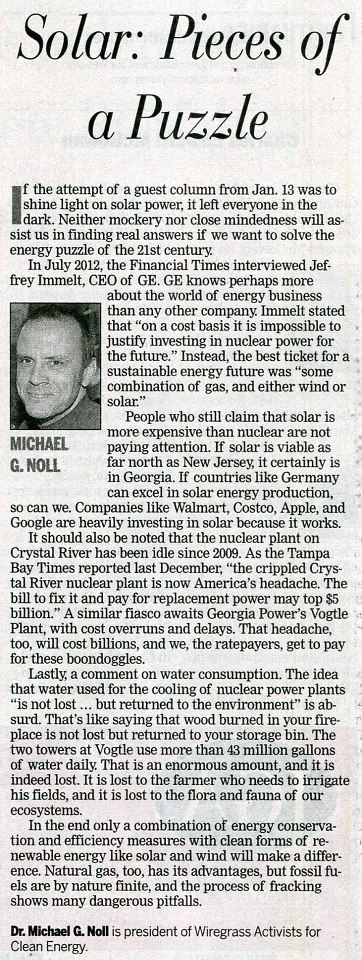
Solar: Pieces of a Puzzle —Dr. Michael G. Noll

Op-ed in the VDT today, responding to

a response

to

my op-ed.
-jsq


If the attempt of

a guest column from Jan 13
was to shine light on solar power,
it left everyone in the dark.
Neither mockery nor close mindedness will assist us in finding real answers
if we want to solve

the energy puzzle of the 21st century.


In July 2012, the Financial Times interviewed Jeffrey Immelt, CEO of GE.

GE knows perhaps more about the world of energy business than any other company.
Immelt stated that

“on a cost basis it is impossible to justfy investing in nuclar power for the future.”

People who sitll claim that solar is more expensive
than nuclear are not paying attention.
If solar is viable as far north as

New Jersey
, it certainly is in Georgia.
If countries like

Germany
can excel in solar energy production,
so can we.
Companies like Walmart, Costco, Apple, and

Google

are havily investing in solar because it works.

It should also be noted that the nuclear plant on

Crystal River has been idle since 2009.

As

the Tampa Bay Times reported last December,

Continue reading

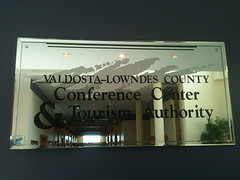
Valdosta Lowndes County Conference Center and Tourism Authority


VLCCCTA Logo

Stopped by the main desk of the Conference Center Wednesday.
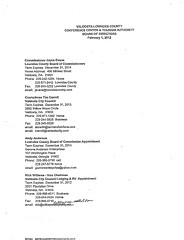
I asked for a list of the current members of the board
and was provided a photocopy of a February 2012 list.
See also
LCC 2012-11-13.
-gretchen

Board of Directors

February 1, 2012


Commissioner Joyce Evans

Lowndes County Board of Commissioners


Term Expires: December 31, 2014


VLCCCTA Board Page 1


Councilman Tim Carroll

Valdosta City Council


Term Expires: December 31, 2015


Andy Anderson

Lowndes County Board of Commissioner Appointment


Term Expires: December 31, 2014


Rick Williams – Vice Chairman

Valdosta City Council Lodging & RV Appointment


Term Expires: December 31, 2012

Continue reading

China, etc., mining uranium in Niger and Mali

A commenter on
Mali: a French War for Uranium
suggested that if "that zone" (presumably
the Sahara in Mali and Niger)
were such an El Dorado the U.S. and the Chinese would have long been interested.
Actually, it turns out numerous countries are involved, especially along
the
Uranium Highway in the Uranium Province in Niger.
Not the Americans so much, but definitely the Chinese.


According to

World Information Service on Energy Uranium Project
,
in

Mali
, it's the Canadians (Cascade Resources Ltd.,
Northern Canadian Uranium Inc., Rockgate Capital Corp.) and
the Australians (Oklo Uranium Ltd).:

The following companies are performing uranium prospection and/or exploration in Mali:


Cascade Resources Ltd. ,
Northern Canadian Uranium Inc. ,
Rockgate Capital Corp. ,
Oklo Uranium Ltd


Faléa uranium/silver project

> View deposit info
Opposition to uranium mining in Faléa: Association des ressortissants et
amis de la Commune de Faléa (ARACF)

Pre-Feasibility study on Faléa mine project started:


On Nov. 15, 2012, Rockgate Capital Corp. announced the commencement of a Pre-Feasibility study on its Faléa U-Ag-Cu project in south-west Mali. Rockgate has engaged the services of the DRA Group of Johannesburg, South Africa to complete the study.

Environmental and social baseline studies commissioned on Faléa mine project:
On April 26, 2010, Rockgate Capital Corp. announced that it has commissioned environmental and social baseline studies on the Faléa Project, Mali.

Apparently Niger has more recoverable Uranium than either the U.S. or Canada;
more than Kazakhstan; more than any country except Australia.


In Niger
, it's Russia, Korea, India, and here are a few notes
about Chinese involvement:


Areva ready to give Chinese access to Imouraren uranium mine:

French nuclear giant Areva is ready to open up to a Chinese partner the

Continue reading

How to get fast Internet service —Susan Crawford

Susan Crawford has a plan

for getting us fast Internet access
for jobs, community, education,
and health care.


Susan Crawford wrote for Wired 2 October 2012,

We Can’t All Be in Google’s Kansas: A Plan for Winning the Bandwidth
Race
,
about how the incumbent telephone and cable companies that provide
our Internet access aren’t going to help:

They have no incentive to do so. Because they never enter one
another’s territories, they don’t face the competition that might
spur such expansion.

Instead, incumbent internet access providers such as Comcast and
Time Warner (for wired access) and AT&T and Verizon (for
complementary wireless access) are in “harvesting” mode.
They’re raising average revenue per user through special pricing for
planned “specialized services” and usage-based billing,
which allows the incumbents to constrain demand. The ecosystem these
companies have built is never under stress, because consumers do
their best to avoid heavy charges for using more data than they’re
supposed to. Where users have no expectation of abundance, there’s
no need to build fiber on the wired side of the business or build
small cells fed by fiber on the wireless side.

If the current internet access providers that dominate the American
telecommunications landscape could get away with it, they’d sell
nothing but specialized services and turn internet access into a
dirt road.

So what is her plan?

Continue reading

Captive cable audience —Susan Crawford


Affordable high-speed Internet access would bring us
jobs, community, “online commerce and services, the ability to reach world
markets, to invent and innovate, to learn and communicate” and
“a wealth of economic activity and information”
writes Susan Crawford, a very savvy and experienced communications law professor
who has been recommended by many as a potential chair of the FCC,
who also explains why we aren’t currently getting it.

The Diane Rehm Show 10 January 2013,

Susan Crawford: “Captive Audience”
,
and that’s the title of her book,

Captive Audience: The Telecom Industry and Monopoly Power in the New Gilded Age
,
excerpted here:

The sea change in policy that led to the current situation has
been coordinated over the past twenty years by legions of lobbyists,
hired-guneconomists, and credulous regulators. The cable companies
have no incentive to upgrade their core network hardware to ensure
that advanced fiberconnections are available to every home
throughout the country. Communications companies describe globally
competitive high-speed access as aluxury, just as the private
electricity companies did a century ago.

Yet communications services are now as important as electricity.

Today if you asked American mayors what technology they most want
for their city, the majority would say, “affordable high-speed
Internet access.”
And they want these networks not simply for
the jobs created to construct them but because the Internet brings
the world to their community.

High-speed Internet access gives towns
and cities online commerce and services, the ability to reach world
markets, to invent and innovate, to learn and communicate. It brings
a wealth of economic activity and information.

But despite these
manifold benefits, Americans continue to treat such services as the
exclusive domain of private monopolies and as luxuries
obtainable only by the wealthy.

Not coincidentally, the United States has fallen from the forefront

Continue reading

Microloans for small farmers —USDA


USDA PR 0010.13
:

USDA Finalizes New Microloan Program

Microloans up to $35,000 aim to assist small farmers, veterans, and
disadvantaged producers

WASHINGTON, Jan. 15, 2013 — Agriculture Secretary Tom Vilsack
today announced a new microloan program from the U.S. Department of
Agriculture (USDA) designed to help small and family operations,
beginning and socially disadvantaged farmers secure loans under
$35,000. The new microloan program is aimed at bolstering the
progress of producers through their start-up years by providing
needed resources and helping to increase equity so that farmers may
eventually graduate to commercial credit and expand their
operations. The microloan program will also provide a less
burdensome, more simplified application process in comparison to
traditional farm loans.


“I have met several small and beginning farmers, returning
veterans and disadvantaged producers interested in careers in
farming who too often must rely on credit cards or personal loans
with high interest rates to finance their start-up
operations,” said Vilsack.“By further expanding access
to credit to those just starting to put down roots in farming, USDA
continues to help grow a new generation of farmers, while ensuring
the strength of an American agriculture sector that drives our
economy, creates jobs, and provides the most secure and affordable
food supply in the world.”

The new microloans, said Vilsack, represent how USDA continues to
make year-over-year gains in expanding credit opportunities for
minority, socially-disadvantaged and young and beginning farmers and
ranchers across the United States. The final rule establishing the
microloan program will be published in the Jan. 17 issue of the
Federal Register.

Administered through USDA’s Farm Service Agency (FSA) Operating Loan
Program,

Continue reading