Category Archives: Forestry

Glimmers of open discussion about Moody AFB zoning by the County Commission @ LCC 2012-12-10


Lowndes County Commissioners had a small amount of open discussion about
the proposed changes to the zoning code related to Moody Air Force Base
at

their Work Session this morning.

However, most of the discussion was not about the changes currently proposed,
which the County Planner once again explicitly linked to a rezoning case
on the same agenda.
At least they discussed tabling the zoning code changes
until there could be more discussion.
They did not, however, say they would make drafts available to the public
or invite the public to discuss those drafts.

County Planner Jason Davenport introduced agenda item
7.d. TXT-2012-02 MAZ II Residential Density:

This text amendment is part of the response to
some of the questions that were raised with the additional rezoning.
At the end of the day what this text amendment is going to do
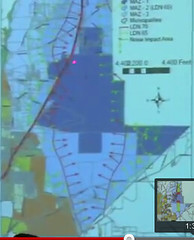
is to take that very outer blue color, the lightest color,
which is the MAZ-3, and recommend change the zoning to 1 acre.
Currently it’s 2 and a half acres.

He mentioned they missed the 30 day requirement to inform Moody AFB
by about a week, but Moody responded anyway.
Hm, that’s not what he said to the Planning Commission;
there he said

they had allowed 31 days.

Commissioner Richard Raines said he’d prefer to table this amendment
until next year, because:

I think there are other issues that we’ve discussed related to MAZ.
If you have a mobile home and it becomes unlivable,
under the restrictions you can’t replace it….

Chairman Ashley Paulk responded that he didn’t have a problem with that, and:

Continue reading

Chamber opposes zoning code change for developer near Moody

Apparently it’s the Chamber and Moody and the Planning Commission

Red arrows on MAZ

and the TRC all against Ashley Paulk
on the Moody rezoning-and-zoning-code case, with the VDT sidling towards Paulk.
The VDT claimed Lowndes County Chairman stated something that’s
not true according to the agenda and LAKE’s videos of the
recent Planning Commission meeting.
And the VDT buried opposition by the Chamber of Commerce’s relevant committee
at the end of its article.

Jason Schaefer wrote for the VDT today,

County disagrees with proposed zoning amendment,
Paulk: Military intervention could prevent development near base
,
and the caption of the picture on the right says:

The Greater Lowndes Planning Commission proposed a text amendment to
the Unified Land Development Code in November that would reduce lot
density restrictions from 2.5 acres to one acre, allowing landowners
within the Moody Activity Zoning (MAZ) district “more
flexibility” to parcel off their land holdings, Paulk said.

The Planning Commission’s own agenda says TEX-2012-02 was proposed by
“Lowndes County Board of Commissioners”.
And the Planning Commission

voted to recommend against approving that
text amendment to the ULDC.

According to Planning Commissioner John Page,
that vote was following the recommendation of the Technical Review Committee (TRC),
which consists of staff of Lowndes County and the City of Valdosta.
Page is also an incoming Lowndes County Commissioner, to take office
next month.
So either Paulk said something he as the Chairman of the Lowndes
County Commission should know not to be true, or the VDT wrote erroneously.

The VDT also seemed to indicate that Paulk was speaking for

Continue reading

Wiregrass Alley for local agricultural knowledge-based jobs

What jobs and businesses can we

build out of local agriculture and VSU and Wiregrass Tech and GMC
and SGMC and Moody
? Build like the way Silicon Valley grew out of
Stanford and HP and Intel, but different, drawing on our local strengths?
Various things, no doubt, but the companies
the VDT listed in its

agricultural heartland
article
suggest maybe Wiregrass Alley:

When you factor in businesses such as South Georgia Pecan, PCA, the
Langdale Company,

Shiloh Farms, Dupont, Arizona Chemical, ERCO
Worldwide, Coggins Farms, Carter and Sons, and the additional
farmers represented by Farmer Browns, the impact of agriculture in
Lowndes County alone is one of the largest private, non-governmental
industries. Across the region, ag and forestry sustain the economies
of a number of counties.

Many of those are obviously agricultural, but Dupont, Arizona Chemical,
and ERCO?
OK, I’ll buy

Arizona Chemical

which turns pine products into adhesives and smells.
But DuPont?
Sure, they make chemical fertilizer,
but that’s like listing Chevron as a home heating company.

And what’s this

ERCO Worldwide
, which provides chemicals like caustic soda for PCA?
ERCO Worldwide’s other name hereabouts is
Sterling Pulp Chemicals.
That’s right, the VDT listed Sterling Chemicals as an agricultural company!
Well, that’s hard to deny, because,
according to

FundingUniverse
,
Sterling Chemicals
“was founded in 1986 to acquire and operate Monsanto Co.’s petrochemical plant in Texas City, Texas.”
Nobody can say Monsanto isn’t agricultural, when 90+% of corn, soybeans,
cotton, and peanuts grown hereabouts are grown from Monsanto seeds.
Which is why we have so many chemical fertilizers and poisonous
pesticides being used around here.
Is that really the direction we want to go?

What if we turn the VDT’s list around,

and start with the “additional farmers”
represented by Farmer Brown and Carters?
You know, the ones who sell at Valdosta Farm Days?
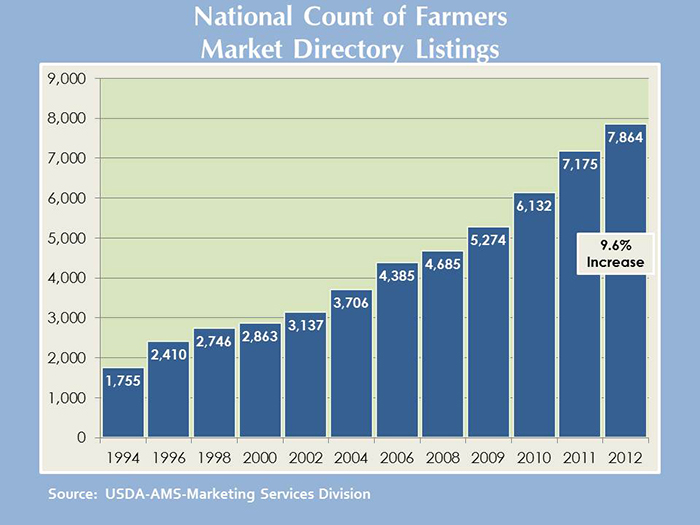
Farmers markets have

increased 6% on average for the past decade.

Why is that?
Partly because of
the conversations and community
at a farmers market.
Anybody who has gone to Valdosta Farm Days or Hahira Farm Days can attest to that.
And it’s not just anecdotal:
there is

research to demonstrate that in farmers markets compared to supermarkets:

On average, the sociologists found, people were having ten times as
many conversations per visit.

Another reason farmers markets are spreading so fast is
people are paying attention to the increasing number of scientific
reports that “conventional” agriculture is poisoning us,
such as

the recent one that demonstrates that even the inert ingredients
in Roundup are poisonous

or the one that links the active ingredient, glyphosate,

to Parkinson’s disease.

Maybe they’ve heard about Monsanto

being sued for “devastating birth defects” and chemical poisoning.

And most farmers market customers seem to like fresh local foods that
taste good and that support local farmers.


So what if we started with those “additional farmers”
that sell at Farmer Brown and Carters and Valdosta Farm Days?
They are the ones already starting in a different direction.
A direction that is actually

more profitable
,
in addition to healthier (and less flooding and more wildlife).
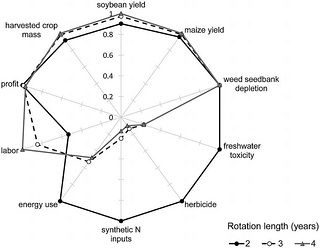
Crop rotation takes more thought and more labor (more jobs!)
than just spraying,
but it also takes a lot less expense on patented seeds and chemicals,
for a net financial profit.

Which could help explain why

the USDA says
:

Consumer demand for organically produced goods has shown
double-digit growth for well over a decade, providing market
incentives for U.S. farmers across a broad range of products.

The USDA is talking certified organic, which has so many hoops
to jump through that most local producers are not certified, yet many

also aren’t using a lot of chemical inputs and are using
crop rotation and other organic techniques.
Techniques which many old-timers around here will recognize,
because they used to use them a half century ago,
but with new wrinkles such as computerized records and
recent research that may make them even more effective.
That’s right:
modern organic and local agriculture is a knowledge-based industry.

What has all this got to do with the colleges and SGMC and Moody?

Moody could be a big customer for local agricultural produce,
as could the local K-12 schools; VSU already is.
Wiregrass Tech can (and already is) help teach people how to grow
organic or with fewer manufactured inputs.
VSU and GMC can study how that’s working out,
in conjunction with SGMC, which eventually will have fewer
cases of some kinds of diseases to deal with.
How many cases, of what kinds of diseases?
There’s a field of research we could lead,
along with the agricultural industry to cause such improvements in health:
healthy jobs from planting to PhDs!

And if we do want other kinds of knowledge-based businesses and workers
(which is where Silicon Valley usually gets mentioned),
I think we’ll find they like a place that produces local healthy foods.

-jsq
Agriculture considered beneficial —VDT

The VDT’s first recent agriculture story
started to connect the dots to

building on local strengths

to growing local knowledge-based jobs in

Wiregrass Alley.

“Staff Writer” wrote for the VDT 14 November 2012,

Valdosta-Lowndes: An agricultural heartland
,

When the Valdosta Daily Times and its sister newspapers in Tifton,


Thomasville, Cordele, Americus and Moultrie decided to launch an
agriculture magazine in January 2011 to be distributed across South
Georgia, it was unknown how it would be received.

Well, the first couple of issues were quarterly, and then due to
overwhelming response and requests, it is now a bi-monthly
publication going into its third year.

While Valdosta may not consider itself an agriculture community, we
sometimes forget just how much acreage and economic benefit derives
from the ag and forestry industries locally. With a farmgate value
of $70 million and more than two thirds of our entire county taxable
digest in agriculture and forestry use, Lowndes County remains
dependent on this economic sector almost as much as the surrounding
counties, which we consider far more rural than ours.

That’s great, and I congratulate the VDT.
Their conclusion is also good as far as it goes,
but it could go further:

Continue reading

Thumbs up for agriculture —VDT

The VDT continues to congratulate agriculture as a mainstay of the
local economy.
It’s amazing what a little investigative reporting can turn up!
Now if the VDT would connect a few dots of local strengths and suggest how
we could take a few tips from Silicon Valley on how to become
the Wiregrass Alley of agricultural knowledge-based industry.

The VDT opined Friday,

Thumbs up
,


THUMBS UP: To the region’s farmers and people involved in the
agricultural industry. While some may think agriculture is a thing
of South Georgia’s past, a Times story revealed this week that
Lowndes County’s farmgate has a $70 million value, making it one of
the strongest private-sector industries after South Georgia Medical
Center. Given the continued financial clout on the economy, we offer
a green thumbs up.

The “some people” would presumably include the Chamber,
which made it pretty clear

it considers agriculture mostly good for paving over for a shopping mall
.

The VDT story mentioned in the Thumbs Up was apparently not
Kay Harris’

agriculture alive and well
,
rather another one of the same day.
See
next post.

-jsq

Agriculture alive and well in Lowndes: even Kay Harris says so

The VDT went out and did some research and discovered that
agriculture is not only still here in Lowndes County,
it’s one of the biggest industries here, and by some
measures it’s increasing.
What if the local elected and appointed and self-appointed
boards and authorities helped promote agriculture
as a local industry?

Kay Harris wrote for the VDT yesterday,

South Georgia agriculture alive and well
,

Agriculture and forestry remain among the strongest economic engines
in South Georgia, including Lowndes County.

A look at the recent farmgate value for 2011 for Lowndes County
shows a $70 million effect on the local economy, making it one of
the strongest private-sector industries in the county following
South Georgia Medical Center.

The popularity of The Times’ bi-monthly sister publication Ag Scene
led this newspaper to look at the ag/forestry industry to see if it
has diminished in economic importance over the years.


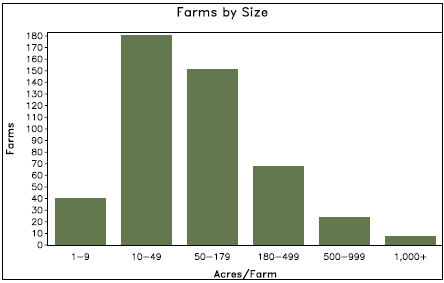
Actually, the number of farms in Lowndes County

has slightly increased in recent some recent years.

The VDT proceeded to do som research, asking Jake Price,
Lowndes County Extension Agent, who noted there are actually
more farms in Lowndes County than in some surrounding counties,
because they tended to be smaller here, with quite a few people
farming on the side.
That and agriculture-based events have become more popular,
such as last week’s Hog Show.
(And he didn’t mention the new last year Valdosta Farm Days.)
He continued:

Continue reading

Green from the Grassroots —Elinor Ostrom


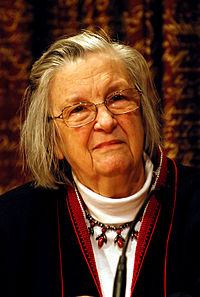
On the day she died, Nobel Prize-winning economist Elinor
Ostrom published
her last article, in Project Syndicate, 12 June 2012,

Green from the Grassroots
,

This grassroots diversity in “green policymaking” makes
economic sense. “Sustainable cities” attract the
creative, educated people who want to live in a pollution-free,
modern urban environment that suits their lifestyles. This is where
future growth lies. Like upgrading a mobile phone, when people see
the benefits, they will discard old models in a flash.

Of course, true sustainability goes further than pollution control.
City planners must look beyond municipal limits and analyze flows of
resources —

energy
,

food
,

water
, and

people


into
and

out of
their cities.

Worldwide, we are seeing a heterogeneous collection of cities
interacting in a way that could have far-reaching influence on how
Earth's entire life-support system evolves. These cities are
learning from one another, building on good ideas and jettisoning
poorer ones. Los Angeles took decades to implement pollution
controls, but other cities, like Beijing, converted rapidly when
they saw the benefits. In the coming decades, we may see a global
system of interconnected sustainable cities emerging. If successful,
everyone will want to join the club.


And counties, and regions, and watersheds, of course.
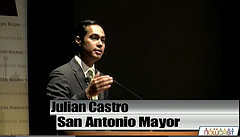
As Mayor Julian Castro of San Antonio said, there is a

"nexus between sustainability and job creation."

We don't have to wait for San Antonio or Los Angeles or Beijing or
Atlanta to lead the way:

we can get on with it right here where we are.

-jsq

Sustainable public housing for Valdosta?

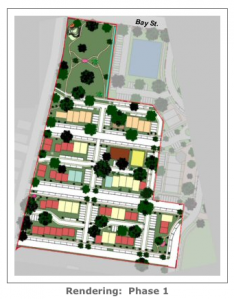
A group of Valdosta City Council members recently visited Sustainable Fellwood in Savannah, and may be considering it as a model for affordable fair housing in Valdosta. There’s also a model much closer than Savannah.

Here’s how one blog described Sustainable Fellwood, 17 November 2009:

Fellwood is a project which aims to demonstrate that highly efficient and healthy buildings can be built affordably. The project will include a four acre park and a community garden. Preserving the local oak tree canopy will be another important step. The development team is taking steps to reduce stormwater run off and utilize native landscaping. Energy Star appliances, reflective roofs, and high efficiency windows are all included in the plans. The project will be registered with the EarthCraft Coastal Communities certification, and it is a pilot LEED — ND neighborhood. It is developed using the principles of smart growth for walkable and diverse communities.

Jan Skutch wrote for SavannahNow 16 May 2012, Sustainable Fellwood celebrates final two phases,

Continue reading

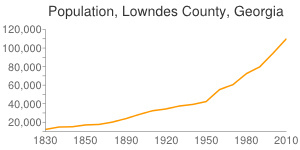
Historical Population, Lowndes County, Georgia

Increased population is using increasing resources in Lowndes County, Georgia:

Increased population is using increasing resources

Increased population is using increasing resources
Chart by John S. Quarterman for Lowndes Area Knowledge Exchange (LAKE) from Georgiainfo data.

Census Pop.
1830 2,453
1840 5,574
1850 7,714
1860 5,249
1870 8,321
1880 11,049
1890 15,102
1900 20,036
1910 24,436
1920 26,521
1930 29,994
1940 31,860
1950 35,211
1960 49,270
1970 55,112
1980 67,972
1990 75,981
2000 92,115
2010 109,233
Georgiainfo data

The population of Georgia has almost tripled during my lifetime, has about doubled since 1970, and has increased 18% in just the ten years from 2000 to 2010. That blip up between 1950 and 1960 is Moody Air Force Base.

That kind of growth doesn’t happen without increased resource use. If we want a livable county and region for ourselves and our descendants, we need to think about what we’re doing, with water, with transportation, and with energy, not to mention education, jobs, and pretty much everything else. We already cut down and sold off almost all the forests. Now we need better ways than using up all the resources that were here.

Hm, how about some knowledge-based jobs in energy and telecommunications and agriculture?

Speaking of Moody, the U.S. military learned in Afghanistan that shipping oil to places where you can generate solar energy produces a vulnerable supply chain. Moody is already leading in local solar energy. How about we help our base help us help them to move ahead in solar for everybody in Lowndes County and the state of Georgia?

-jsq

Privatizing water: could it happen here?

Water, the next oil: many big companies have already been betting on that for years now. Do we want privatize companies controling our water supplies for their profit, running up prices at our expense? We can prevent that, and we should get on with it.

Jeneen Interlandi wrote for Newsweek 8 October 2010, The New Oil: Should private companies control our most precious natural resource?

…privately owned water utilities will charge what the market can bear, and spend as little as they can get away with on maintenance and environmental protection. Other commodities are subject to the same laws, of course. But with energy, or food, customers have options: they can switch from oil to natural gas, or eat more chicken and less beef. There is no substitute for water, not even Coca-Cola. And, of course, those other things don’t just fall from the sky on whoever happens to be lucky enough to be living below. “Markets don’t care about the environment,” says Olson. “And they don’t care about human rights. They care about profit.”

Well, that couldn’t happen here. Or could it? What about this:

Many of us have no idea where our water comes from….

Do you know what’s upstream of you, that might be getting into your water? Do you know what’s downstream of you, that your runoff migh be getting into? If you’re like me, you’ll have to look that up.

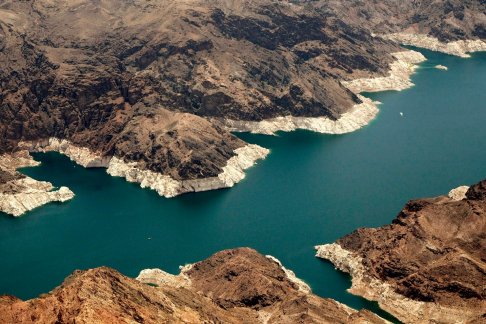
Remember what Ben Copeland said: Orlando, Jacksonville, and Tallahassee “all have their straws in that same aquifer.” The Floridan aquifer, which is the source of most of our drinking water. Our rivers and streams help replenish the Floridan aquifer, but we’re using it up faster than rain falls.

The article goes on about Bolivia privatizing water as a condition of “austerity”, until

Continue reading