Category Archives: energy efficiency

Solar: jobs, leadership, grid, independence, and health

Peak power when you need it: solar.
Somebody has been studying it, and addressing problems
local decisionmakers right here in south Georgia have been raising.


Solar Power Generation in the US:
Too expensive, or a bargain?

by
Richard Perez, ASRC, University at Albany,
Ken Zweibel, GW Solar Institute, George Washington University,
Thomas E. Hoff, Clean Power Research.
That’s Albany, New York, but it applies even more to Albany, Georgia
and Lowndes County, Georgia, since we’re so much farther south,
with much more sun.

Let’s cut to the chase:


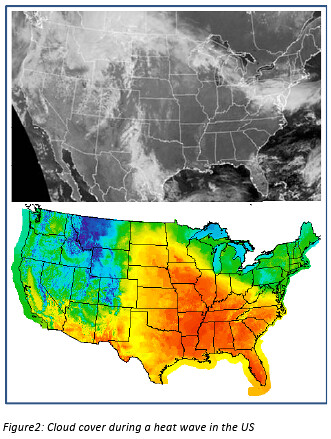
The fuel of heat waves is the sun; a heat wave cannot take place without a
massive local solar energy influx. The bottom part of Figure 2 illustrates
an example of a heat wave in the southeastern US in the spring of 2010
and the top part of the figure shows the cloud cover at the same time:
the qualitative agreement between solar availability and the regional
heat wave is striking. Quantitative evidence has also shown that the
mean availability of solar generation during the largest heat wave
driven rolling blackouts in the US was nearly 90% ideal (Letendre et
al. 2006). One of the most convincing examples, however, is the August
2003 Northeast blackout that lasted several days and cost nearly $8
billion region wide (Perez et al., 2004). The blackout was indirectly
caused by high demand, fueled by a regional heat wave3. As little as 500
MW of distributed PV region wide would have kept every single cascading
failure from feeding into one another and precipitating the outage. The
analysis of a similar subcontinental scale blackout in the Western US
a few years before that led to nearly identical conclusions (Perez et
al., 1997).

In essence, the peak load driver, the sun via heat waves and A/C demand,
is also the fuel powering solar electric technologies. Because of this
natural synergy, the solar technologies deliver hard wired peak shaving
capability for the locations/regions with the appropriate demand mix
peak loads driven by commercial/industrial A/C that is to say, much
of America. This capability remains significant up to 30% capacity
penetration (Perez et al., 2010), representing a deployment potential
of nearly 375 GW in the US.
The sun supplies solar power when you need it:
at the same time the sun drives heat waves.

The paper identifies the problem I’ve encountered talking to local
policy makers, especially ones associated with power companies:
Continue reading

Andrea Schruijer’s Opportunity —John S. Quarterman

Here’s my op-ed in the VDT today. -jsq

Welcome

Andrea Shuijer Schruijer
to a great opportunity as the new Executive
Director of the Valdosta-Lowndes County Industrial Authority (VLCIA)!


For a year I’ve been asking for a list of jobs attracted by the
Authority. We welcome your marketing expertise so we’ll know
the Authority’s successes!

We welcome your communications expertise to inform the community
affected by the process of bringing new jobs. VLCIA could publish
its agendas, minutes, and videos of its meetings, events, and
new jobs on its web pages, and facebook, maybe even twitter.

We welcome your stewardship of the Authority’s $3 million/year in taxes.
Maybe some

Continue reading

Energy as a National Security Challenge —Col. Dan Nolan @ Solar Summit

In his morning keynote at the sold-out

Southern Solar Summit,

Col. Dan Nolan (U.S. Army ret.) asked the musical question:

“When did our Marines become Birkenstock-wearing tree huggers?”

This was after some Marines asked for solar power so they wouldn’t
have to haul fuel in long convoys, which were among the most dangerous missions.
Most of that fuel was going into very inefficient generators to run
very inefficient air conditioners in tents in the desert.
Dealing with that got the military thinking about energy security:
assured access to mission-critical energy.

Looking up, he asked:


“What is it we as a nation need to understand about our own energy security?”

He identified America’s strategic center of gravity as its economy.
It’s very resilient but has vulnerabilities open to attack.
So how do we secure those vulnerabilities?

The main vulnerabilities are:

Continue reading

A mix is the way to go —Dr. Noll

This comment from Dr. Noll came in today on

San Antonio promises to shut down a coal plant
:

Of course we can! And “a mix of energy efficiency, [energy conservation,]
and new renewable energy projects” (e.g. solar, wind, geothermal)is the
way to go. We simply need the political will and communal support to
make such a transition possible.


I am still in Germany and am amazed to see just how much progress has been
made here in these past couple of years. Solar thermal and solar voltaic
installations abound on private residences; wind mills can be seen in
many regions; cars are more fuel efficient, houses better insulated,
public transportation accessible and affordable, recycling thoroughly
organized, etc.

We may still have a long way to go, but until

Continue reading

Southern Company committed to communities, renewable energy, energy efficiency

Thomas A. Fanning, chairman, president and CEO of Southern Company,
says his company is committed to communities, renewable energy, and
energy efficiency.
So
helping finance municipal refitting and solar projects

should be a natural for Southern Company!

According to PR from Southern Company, 25 May 2011,

Southern Company Holds Annual Meeting of Shareholders


Fanning also emphasized a continued commitment to the communities the
company serves and stressed the need for a national energy policy and
a robust research and development initiative.

“Southern Company keeps customers at the center of every decision
we make,” said Fanning. “We remain committed to providing reliable,
affordable energy for our customers and to do that we need to maintain
a diverse fuel mix as well as stay focused on developing the newest
technologies.”

Referencing a diverse fuel mix, Fanning highlighted the company’s
commitment to nuclear energy, including building the nation’s first new
units in 30 years. He also discussed the importance of preserving coal –
America’s most abundant energy resource – as well as the role of natural
gas, renewable energy and energy efficiency in meeting its customers
energy needs.

“Furthermore, we are the only company in the industry that is doing
it all. We’ve committed more than $20 billion to these efforts,”
Fanning said.

Sure, he listed renewable energy and energy efficiency last.
But this is the same Thomas A. Fanning who said in May that he’s

“bullish” on solar.

The same CEO of the parent company of Georgia Power, which just

connected a 300 kiloWatt solar plant in Lowndes County.

The same CEO who’s being nagged by the Georgia PSC chairman

“to come up with options in the next 30 days for expanding the tiny amount of electricity generated from solar power.”

And a company that spends more than $20 billion on new energy projects
can afford a few tens of millions for community refitting and solar.

-jsq

Birmingham U.K. municipal solar didn’t wait for larger governments

Banks and power companies can fund municipal solar projects;
cities and counties don’t have to wait for state or federal governments
to provide them grants.
Or at least Birmingham, U.K. has done it for public housing.
And

Quitman, Georgia did it last year, too.

According to Larry Elliott in the Guardian, 3 October 2010,

10,000 Birmingham council homes to get solar panels:
City agrees £100m scheme, partly funded by banks and energy suppliers, to meet target for cutting carbon emissions


Plans to fit power generating solar panels to council-owned properties
in Birmingham will be pushed forward this week after the council agreed a
“green new deal” scheme covering 10,000 homes.

In the biggest proposal for retrofitting houses through an energy
efficiency upgrade yet seen in the UK, the council agreed a £100m
proposal last week designed to create jobs and meet the city’s ambitious
targets for reducing carbon emissions.

The plan – Birmingham Energy Savers – will be jointly funded by
Birmingham council and investment from energy suppliers and commercial
banks, and follows two successful pilot schemes conducted in Europe’s
biggest local authority.

Energy efficiency and solar power to create jobs!

We have local proof of concept right next door

Continue reading

Renewable Sustainable Energy Network —VLCoC

Had a chat today with Myrna Ballard, President of the
Valdosta-Lowndes County Chamber of Commerce, and
ReKasa Deen, Business Development Director,


about the Renewable Sustainable Energy Network.
Note that word Sustainable that they’ve added since

last I spoke with them.

They’re moving along the idea of a series of meetings or workshops
of Chamber members together with an online forum.
The next step is for the Chamber Board of Directors
to decide whether to approve the project or not.
They’re talking to various people and organizations around the community;
if you want to get involved, please contact

ReKasa Deen
.


-jsq

Trash and biomass —Dr. Noll

This comment by Dr. Noll came in today on
Got trash? Need disposal? Good luck.

I ran across the picture at the same time. -jsq


There are some interesting parallels/similarities in regard to the
discussion of trash and biomass.

There is no doubt mankind produces trash, as there is no doubt that we
need energy. What we keep forgetting, though, is an honest reflection
on how we can be less “waste-ful”, both in terms of energy and trash.

Thus, instead of reducing the amount of trash we create by

Continue reading

Renewable Energy Network at Opportunity Central

Renewable energy for jobs: that’s something that would interest
a Chamber of Commerce.

Partly due to

MAGE SOLAR at Lowndes High School


(thanks, Jerome Tucker!), the Valdosta – Lowndes County Chamber of Commerce (VLCoC) has taken an interest in renewable energy.
ReKasa Deen,

Business Development Director
,
already heads the Chamber’s

Opportunity Central
:


The Valdosta-Lowndes Chamber is positioning Metro Valdosta as Opportunity
Central with opportunities for business to grow and thrive, career
opportunities for well-educated young professionals and opportunities
for cultural interests and active lifestyles.


The key phrase I keep hearing from

VLCoC president Myrna Ballard

is

“knowledge-based businesses and jobs.”

As it says on a recent

Opportunity Central blog post:

New jobs follow bright and creative professionals…

Ms. Ballard and Ms. Deen have repeatedly said they see renewable energy
as a source of jobs for graduates of our local high schools and colleges.

What do they mean by renewable energy?

Continue reading

Neither wind nor solar power “need to be purchased by Halliburton”

Continuing to see what “the indigenous” think about solar power:

Today, a number of Native tribes, from the Lakota in the Dakotas to
the Iroquois Confederacy in New York to the Anishinaabeg in Wisconsin,
battle to preserve the environment for those who are yet to come. The
next seven generations, the Lakota say, depend upon it.

“Traditionally, we’re told that as we live in this world, we have
to be careful for the next seven generations,” says Loretta Cook. “I
don’t want my grandkids to be glowing and say, ‘We have all these
bad things happening to us because you didn’t say something about it.’

Part of this family and spiritual obligation to preserve

Continue reading