Tag Archives: Valdosta

EPA raising radiation limits? Comment period still open

Should we worry about those radioactive tuna off California? Should we raise radiation limits like EPA is proposing?

J. D. Heyes wrote for NaturalNews 30 May 2012, Fukushima radiation now detected in the U.S. food supply,

“I wouldn’t tell anyone what’s safe to eat or what’s not safe to eat,” Madigan told Reuters. “It’s become clear that some people feel that any amount of radioactivity, in their minds, is bad and they’d like to avoid it. But compared to what’s there naturally […] and what’s established as safety limits, it’s not a large amount at all.”

PR from Public Employees for Environmental Responsibility 8 April 2013, WHITE HOUSE APPROVES RADICAL RADIATION CLEANUP ROLLBACK: Civilian Cancer Deaths Expected to Skyrocket Following Radiological Incidents,

The White House has given final approval for dramatically raising permissible radioactive levels in drinking water and soil following “radiological incidents,” such as nuclear power-plant accidents and dirty bombs. The final version, slated for Federal Register publication as soon as today, is a win for the nuclear industry which seeks Continue reading

News media finally reporting Fukushima leaking radioactive water into ocean

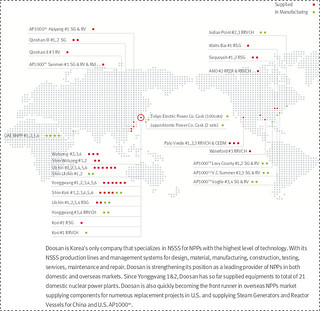
It’s not just a storage tank, either; radioactive water has been leaking for more than two years, from the broken reactor buildings into groundwater and the Pacific Ocean. It’s not just a local Japanese problem: Fukushima is here.

The cautious version, by Antoni Slodkowski and Mari Saito, Reuters, today, Radioactive water seeping into Pacific from Fukushima is ’emergency,’ official says,

Highly radioactive water seeping into the ocean from Japan’s crippled Fukushima nuclear plant is creating an “emergency” that the operator is struggling to contain, an official from the country’s nuclear watchdog said Monday.

This contaminated groundwater has breached an underground barrier, is rising toward the surface and is exceeding legal limits of radioactive discharge, Shinji Kinjo, head of a Nuclear Regulatory Authority task force, told Reuters.

Countermeasures planned by Tokyo Electric Power Co (Tepco) are only a temporary solution, he said.

VOA News, also today, admits leaks have been going on for more than two years and nobody knows how to stop them, Fukushima Operator Under Fire for Radioactive Leaks,

Rianne Teule, a nuclear campaigner for Greenpeace International, says the issue is a serious environmental concern.

“Most of all it proves TEPCO is incapable of dealing with this situation and that the Japanese authorities should really step in and ensure that proper action is taken to stop the leaks,” said Teule.

But it is not clear what other actions TEPCO could take at this point. Former Nuclear power plant designer Masashi Goto worked on several projects with TEPCO.

“The situation is already beyond what Tepco can handle,” said Goto. “If Continue reading

Path of proposed pipeline through Lowndes County

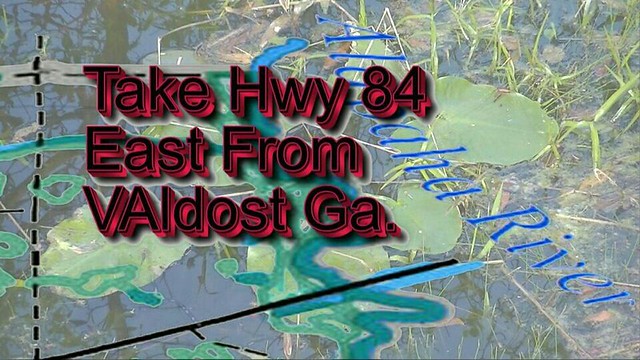
That pipeline that starts in PCB-polluted Anniston, Alabama, where would it cross Lowndes County?

Two routes, one north to south, another from Brooks County southeast to the Florida line.

Pipeline points with streets Pipeline points with imagery

On this google map, A is the land mentioned in Massive pipeline project may cross Lowndes, by Jason Schaeffer, VDT, 30 June 2013, B, C, and D several of the parcels listed in the letters Sabal Trail Transmission LLC sent Lowndes County (another is very near D). They all form pretty much a straight line north to south. The actual route probably Continue reading

Expansion of Azalea City Trail for bicycles

More bicycling soon in Valdosta. Still no map of Azalea City Trail on Valdosta’s website that I can find. The picture of bicyclers comes from Parks and Rec. Heads-up by Corey Hull of VLPRA.

Valdosta PR 1 August 2013, Portion of Williams Street Closed for Improvements and Expansion of Azalea Trail,

On Monday, August 5, the City of Valdosta will begin construction on the Williams Street Improvements Project. The project, which spans from Ashley Street to Park Avenue, will include the reconstruction of the Williams Street centerline, new curbs and gutters at various locations, minor storm drainage repairs and a new asphalt surface.

The project also features the construction of a 10-foot wide sidewalk that will tie into the existing 2.7 mile Azalea Trail, which currently stretches from the Vallotton Youth Complex to the Craig Center on Gordon Street. This multi-purpose trail will soon after be extended to Woodrow Wilson Drive, providing additional recreational opportunities and a safe route for citizens traveling to the South Georgia Regional Library.

During the construction, Continue reading

Nuclear an economic boon despite high costs –Tim Echols

Some of the “stuff” that happened before and after GA PSC Tim Echols cheered nuclear Friday.

GA Public Service Commissioner Tim Echols wrote in the Athens Banner-Herald Friday Echols: Nuclear power can be economic boon to Southeast,

Just when we thought nuclear power might be on a comeback, well, stuff happened. Only time will tell if Georgia and South Carolina can “jump-start” a nuclear renaissance. Let’s hope we can, because low-cost base-load energy — the amount of electricity available 24 hours a day — is a key to economic growth.

Stuff like this happened:

EDF exits nuclear, focuses on solar and wind

EDF is moving to solar and wind, despite its excuse of shale gas for leaving the U.S. nuclear market. EDF already has almost twice as much solar and wind in the U.S., 2.3 gigawatts, as the 1.2 gigawatts Southern Company plans by 2016. Maybe this means Calvert Cliffs is finally dead maybe along with NRC’s attempt to change foreign ownership rules to accomodate EDF. EDF is the operator of France’s fleet of nuclear reactors, including caught-on-fire Cattenom and many others that drain over-hot water into French rivers in the summer.

Reuters in Climate Spectator 31 July 2013 EDF exits US nuclear, focuses on renewables,

French utility EDF, the world’s biggest operator of nuclear plants, is pulling out of nuclear energy in the United States, bowing to the realities of a market that has been transformed by cheap shale gas.

Several nuclear reactors in the US have been closed or are being shuttered as utilities baulk at the big investments needed to extend their lifetimes Continue reading

Duke ends Levy County nuke

No nukes in Levy County, Florida, Duke Energy just announced, six months after it terminated Crystal River 3.

Terminating the engineering, procurement and construction (EPC) agreement for the Levy nuclear project.

Duke is also going to write off $295 million in investments in already-closed Crystal River 3 “and $65 million related to the wholesale allocation of investments in the Levy nuclear project, as well as accelerate the recovery of $135 million in cash flows related to CR3.” In other words, Duke still wants somebody else to pay for part of Crystal River 3’s debts. But Crystal River 3 and Levy County 1 and 2 will never be built.

Duke PR today, Duke Energy reaches revised multi-year settlement with Florida consumer advocates, Continue reading

VDT wins awards, two for people who don’t work there anymore

VDT fourth in class in newspaper AP Georgia awards, half for people who don’t work there anymore.

VDT today, Times wins AP awards; I’ve added some links and notes in [square brackets]:

The Valdosta Daily Times won several awards at the recent Georgia Associated Press Managing Editors Newspaper Awards luncheon in Atlanta.

Former Times’ reporter Jason Schaefer received a First Place in Deadline Reporting award for his story on homeless individuals in 2012. [“Life on Hard Ground”, which apparently is not online, but apparently was published on paper 3 December 2012.]

Former news photographer Paul Leavy won a Third Place Award in Photography for his photo of a meth lab arrest at a local motel. [For Tip leads to meth lab raid 27 January 2012, by another former reporter, David Rodock.]

This is the first admission I’ve seen that Jason Schaefer doesn’t work there anymore, even though his byline hasn’t appeared since his last story on homeless people, 3 July 2013.

Kay Harris also won two awards, for Continue reading

Southern Company missed earnings on Kemper Coal but Plant Vogtle is dominant

The dominant financial consideration is “what’s going to happen with Georgia”, meaning with nuclear Plant Vogtle, said SO CEO Tom Fanning, referring to the GA PSC CWIP monitoring hearings currently in progress. Meanwhile, that $160 million estimate 2 July 2013 of more Kemper Coal cost overruns by 30 July turned into $278 million after taxes (AP). This is on top of $333 million after taxes in May. SO earnings fell 52% (WSJ), missing projections, and SO stock dropped 2% yesterday.

Remember GA PSC Tim Echols already suggested a Plant Vogtle cost overrun cap similar to the one Mississippi PSC applied to Kemper Coal that caused SO to have to eat all those costs. If that happens, SO’s got financial problems.

Has SO seen the solar light yet, as in reliable, dependable, and deployable on time and on budget? Nope. Solar was tacked onto the end of Tom Fanning’s summary of interesting stuff in the 31 July 2013 earnings call: Continue reading

The Economist answers Paul Bowers about carbon tax

Back in May someone asked Georgia Power CEO Paul Bowers what he thought about a carbon tax, and he answered, “Why would anyone want that?” The Economist answered his question, 29 June 2013, Tepid, timid: The world will one day adopt a carbon tax—but only after exhausting all the alternatives,

Winston Churchill famously said America would always do the right thing after exhausting the alternatives. The right thing in climate You can always count on Americans to do the right thing, after they ve tried everything else. --Winston Churchill policy for all the big countries is a carbon tax, which is simpler and less vulnerable to fluctuations in emissions than cap-and-trade schemes. For years, such a tax has been a non-starter politically. But as the alternatives are tested to destruction, it deserves to be looked at again. Current environmental policies will not keep the rise in global temperatures to below 2°C—the maximum that most climate scientists think safe. A carbon tax, if stiff enough, could. Big polluters should assume that such a tax will one day arrive, and start planning for it now.

Dear Paul Bowers,

Stop being tepid and timid. Go beyond Continue reading