Tag Archives: jail

Many rural farmers are taking notice of HB 87 —Patrick Davis

Patrick Davis points out from Macon that HB 87 is producing
Lowndes County farm employment problems, and maybe local farmers
should take that into account when they vote.

Patrick Davis wrote,

Rural Republicans in Georgia can’t have it both ways on immigration reform


With the law passed and ready for implementation, many rural
farmers—especially in Central and South Georgia—are taking notice to
the exodus of migrant workers and immigrants which has left some farmers
without workers to pick crops.

Many of these same farmers that are hurting economically and losing
crops in these rural counties had voted Republican for years.


Valdosta’s Ellis Black who represents parts of Lowndes County as a
state representative helped to pass Gov. Nathan Deal’s conservative
and punitive agenda and consequently it has contributed to drive an
increasing number of migrant workers out of the Peach State.


Black has continued to justify his HB-87 vote and attempt to support
Gov. Deal’s ridiculous assertion in regard to the use of probationers
as a solution.

That last link is to

Parolees to replace migrants?
Gov. Deal says put probationers in fields

by David Rodock in the VDT 15 June 2011, which included:

Continue reading

Trend towards drug legalization

Has anyone else noticed that even sitting big name
politicians are saying things only one step short of just legalize it?

The most famous politician in the world said a few months
ago:

‘Drug legalization is an “entirely legitimate topic for debate,”‘

which is a big change from 2009 when Obama laughed
off the question.

Newly elected GA gov. Nathan Deal said

we can’t afford to lock up non-violent drug offenders.

In April Gov. Deal
signed a bill to create a panel to overhaul sentencing laws.


Public opinion

is almost to the majority nationwide
for legalization,
according to the Pew Research Center.

Private prisons have no business plan, because the majority of their
“customers” are in danger of not getting locked up.
We don’t need a private prison in Lowndes County, Georgia.
Spend that tax money on rehabilitation and education instead.

-jsq

Protests about “trillion dollar incarceration machine” crash White House web site

W.E. Messamore wrote for caivn.org 18 June 2011,

Internet activists crash White House phone lines calling for an end to the War on Drugs
:


On Friday June 17th, exactly 40 years after President Richard Nixon
declared a “War on Drugs,” Internet activists organizing from the social
news and activism website, Reddit.com, called the White House en masse
to demand an end to the War on Drugs, calling it a “trillion dollar
incarceration machine” with a measurable failure to reduce drug use,
or harm from drug use.

The

original post included this:

This is also the last vestige of Nixon’s fight against the civil rights and anti-war movements: And if you look at US incarceration rates, it’s been incredibly effective. . .

  • 4,919 Black males per 100,000 population
  • 1,717 Latino males per 100,000 of population
  • 717 White males per 100,000 of population.
  • South Africa under Apartheid (1993) – 851 Black males per 100,000

That’s right, almost six times as many black males per capita
get locked up in the U.S. than in South Africa under apartheid.
The numbers are even worse for young people and especially young black males,
leading to this summary:

This isn’t a War on Drugs: It’s a Race War; It’s a War on the youth,
likely to protest controversial policies (a war that conveniently takes
away those groups voting rights). It’s a war on the American People,
paid for by the American people, for the American people’s own good.

Yep.
Except a majority of the American people don’t want the “war on drugs”
any more.
It’s time for the laws to change.

Back to the

main article:

Continue reading

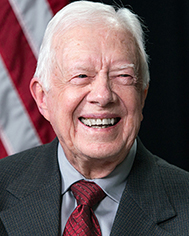
Call Off the Global Drug War —Jimmy Carter

Jimmy Carter in the New York Times 16 June 2011,

Call Off the Global Drug War

said the

Global Commission on Drug Policy
:


… has made some courageous and profoundly
important recommendations in a report on how to bring more effective
control over the illicit drug trade. The commission includes the former
presidents or prime ministers of five countries, a former secretary
general of the United Nations, human rights leaders, and business and
government leaders, including Richard Branson, George P. Shultz and Paul
A. Volcker.

The report describes the total failure of the present global antidrug
effort, and in particular America’s “war on drugs,” which was
declared 40 years ago today. It notes that the global consumption of
opiates has increased 34.5 percent, cocaine 27 percent and cannabis 8.5
percent from 1998 to 2008. Its primary recommendations are to substitute
treatment for imprisonment for people who use drugs but do no harm
to others, and to concentrate more coordinated international effort
on combating violent criminal organizations rather than nonviolent,
low-level offenders.

These recommendations are compatible with United States drug policy from
three decades ago. In a message to Congress in 1977, I said the country
should decriminalize the possession of less than an ounce of marijuana,
with a full program of treatment for addicts. I also cautioned against
filling our prisons with young people who were no threat to society, and
summarized by saying: “Penalties against possession of a drug should
not be more damaging to an individual than the use of the drug itself.”

Imagine that!
A drug policy meant to address the problem.

How did we go wrong?

Continue reading

Gov. Deal celebrates Juneteenth by recommending indentured agricultural labor

Remember 85% of people in the prison system are black,
and Gov. Nathan Deal recommends during the week of Juneteenth celebrations,
according to David Rodock in the VDT today,
Parolees to replace migrants?
Gov. Deal says put probationers in fields


With the recent exodus of undocumented Hispanic migrant workers leaving
Georgia to avoid the consequences of House Bill 87, Gov. Nathan Deal made
a statement on Tuesday suggesting that probationers could potentially fill
the approximately 11,000 open jobs in the state’s agricultural economy.

“Specifically, I asked Department of Corrections Commissioner Brian
Owens and (Department of Agriculture) Commissioner Gary Black to review
the current situation and offer possible options,” said Deal in his
statement. “Commissioner Owens has indicated that there are 100,000
probationers statewide, 8,000 of which are in the Southwest region of
the state and 25 percent of which are unemployed … I believe this
would be a great partial solution to our current status as we continue
to move towards sustainable results with the legal options available.”

The potential move would allow probationers who are unable to find work
to have a source of income, provided they are able to meet employer
standards. Income can then be used to pay probation fines, along with
other state fines that are a requirement of their probation sentence.

This fits right in with Joe Pritchard’s rumored suggestion

to replace animal shelter employees with interns.

Hey, if there’s one thing Georgia is good at, it’s
locking up more people
even while other states realize they can’t afford to do that anymore.

So if probationers don’t want to pick onions, lock ’em up again,
in the new private prison VLCIA wants to build in Lowndes County!
That will benefit private prison executives and investors and not
us in Lowndes County, but hey, that will serve those immigrants right!

-jsq

Early education prevents incarceration —peer-reviewed research

In ScienceDaily, 10 June 2011,

Large-Scale Early Education Linked to Higher Living Standards and Crime Prevention 25 Years Later


In the study published June 9 in the journal Science, Reynolds and
Temple (with co-authors Suh-Ruu Ou, Irma Arteaga, and Barry White)
report on more than 1,400 individuals whose well-being has been tracked
for as much as 25 years. Those who had participated in an early childhood
program beginning at age 3 showed higher levels of educational attainment,
socioeconomic status, job skills, and health insurance coverage as well
as lower rates of substance abuse, felony arrest, and incarceration than
those who received the usual early childhood services.

Among the detailed findings for the study group:

  • 28 percent fewer abused drugs and alcohol; 21 percent fewer males alone

  • 22 percent fewer had a felony arrest; the difference was 45 percent for children of high school dropouts

  • 28 percent fewer had experienced incarceration or jail

Here’s

the journal article:
Arthur J. Reynolds, Judy A. Temple, Suh-Ruu Ou, Irma A. Arteaga, and
Barry A. B. White. School-Based Early Childhood Education and Age-28
Well-Being: Effects by Timing, Dosage, and Subgroups. Science, 9 June
2011 DOI: 10.1126/science.1203618
.

We don’t need a private prison in Lowndes County, Georgia.
Invest those tax dollars in education, instead.

-jsq

The Quitman 10 in Quitman: 18 June 2011

Information from George Rhynes:

What: Quitman 10 Support Rally
When: 2 PM Saturday 18 June 2011
Where: Walker Street Auditorium, Quitman, Georgia

Here are

more details.

George explains:

Once again, no comments or interviews from the Quitman Ten on the
alleged voter fraud charges against them. Moreover, nothing has been
published about

the Quitman Ten receiving support and recognition from
Brooks County Community Leaders,

Georgia State Senators, Representatives, President of GABEO, Chairman
of the Peoples Agenda, and other Civil and Human Rights Leaders and
organizations.


I will note that I took the video in that blog entry for LAKE,
and LAKE published it in January,
so it’s not quite nothing has been published, but

George has a point about newspapers and TV.

Here’s

the video:

More from George (I’ve added a few LAKE blog links to his links to his blog):

Continue reading

Sounds like trouble is brewing down I-75. —Jim Galloway

What’s even more secretive than the

Industrial Authority?

Valdosta State Prison!

The

AJC has noticed

Sounds like trouble is brewing down I-75. —Jim Galloway

that the VDT

is getting serious about open records requests:

The Valdosta Daily Times’ Open Records request concerning violent incidents in the Valdosta State Prison was denied Monday.

The Department of Corrections (DOC) denied all requests in the Times’
Open Records filing, stating that, under Georgia law, the documents do
not have to be released.

After receiving phone calls from concerned individuals who have knowledge
of recent violent prison attacks, the Times submitted the Open Records
request to Department of Corrections Commissioner Brian Owens.

Kay Harris wrote that in the VDT today.


Curiously,

the state doesn’t even

provide a picture of the prison.

It’s enough to make you wonder what they have to hide.

Apparently the VDT wonders:

Continue reading

Private Prisons don’t save much money —NYTimes

Richard A. Oppel Jr. wrote
on the front page of the New York Times, 19 May 2011,

Private Prisons Found to Offer Little in Savings


The conviction that private prisons save money helped drive more than
30 states to turn to them for housing inmates. But Arizona shows that
popular wisdom might be wrong: Data there suggest that privately operated
prisons can cost more to operate than state-run prisons — even though
they often steer clear of the sickest, costliest inmates.

That’s right, they leave we the taxpayers to pay more in public prisons
to house the most expensive prisoners:

The research, by the Arizona Department of Corrections, also reveals a
murky aspect of private prisons that helps them appear less expensive:
They often house only relatively healthy inmates.

“It’s cherry-picking,” said State Representative Chad Campbell,
leader of the House Democrats. “They leave the most expensive prisoners
with taxpayers and take the easy prisoners.”

And yet private prisons still cost more.

Could it have something to do with their executive salaries?

Anyway, we don’t need a private prison in Lowndes County.
Spend that tax money on education instead.

-jsq

Find better way to fight crime —Rev. Chuck Arnold

Another Sunday, another preacher against private prisons.
Unlike some,
this one is not famous; Rev. Chuck Arnold is
pastor of Valley of the Flowers United Church of Christ in Vandenberg Village, CA.
He wrote in

the Lompoc Record 20 May 2011


Going to a RAND Corporation study, in 1994 higher education received
12 percent of the state budget, corrections 9 percent, other services 9
percent (which included controlling environmental pollution, management
of parks, fighting of brush fires, regulating insurance and other
industries). By 2002 higher education took the biggest hit, along with
“ other services,” both of which were virtually eliminated from the
state budget. Corrections on the other hand went from 9 percent to 18
percent of the budget.

Which means that California, like so many other states, including Georgia,
spends more on prisons than on education.

And not just public prisons anymore:

Continue reading