Category Archives: energy efficiency

GaSU wins at GA PSC, but will GaSU help all of us win in the legislature?

GA PSC Stan Wise’s 2009 nuclear CWIP lobbying points eerily matched Southern Company’s,
but suddenly he’s got separation-of-powers religion about Georgia Solar Utilities (GaSU).
The PSC recommended GaSU’s utility bid anyway.
When the legislature takes that up in a month or so, will GaSU CEO Robert Green,
unlike SO or Georgia Power or Stan Wise, help the rest of us little people
fix the 1973 Territoriality law so we can sell our solar electricity
on a free market?

Dave Williams wrote for the Atlanta Business Chronicle yesterday,

Georgia Public Service Commission moves ahead on solar energy
,


Georgia Power logo

The Georgia Public Service Commission approved a plan by Georgia
Power Co. Tuesday to acquire an additional 210 megawatts of solar
generating capacity, more than tripling its investment in solar
energy.


GA PSC PR about 20 November 2012 decisions

But a sharply divided PSC also gave a potential competitor to
Georgia Power its blessing to appeal to the General Assembly to
amend a 39-year-old law that gives the Atlanta-based utility the
exclusive right to continue serving existing customers.

Under Georgia Power’s Advanced Solar Initiative, the company will
buy solar power produced by both large “utility-scale”
solar farms and from smaller projects operated by residential and
commercial property owners.

Right, that’s actually

only 10 Megawatts from “smaller projects”,

maintaining Georgia Power’s monopoly while throwing throwing
a bone to the rest of us.

While the PSC supported Georgia Power’s plan unanimously, a
subsequent motion by McDonald encouraging other solar utilities
interested in serving Georgia to pursue their plans with the
legislature passed by the narrow margin of 3-2.

Georgia Solar Utilities Inc., a company launched in Macon, Ga.,
earlier this year, filed an application with the PSC in September
for authority to generate solar energy in Georgia on a utility
scale.

The two Nay votes were from the two recently-reelected PSC members,
apparently now thoroughly in the pocket of the incumbent utilities.
Here’s one of them now:


Continue reading

Help the military stop climate change through sustainable renewable energy

In memory of Armistice Day, the eleventh hour of the eleventh day of the
eleventh month, when World War I ended,
let’s help the military get us off of oil
and to deal with climate change so fewer people will die in wars.

John M. Broder wrote for NYTimes 9 November 2012,

Climate Change Report Outlines Perils for U.S. Military
,

Climate change is accelerating, and it will place unparalleled strains on


American military and intelligence agencies in coming years
by causing ever more disruptive events around the globe,
the nation’s top scientific research group said in a
report
issued Friday.

The group, the National
Research Council
, says in a study commissioned by the
C.I.A. and other intelligence agencies that
clusters of apparently unrelated events exacerbated by a warming climate
will create more frequent but unpredictable crises in water supplies,
food markets, energy supply chains and public health systems.


Hurricane Sandy provided a foretaste
of what can be expected more often in the near future, the report’s
lead author, John D. Steinbruner, said in an interview.

“This is the sort of thing we were talking about,” said
Mr. Steinbruner, a longtime authority on national security. “You
can debate the specific contribution of global warming to that storm. But
we’re saying climate extremes are going to be more frequent, and
this was an example of what they could mean. We’re also saying it
could get a whole lot worse than that.”

Climate-driven crises could lead to internal instability or international
conflict and might force the United States to provide humanitarian
assistance or, in some cases, military force to protect vital energy,
economic or other interests, the study said.


This is in addition to the even more obvious
connection between war and U.S. dependence on foreign oil

which the veterans in Operation Free want to fix

by helping us shift to clean renewable energy.

“In Iraq… the lines would stretch up to ten miles long under
the hot sun, under constant risk of attack by extremists. I realized
then just how vulnerable it makes any country to be dependent on
oil, especially the United States, which uses nearly a quarter of
the world’s supply.”

We also heard last year from

Col. Dan Nolan (U.S. Army ret.) that the Marines in Afghanistan
realized

Continue reading

Georgia Power raising rates


Georgia Power is raising rates
in January, despite its recent announcement that it would lower
rates because of lower fuel bills.
Why raising?
Mostly the new nukes and for a new natural gas plant.
And 16% of the rise is for energy efficiency.
Does that seem like the right proportion to you?

Kristi Swartz wrote for the AJC 1 Nov 2012,

Georgia Power bills to increase
,

The average Georgia Power bill will increase about 44 cents a month
starting in January, not decrease as many might have expected when
the company announced last month its fuel costs had dropped.

The utility, which serves 2.4 million customers, notified state
regulators in October that it would be applying for a residential
rate reduction because the amount it pays for fuel has fallen 7
percent, saving $122 million. The utility cannot profit from lower
fuel costs and must pass those savings on to customers.

So why are customer rates going up?

About $1.05 of the typical residential bill will go toward paying
for a new natural gas unit at Plant McDonough-Atkinson in Smyrna.
That increase already was approved as part of a three-tiered rate
hike set in 2010.

Yep, that’s that

set-in-2010 and keep-rising-’till-2013 natural gas
rate hike

that Georgia Power got away with while complaining about
any potential solar subsidies.
The one
AJC complained would be “on autopilot”:

Continue reading

Vote No on Amendment 2 —Charlie in Peach Pundit

Let's cut to the chase on what Charlie

wrote for Peach Pundit 18 Oct 2012:

Georgia needs significant ethics reforms. There needs to be greater
transparency for those who do business with the state. Trust must be
restored. Good governance must be demonstrated.

Paying slightly higher rates for a few more years is a small price
to pay to avoid giving away 20 year favors to today's patronage
class. Vote no on this amendment. That is the best way to save
Georgians money.

Georgia is the worst state for legislative corruption.
Do we want those legislators committing us financially
for 10 or 20 years?
If knowing

it's an ALEC bill
wasn't enough for you, maybe this will be.
Vote No on amendment 2.

-jsq

ALEC’s “our state legislators” behind multi-year GA constitutional amendment referendum


Ronnie Chance

Look who sponsored

Georgia Senate Resolution 1231
which put
the second referendum question on the ballot!
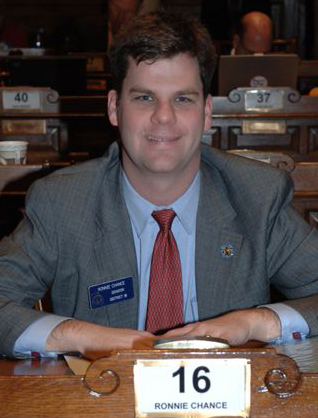
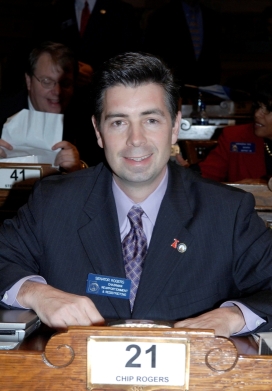
Two of ALEC’s “our state legislators”,
Senators Ronnie Chance of the 16th,
and
Senate Majority Leader Chip Rogers of the 21st,
are among the sponsors (Chance is the first sponsor).

SourceWatch’s ALEC Exposed

found Ronnie Chance on ALEC’s International Relations Task Force.

Rogers himself told CBS News how much he values ALEC,

Who is ALEC?

By Mark Strassmann and Phil Hirschkorn 30 June 2012.
Rogers spelled out the same thing ALEC itself told me:
it considers people like Chance and Rogers
“our state legislators”.
“Our” as in belonging to ALEC, not representing you the voters and taxpayers.


Chip Rogers

Guess who sponsored the bill that put the charter school amendment on the ballot,
HB 1162 in its Senate form?

Chip Rogers.

And who sponsored the companion bill that would suck money out of public
schools and give more per pupil to charter schools, using our local tax dollars,
HB 797 in the Senate?

Chip Rogers.

And House sponsors Jan Jones (R 46th) and Edward Lindsey (R 54th) of both bills

are also ALEC’s “our state legislators”.

I don’t always agree with Adam Smith, but when I do, I quote The Wealth of Nations from 1776:

Continue reading

Another $3.5 billion nuclear cost overruns coming —David Staples @ HBA 2012-10-18


David A. Staples
running for the Georgia Public Service Commission for District 5,
talked about the ethical conflicts of the incumbents who take
almost all of their campaign contributions from people associated
with the utilities they regulate.
Then he mentioned that the new nuclear reactors Georgia Power
is building for Southern Company at Plant Vogtle
have
another $3.5 billion in cost overruns coming.

This is after

the PSC incumbents just rubberstamped the Vogtle budget in August
,
and on top of the

$900 million in cost overruns we already knew about.

That $900 million was already more than 6% of the originally-projected $14 billion
total cost.
If it’s now $3.5 + $0.9 = $4.4 billion, that’s more than 31% over
the original total.
Maybe we should vote in some PSC members and legislators who will stop this nonsense.

Here’s

the video:

Continue reading

Elect Georgia Public Service Commissioners to represent you


GA PSC

The Georgia Public Service Commission decides how much you pay for energy.
If you’re tired of Georgia Power’s

three-legged nuclear regulatory-capture stool

and
Georgia lagging far behind other states in solar and wind energy
,
or you just want

PSC members who will represent you

and who do not

accept massive campaign contributions from the utilities they regulate
or their employees or lawyers
like the incumbents do;

the incumbents who can’t even be bothered to show up for debates
or to answer questionnaires.


David Staples for GA PSC


Steve Oppenheimer for GA PSC

Here are two GA PSC challengers who did answer a questionnaire:

Democrat Steve Oppenheimer

and

Libertarian David Staples
.
Early voting has already started:
you can vote for them today.


let the sun shine on Georgia

While you’re at it, you can

vote for statehouse legislators who will let the sun shine on Georgia.

-jsq

GA PSC questionnaire answers: Steve Oppenheimer


Steve Oppenheimer

The Georgia Sierra Club sent a questionnaire to all candidates for
Georgia Public Service Commission.
None of the incumbents answered.
The two challengers did.
Here’s the one from
Steve Oppenheimer
for District 3.
-jsq

  1. As a Candidate for Public Service Commission, what is your campaign strategy for achieving 50% +1 of the votes cast?

    [I’m omitting the answers to this question. -jsq]

  2. How should the Public Service Commission consider and
    weight the impacts to community health (asthma, cancer rates, etc.)
    and on Georgia’s environmental (water quantity, air quality etc.)
    when making decisions about a utility’s generation portfolio?

    The PSC has a major role shaping energy policy for Georgia. I would
    like to schedule PSC hearings on the relationship of power
    production and our air, water, morbidity and mortality and our
    general quality of life. My professional background in dentistry &
    health care provides a keen understanding of the relationship of
    power generation and health. Dr David Satcher, former US Surgeon
    General and Executive Director Satcher Health Leadership Institute
    at Morehouse University has become a friend and part of my
    professional network during the campaign. I would like to see PSC
    convene hearings on the topic. Georgians for a Healthy Future, a
    relatively new, broad based, organization would provide another
    forum for discussion of these issues. Membership in Georgians for a
    Healthy Future includes Georgia Legislators on both sides of the
    aisle. The PSC must be a leader on these issues—as the
    legislature as a body will likely not be progressive on these
    issues.

Continue reading

GA PSC questionnaire: David Staples


David Staples

The Georgia Sierra Club sent a questionnaire to all candidates for
Georgia Public Service Commission.
None of the incumbents answered.
The two challengers did.
Here’s the one from
David A. Staples for District 5.
-jsq

  1. As a Candidate for Public Service Commission, what is your
    campaign strategy for achieving 50% +1 of the votes cast?

    [I’m omitting the answers to this question. -jsq]

  2. How should the Public Service Commission consider and weight the
    impacts to community
    health (asthma, cancer rates, etc.) and on Georgia’s environmental
    (water quantity, air quality
    etc.) when making decisions about a utility’s generation portfolio?

    Impacts to community health and the environment have to be considered
    very carefully. I know
    there are a number of different ways of viewing the situation but the
    explanation I’ve found
    that works best with Republicans in trying to get their support is that
    it comes down to a private
    property matter. The right to swing ones fist ends at the other
    person’s nose. Does anyone have
    the right to pollute the air that I breathe or the water that I drink?

    If I buy a piece of property for
    instance along the Savannah River or Ogeechee River, does someone
    upstream from me have
    the right to pollute the water that then flows onto my land, carrying
    those pollutants with it?

    Absolutely not.

Continue reading

What Georgia Power is afraid of: GaSU and Dr. Smith; and you

So what is Georgia Power afraid of

that made their CEO Paul Bowers double down on old-style baseload?

Competition, that’s what!
What could be more scary in the power-monopoly state of the

1973 Territorial Electric Service Act?


GaSU sun

On one side, Georgia Power faces

GaSU and its 80 or 90 MW solar plant proposal.

Walter C. Jones wrote for OnlineAthens 24 September 2012,

Proposed solar company could stir up Georgia’s utility structure
,

A proposal from a start-up business promises to lower electricity
rates by rebating profits to customers if given a chance to compete
as Georgia Power Co.’s “mirror image.”


GaSU fb profile image

To proceed with its long-range plan of developing 2 gigawatts of
solar power, the start-up, Georgia Solar Utilities Inc., wants to
start by building an 80-megawatt “solar farm” near
Milledgeville as soon as it gets a green light from the Georgia
Public Service Commission. GaSU filed its request last week, and as
of Monday, it’s still too fresh for public evaluation.

So radical is the proposal that spokespersons for Georgia Power and
the Georgia Solar Energy Association said they still were evaluating
it and could not comment.

Groups that normally advocate for customers also are staying quiet.

GaSU executives recognize such a big change won’t come easily.

Continue reading