Tag Archives: Economy

River gauge, park deed, personnel costs, pest control, and a special presentation @ LCC 2013-08-26

Five minutes for tomorrow morning’s Lowndes County Commission Work Session?
The mysterious “Special Presentation” might take longer Tuesday.


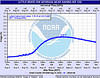
The last time the river stream gauge funding came up was I think
10 September 2012.
At that time I thought Emergency Director Ashley Tye was referring
to the Withlacoochee River, but he actually didn’t say which river,
and USGS only lists a gauge on the Little River at GA 122,
not on the Withlacoochee.
If the county put agenda packet information online with the agenda,
that sort of confusion wouldn’t be so easy.

Here’s

the agenda
:

LOWNDES COUNTY BOARD OF COMMISSIONERS

PROPOSED AGENDA

WORK SESSION, MONDAY, AUGUST 26, 2013, 8:30 a.m.

REGULAR SESSION, TUESDAY, AUGUST 27, 2013, 5:30 p.m.

327 N. Ashley Street – 2nd Floor

Continue reading

AGL pipeline station in Atlanta leaking, eroding, substandard construction

Citizens are calling for GA PSC Chuck Eaton to call it off.
Since apparently

GA PSC does have authority over natural gas pipelines
,
maybe we should talk to our Commissioner
H. Doug Everett
about that

proposed Sabal Trail natural gas pipeline through Lowndes County
.
Wasting resources on natural gas now is foolish when

solar will overtake everything within a decade

and we should be getting on with sun power for Lowndes County
instead of methane for Florida.

Brookhaven Post 23 August 2013,

Deteriorating conditions at AGL regulator station site has citizens calling for its removal
,


An Atlanta Gas Light (AGL) regulator station that is being
constructed on Parcel 36 off of Clairmont Rd., has been a project of
concern for some time now. Site conditions such as trenches full of
water, deteriorating banks, eroding foundations, corrosion,
substandard and hazardous construction practices, and a host of
other issues, have become the catalyst to amplifying an effort to
have Public Service Commissioner, Chuck Eaton, intervene and ask
that AGL cease construction and remove the station.

-jsq

Solar will overtake everything –FERC Chair Jon Wellinghof

“Everybody’s roof is out there,” for solar power,
so natural gas or oil pipelines are a waste of time.


Solar prices dropping exponentially drive solar deployment up like compound interest, eventually onto everybody’s rooftops,
where eventually means in about a decade,
after which we’ll be ramping down natural gas like we’re already ramping down coal.
It’s time for Georgia Power and Southern Company and all of Georgia’s EMCs
to get on with solar and stop wasting resources on dead ends,
especially that bad idea of fifty years ago, nuclear power.

Herman K. Trabish wrote for Green Tech Media yesterday,

FERC Chair Jon Wellinghoff: Solar ‘Is Going to Overtake Everything’:
One of the country’s top regulators explains why he is so bullish on solar.

“Solar is growing so fast it is going to overtake
everything,” Wellinghoff told GTM last week in a sideline
conversation at the National Clean Energy Summit in Las Vegas.

If a single drop of water on the pitcher’s mound at Dodger Stadium
is doubled every minute, Wellinghoff said, a person chained to the
highest seat would be in danger of drowning in an hour.

“That’s what is happening in solar. It could double every two
years,” he said.

Indeed, as GTM Research’s MJ Shiao recently pointed out, in the next
2 1/2 years the U.S. will Continue reading

Japanese solar grid

After Fukushima, Japan is now serious about solar power.
From Miyama, Fukuoka (pictured), in the south of Honshu to northerly Hokkaido,
Japan is building solar power plants,
and now needs to upgrade its grid.
Rooftop solar doesn’t need as many grid changes, since it delivers
onsite at peak load.
Hey, here’s an idea: solar panels on unused industrial park areas!

Yvonne Chang wrote for National Geographic 14 August 2013,

Japan Solar Energy Soars, But Grid Needs to Catch Up
,


Japan’s renewable energy incentive law has spurred construction of so many photovoltaic farms like this one, in Miyama, that the nation is expected to be the world’s leading solar energy market this year. But Japan must upgrade its system for delivering electricity.

Photograph from Asahi Shimbun/Getty Images

A new renewable energy incentive program has Japan on track to
become the world’s leading market for solar energy, leaping past
China and Germany, with Hokkaido at the forefront of the sun power
rush. In a densely populated nation hungry for alternative energy,
Hokkaido is an obvious choice to host projects, because of the
availability of relatively large patches of inexpensive land. Unused
industrial
park
areas, idle land
inside a
motor race circuit,
a former horse ranch—all
are being converted to solar farms. (See related, ”
Pictures:
A New Hub for Solar Tech Blooms in Japan
.”)

But
there’s a problem with this boom in Japan’s north. Although
one-quarter of the largest solar projects approved under Japan’s
new renewables policy are located in Hokkaido, the island accounts
for less than 3 percent of the nation’s electricity demand. Experts
say Japan will need to act quickly to make sure the power generated
in Hokkaido flows to where it is needed. And that means modernizing
a grid that currently doesn’t have capacity for all the projects
proposed, installing a giant battery—planned to be the world’s
largest—to store power when the sun isn’t shining, and ensuring
connections so power can flow across the island nation. (See related, ”
In
Japan, Solar Panels Aid in Tsunami Rebuilding
.”)


Turning to Renewables

Japan
historically has had no fossil energy sources of its own; it
powered much of its economic growth over the past few generations
with homegrown nuclear energy. At the start of 2011, more than 50
reactors provided Japan with 30 percent of its electricity, and the
plan was to increase that share to 50 percent. That scenario was
upended on March 11, 2011, when the most powerful earthquake ever
to shake Japan touched off a tsunami that breached the defenses of
Fukushima Daiichi nuclear power plant on the east coast. (See related, ”
One
Year After Fukushima, Japan Faces Shortages of
Energy, Trust
.”)

The second-worst Continue reading

Last NRC call about foreign ownership of U.S. nuclear reactors: now until noon today

Call in this morning or send written comments.
Here are the

previous materials
(this URL works; the one in the NRC PR is broken).
See also
NRC’s PR
and
Commission Direction.
The nuclear industry has been

pushing for changes for a year now
;
see
more posts.
Rather than relaxing rules on foreign ownership of operating reactors,
how about stop accepting foreign nuke parts from the likes of

document-forging Doosan
, which supplies Plant Vogtle among a dozen
or so other U.S. nukes?

Try joining the
webinar
from a Linux system and you get:

This system isn’t supported


Not supported


Joining a session from this computer’s OS or web browser isn’t supported.


Please view the GoToWebinar system requirements.


Questions?


Contact Global Customer Support or tweet to us @gotowebinar.

They support Windows, Mac, iOS, or Android, but not Linux.
Seriously?
And NRC is asking technical questions?


NRC PR 7 August 2013,

NRC Webinar Aug. 21 to Discuss Regulations On Foreign Ownership of U.S. Reactors
, Continue reading

Karst subsidence beneath a house in Lowndes County –Don Thieme @ LCC 2013-08-13

Received yesterday on

Florida sinkholes spreading real estate effects in same Aquifer as under Lowndes County
. -jsq


Scanning

John — Thank you for pressing forward on this important issue for the
airmen and their families at Moody AFB as well as for all citizens of
Lowndes County. My colleagues and I are also concerned and hope that we
can eventually obtain the Phase I geotechnical study. Of course, we have
our own research agendas as well as a desire to see our students working
on these problems close to their own university campus. In particular,
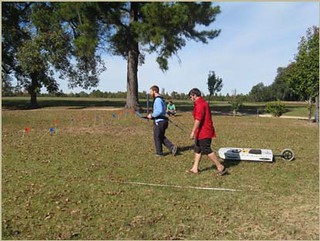
one of my undergraduate students just completed his thesis on karst
subsidence beneath a house in Lowndes County. Here is a link to a poster
where he presented those finding to our undergraduate research conference:

GPR Investigation of Subsidence
.

-Don Thieme

Ground-Penetrating Radar Investigation of Subsidence

in Covered Karst near Valdosta

Benjamin Davis, Department of Physics, Astronomy, and Geosciences

Faculty Sponsor: Donald M. Thieme

Abstract

Continue reading

PR and Marketing materials, ads, and trips @ VLCIA 2013-08-20


One hopes all this PR and marketing pays off in jobs.
Remember, the Industrial Authority has kept its cushy
1 mil of property tax throughout the economic downturn.
Four new industry projects are on the agenda this time,
plus more solar power at Valdosta’s Mud Creek Wastewater Treatment Plant.
Much better PR than
Valdosta Fire Dept. helping put out Perma-Fix on fire
.

Here’s
the agenda

in a slightly broken PDF on the VLCIA website

and extracted below.

Continue reading

Florida sinkholes spreading real estate effects in same Aquifer as under Lowndes County

Florida real estate effects of sinkholes in the same Floridan Aquifer
that underlies Lowndes County
would be worth looking at
before rushing to build Moody Housing around a sinkhole on Val Del Road.
It’s not just the sinkhole that may widen, it’s housing prices that may drop.

Diana Olick wrote for CNBC 15 August 2013,

Overdevelopment widens Florida sinkhole problem
,


DAVID MANNING / Reuters

A section of the Summer Bay Resort lies collapsed after a large sinkhole opened on the property’s grounds in Clermont, Fla. on Aug. 12.

Sinkholes may be as old as the earth itself, but the increase in
sinkhole activity is new. The rush to reason why has put scientists,
engineers and real estate developers at odds.

Some geological experts believe the sinkhole activity is increasing
because developers are pumping more water out of the ground for new
projects or for agricultural use. While acid in the water itself is
what causes the limestone under much of Florida to dissipate and
create the holes, the water also acts as a support. Add water from
heavy rains on the top soil, and you’ve got a bigger problem.


It is even beginning to weigh on the recovering real estate market
in Florida.

Recent sinkholes of note in Lowndes County include: Continue reading

Georgia’s ALEC local cheap labor law

Did you know in 2005 Georgia passed a cheap labor law
even more draconian than its ALEC model Local Minimum Wage Preemption Act?

Here’s the law,
2005-2006 Regular Session – HB 59
Minimum wage mandates by local governments; change certain provisions
,
sponsored by who else but

resigned-in-disgrace

for

promoting an Agenda 21 talking points film at the statehouse

Chip Rogers,
who nonetheless also sponsored the successful

charter school and
multi-year contract
constitutional amendments.
HB 59 took effect 1 July 2005.
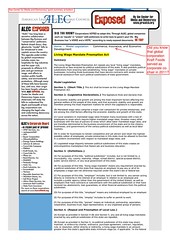
Here’s the part that matches the

ALEC model Living Wage Mandate Preemption Act
:


ALEC Living Wage Mandate Preemption Act

34-4-3.1(a)(6)(b)

(1) Any and all wage or employment benefit mandates adopted by any local
government entity are hereby preempted.

(2) No local government entity may adopt, maintain, or enforce by charter, ordinance,
purchase agreement, contract, regulation, rule, or resolution, either directly or indirectly,
a wage or employment benefit mandate.

Here’s the part that goes beyond even what ALEC proposed: Continue reading

New nukes make no financial sense –financial expert to GA PSC

If new nukes make no sense because of natural gas prices,
they make even less sense with continually-dropping solar power prices.

Ray Henry wrote for AP yesterday,

Regulator: New nuke plant now wouldn’t make sense
,

If Georgia was starting from scratch, it would not build a nuclear
power plant….


An analyst working for state regulators, Philip Hayet, said in
written testimony that the total costs of building two more nuclear
reactors at Plant Vogtle (VOH’-gohl) is more expensive than the
next-best option, constructing natural gas plants.

Still, Hayet said it is cheaper in most scenarios to finish the
nuclear plant rather than halt the project and instead build natural
gas plants.

But it’s not cheaper to finish a nuke than to halt it and
get on with wind offshore and distributed solar power throughout Georgia.

GA PSC didn’t publish Hayet’s calculations, using the old excuse of
“they involve proprietary financial information from Southern Co. subsidiary Georgia Power”.
But Edison Electric Institute didn’t need any proprietary financial
information to compute that Continue reading