Category Archives: Renewable Energy

Solar energy trust to help fund Bulloch County’s budget

This story is very interesting in light of Georgia’s territoriality
agreement which (I am not a lawyer) basically says not just anybody
can sell electric power to municipalities.

Mary Carr Mayle wrote for SavannahNow 27 September 2011,

Solar firm establishes energy trust

Two area doctors, co-owners of the Tabby Power Solar Co. in Bulloch


County, have formed the Georgia Energy Trust Fund to direct part of
their company’s proceeds to the county.

And, while it will take more than a few generations – some 350
years, in fact – Savannah dermatologist Dr. Sidney P. Smith and
Brunswick pathologist Dr. Pat Godbey hope the trust fund will
eventually generate enough money to pay all of Bulloch County’s
budget and create a prototype other rural Georgia counties can
follow.

Initially, the doctors are donating 1.5 percent of the gross
receipts from their six-acre solar farm in Pembroke to the trust,
which will invest in state bonds for the county. The county will
then receive half of the earned interest, with the other half
reinvested for the county.

Interesting angle, that: they’re not directly selling the power
to the county; they’re using some of their income to buy bonds
for the county.
And they’re inviting others to do the same:

Other county solar installations, both private and public, will be
able to contribute to the fund, he said.

Will Georgia Power (or somebody) sue?
We’ll see!

And they didn’t wait for North Carolina or New Jersey to do it first:

Smith believes the Georgia Energy Trust is the first trust fund of
its kind in the country.

“It will lead to financial independence in the counties in
which it is enacted.”

Sounds like a plan to me!

-jsq

Vermont Comprehensive Energy Plan

Georgia can do this if it wants to,

Final Comprehensive Energy Plan 2011


The Comprehensive Energy Plan (CEP) addresses Vermont’s energy
future for electricity, thermal energy, transportation, and land use.
This document represents the efforts of numerous state agencies and
departments, and input from stakeholders and citizens who shared their
insights and knowledge on energy issues over the past ten months. The plan
can be downloaded from this website or may be viewed at the Department
of Public Service, 112 State Street, Montpelier during regular business
hours.

More about those public comments:

The release of the Final CEP 2011 includes the CEP Public Involvement
Report II (above). This document summarizes the written comments received
during the second public comment period, between the release of the CEP
Public Review Draft (CEP) on September 13, 2011 and the close of the
public comment period on November 4, 2011. Over 1,380 written comments
were received via email, the Comprehensive Energy Plan website, and
hard copy between July 15 and November 4. Approximately 350 stakeholder
groups, including municipal, business, and non-profit entities, submitted
comments. Over 830 form-letter comments were signed and submitted by
members of at least three different organizations. Over 200 comments
were submitted by individual members of the general public.

Real input from the entire state. Imagine that!

Vermont’s population is about 622,000, or the size of a single
Congressional district, so maybe it’s easier for them than for Georgia.
On the other hand, maybe a regional south Georgia energy policy,
or even a county policy, would be possible.

-jsq

After Fukushima: Fewer nukes most places; More in Georgia

Most countries are not building more nuclear power plants,
and some are shutting down some of the ones they have,
because Fukushima has confirmed what Chernoby and Three Mile Island
already told us: maybe the physics is sound, but the business
model leads to unsafe plants.
But in the U.S. and Georgia, it’s full speed ahead for new nukes,
regardless of the risks of radiation leaks or cost overruns.

Christopher Joyce wrote for NPR today,

After Fukushima: A Changing Climate For Nuclear

“We don’t see Fukushima as having a significant impact on the


U.S. industry,” says Scott Peterson, vice president of the industry’s
Nuclear Energy Institute. “The Nuclear Regulatory Commission was renewing
10 licenses for U.S. plants, extending them 20 years in operation. We
were continuing to move forward in examining new reactor designs.”

Nevermind that those extensions mostly go well beyond the design
lifespans of the plants extended.

Marc Chupka, who advises electric utilities as an economist with the
Brattle Group in Washington, wonders who’s going to pay for them.

“Right now, just the plain economics of nuclear power are
underwater,” he says. He notes that over the past decade,
construction costs have skyrocketed and natural gas got more
plentiful and cheaper.

“Things change significantly over relatively short periods of time,”
Chupka says, noting that it takes about a dozen years to plan and
build a new nuclear plant. “That makes it an incredibly challenging
environment to plan for the long term. And that adds to the risk and
it makes investors understandably skittish.”

So we could do what Germany is doing:

Germany says the same: The government will throw its weight and
wealth into solar and wind energy to replace nuclear power.

Or we could listen to the same old excuse:

Continue reading

Planting Solar

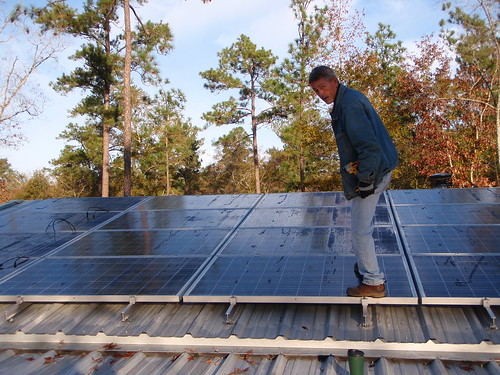
When planting solar panels, be sure to tamp well:


Hannah Solar installing solar panels at Okra Paradise Farms;

Pictures by John S. Quarterman, 20 December 2011.

Actually, you may not want to try this at home, unless your panels
have strong steel supports like these.
Still, most solar panels are very sturdy.

More later on what’s going on here.

-jsq

Southern Company claims to be incompetent regarding new EPA rules

Why can’t Southern Company do what other power companies can do
in implementing the new coal plant pollution control rules EPA
is about to promulgate?


Elizabeth Shogren wrote for NPR today,

EPA To Unveil Stricter Rules For Power Plants
.
She described new rules for coal plants EPA is going to release in the next
few weeks, including controls on mercury, “arsenic, acid gases and other pollutants.”
Southern Company doesn’t like that.

“It’s physically impossible to build the controls, the generation, the


transmission and the pipelines needed in three years,” says Anthony
Topazi, chief operating officer for Southern Company, which provides
electricity to nearly 4 million homes and hundreds of thousands of
businesses in the Southeast.

Topazi says electricity rates will go up, putting marginal companies out
of business. He says unless his company gets six years, it will not be
able to keep the lights on.

“We will experience rolling blackouts or rationing power if we don’t
have simply the time to comply,” Topazi says.

Other power companies see no problem:

Continue reading

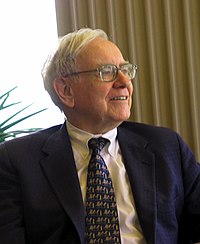
Warren Buffett thinks there’s money in solar

Cassandra Sweet wrote for the WSJ yesterday,

Solar Plant Sold to Berkshire Unit
,

First Solar Inc. is selling one of its large California solar farms to


MidAmerican Energy Holdings Co., ending the solar-panel maker’s search
for a buyer.

The sale places MidAmerican Energy, a unit of Warren Buffett’s
Berkshire Hathaway Inc., in the solar-power business for the first
time. MidAmerican operates fleets of wind farms and conventional
power plants.

The companies didn’t disclose terms of the deal Wednesday, but said the
Topaz solar-power plant, in San Luis Obispo County, is worth more than
$2 billion.

That’s more evidence there is private financing available for solar power.

-jsq

PS: Owed to Harry DeLano.

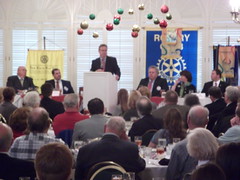
Local state legislative delegation at the Country Club

At the State Legislative Luncheon at the Country Club yesterday,
sponsored by the Rotary Club and the Chamber of Commerce,
I found it more interesting what the legislators didn’t mention
than what they did.


Frequent attendees told me the audience was much larger
than in previous years, and one attributed that to the recent
school consolidation referendum.
Sitting side by side were Chamber Chair Tom Gooding and
FVCS President Sam Allen.


Jeff Hanson introduced the legislators.
He’s the Chair of the Chamber’s

Government Affairs Council (GAC).

He said they are seeking more participants.
Hm, they have an Energy and Environment Policy Committee that’s chaired
by someone from Georgia Power….

Tim Golden announced that the local delegation’s highest priority
was to get $32 million for a Health Science Center for VSU.
VSU Interim President Dr. Levy was there, as was former president

“Dr. Z” as Tim Golden called him.

I was just talking to someone from SGMC in the food line about
how it would be nice if the Industrial Authority would promote
healthcare industries more.
It’s good that the legislators are doing that,
although it’s not clear that there are not other things
that should be even higher priority.

Tim Golden also wants to remove a sales tax

Continue reading

A renewable energy transparency law that enabled an industry

North Carolina passed a law in 2007
called the

Renewable Energy and Energy Efficiency Portfolio Standard (REPS)
,
which requires power utilities to get certain percentages of their energy from
“renewable energy resources or energy efficiency measures.”
To that NC added frequent, detailed, public reporting,
and thus enabled a renewable energy industry.

Power utilities don’t like to reveal data about their energy sources or sales
any more than Internet organizations like to reveal security problems.
The key to REPS is

the reporting it requires:


“Beginning in 2009, each power supplier is required to file a compliance
report, detailing the actions it has taken to fulfill the requirements
of the REPS.”

This is called the

Renewable Energy Certificate (REC) Tracking System.

It provides the data to see which utilities are providing how much of
which kind of energy.


According to Ivan Urlaub
of the North Carolina Sustainable Energy
Association (NCSEA),

REC reporting enabled the solar industry in North Carolina:


“The passage of the REPS law in 2007 and resulting success of the
North Carolina’s clean energy market has created the rapid start-ups
and expansions of clean energy businesses from installers to developers
to manufacturers and the associated service sectors over the last few
years.”

Not only is North Carolina now one of the national leaders in solar energy,
but

91% of NC voters want more solar power,

with wind second, and everything else far behind.

REC enabled not only a renewable energy industry, but also selection
within that industry for what works.

How did this happen?

Continue reading

Solar is coming —Michael Noll

Received yesterday on

Solar tipping point within a few years
. -jsq

In line with comments made by
Steven Chu:


Solar cheaper than fossil fuels in a decade, says Steven Chu
,
by Christopher Mims, 3 November 2011.

Solar power will be cheaper than fossil fuels at some point between the end of this decade and 2026*, said U.S. Secretary of Energy Steven Chu

as well as a recent Op-Ed piece by Paul Krugman:


Here Comes Solar

by Paul Krugman, 6 November 2011.


…progress in solar panels has been so dramatic and sustained that, as a blog post at Scientific American put it, “there’s now frequent talk of a

‘Moore’s law’ in solar energy
,”
with prices adjusted for inflation falling around 7 percent a year.

This has already led to rapid growth in solar installations, but even more change may be just around the corner. If the downward trend continues — and if anything it seems to be accelerating — we’re just a few years from the point at which electricity from solar panels becomes cheaper than electricity generated by burning coal.

And if we priced coal-fired power right, taking into account the huge health and other costs it imposes, it’s likely that we would already have passed that tipping point.

-Michael Noll

I added the blockquotes and the Moore’s Law link. Seems to me physicist Sec. Chu must be looking only at the sticker price,
while economist Krugman is also looking at other costs and at externalities not currently included in the sticker price, yet still costing us in other ways.
Add in the costs of wars for oil and I wonder how long ago solar already became cheaper than oil….

-jsq

Jerome Tucker honored at Civic Roundtable

The Civic Roundtable honored Jerome Tucker for some of
the many things he has done for Lowndes County and south Georgia.
And as usual he hit the nail on the head.

Dawn Castro

wrote for the VDT yesterday:


“We do have one of the best communities,” Tucker said. “The toughest
part of me standing before you is knowing how much better we could be
if all the little groups would work together.”

He also said:

“I am still blessed to have my dad with me,” Tucker began. “He
always asks me, ‘Where have you been?’ and ‘Did you do any good?’

Here are a few good things Jerome Tucker has done recently:

Continue reading