Category Archives: Law

Charter school preamble biased like T-SPLOST?

T-SPLOST proponents are up to their old tricks again,
starting with the preamble to the charter school referendum.
And

Bert “Little Goose” Brantley,

formerly of Lowndes County, defends that wording.

Paul Crawley wrote for 11alive.com September 12 2012,

Is Charter Schools Amendment wording biased?

Here we go again, apparently another ballot issue with questions
about whether it’s worded fairly.

First, it was the July 31st transportation sales tax issue, known as
T-SPLOST, which Georgia voters rejected overwhelmingly.

Opponents howled when they found out the ballot preamble wording
promised to “create jobs” and “relieve traffic congestion”.

Now, opponents of a November ballot question are also crying foul.


They’re upset over the preamble wording for the Charter School
Commission Amendment.

It reads, “Provides for improving student achievement and parental
involvement through more public charter school options.”

How can the preamble say that?

Continue reading

“No other state has had a positive outcome for a charter-positive ballot initiative” —former T-SPLOST proponents now pushing charter schools

The same people who pushed the failed T-SPLOST tax referendum
on the July primary ballot are now pushing the charter school referendum
on the November general election ballot.
Four of their leaders are the same specific individuals,
including one from right here in Lowndes County.
They’re pushing something they admit has failed in every other state.
Let’s not be the first to fall for it.


According to the

Georgia Charter Schools Association (GCSA)
,

No other state has had a positive outcome for a
charter-positive ballot initiative

So even one of the major proponents of charter schools admits
no other state’s voters have thought they were a good idea.
Their slides
lay out a pair of statewide major money campaigns to push the referendum anyway.

We know about this because these slides fell into the hands of
the AJC, and
Jim Galloway published them today, saying:

Continue reading

Video Playlist @ LCC 2012-09-10


Yesterday morning’s County Commission Work Session

started on time!

In addition to the open records and open meetings items,
it included a report from KLVB, two rezonings, typo fixes and date changes
in the ULDC, a vanity road name change, an alcohol license and an
alcohol ordinance change, a USGS river gauge, surplus vehicles,
purchase of a new fire truck, and more!
They vote on all this tonight at their Regular Session, 5:30 PM.
Here’s
the agenda.

5.a. Unsurprisingly,
the County Manager suggested

the County Clerk be appointed the Open Records Officer

now required by state law.
5.b. They also have a resolution before them about

review and approval of minutes of executive sessions
,
but of course they don’t allow we the taxpayers to see that
before they vote on it.

They considered adopting subdivision infrastructure for

5.c. Glen Laurel

and

5.d. Crestwood
.

6. Videos of the
KLVB report
and of applicant Emily Macheski-Preston

are in a separate blog post.

7. Public Hearings:

Continue reading

Citizens plead for Strickland Mill, then a surprise offer @ RCC 2012-09-10


Haley Hyatt videoed
yesterday’s Remerton City Council
decision about Strickland Mill.
Citizens pled, unsuccessfully, for it to be saved.
Then the owners made a surprise offer.

Here’s

Part 1 of 3:


The final plea

was made by Celine H. Gladwin.

Continue reading

Charter school bait and switch

Proponents of the state-forced charter school constitutional amendment

Mr. Moneybags

on the November ballot have a

website

that is full of bait and switch.
Most of it is about what they claim are the benefits of charter schools.
But that’s not what the referendum is about.
Local school boards can already authorize charter schools,
and many of them have.
The referendum would change the Georgia Constitution to authorize
an appointed state board to force charter schools on local elected school
boards that don’t want them,

granting more money per student than in public schools
,
with

the difference to be made up from local property and sales taxes.

The most substantive thing I have found on the proponents’ website
says that last is not so, but unconvincingly.

Tony Roberts, President of Georgia Charter Schools Association wrote
to All Charter School Leaders and Board Members
7 August 2012,

Response to Letter from Herb Garrett of Georgia Superintendents Association
,


Tony Roberts

One final, but important point, local school superintendents and
board members were adamantly against any local dollars going to
charter schools that were denied by a local school board. The final
version of HB 797 was negotiated to ensure that was the case —
the language is written right there into the law. So, to recap, they
insist on no local money going to state-approved charters, and then
get upset about the state money going to charters.

Curiously, he doesn’t cite that purported language.
The closest thing I can find in

HB 797

is

a paragraph I already quoted:

Continue reading

Remerton City Council votes today @ RCC 2012-09-10


Strickland Mill For Sale

Tonight the Remerton City Council votes on

the old Strickland Mill
at

1853 West Gordon Street
,
same item as

discussed 4 June 2012

and

postponed 11 June 2012.

Also, Remerton doesn’t play mysterious about
the Haven.
All that plus signs, water, and alcohol.

I will be there for about half an hour, after which I have to go video
something else.
Could someone else video the rest of tonight’s Remerton City Council meeting?


City Clerk Rachel Tate

Here’s

the agenda
,
which for some reason (I’m guessing City Clerk Rachel Tate not being available)
is a scan instead of a text-extractable PDF.
I’ve transcribed it below this time.

CITY OF REMERTON

REGULAR SESSION AGENDA

MONDAY, SEPTEMBER 10, 2012

COUNCIL CHAMBERS

5:30 PM

Continue reading

Public schools to be treated less favorably than state-dictated charter schools?

Do you want to pay more local taxes for state-dictated and state-run
charter schools?

Ellis Black (R-174)

In

HB 797
,
one of the state laws we’re being asked to ratify with the charter school referendum
on the ballot in November,
in addition to the magic accounting rules that would

grant charter schools much more money per student than public schools,

it would create a state-wide charter school board that will take away
all oversight from the local school board for any charter schools the
state imposes on any locality.
Yet it does not provide additional state funding for the extra
money per student for charter schools, and it does
explicitly address assessed valuation of local taxes.

The state takes all control over local chartered
schools from the local school board in section 2A(7), last paragraph:


Amy Carter (R-175)

The local board shall not be responsible for the fiscal management,
accounting, or oversight of the state chartered special school.

Yet the state provides no additional funding for the additional money
per student for charter schools:


Jason Shaw (R-176)

2A(5) No deduction shall be made to any state funding which a local school
system is otherwise authorized to receive pursuant to this chapter
as a direct result or consequence of the enrollment in a state
charter school of a specific student or students who reside in the
geographical area of the local school system.

(6) Funding for state chartered special schools pursuant to this
subsection shall be subject to appropriations by the General
Assembly and such schools shall be treated consistently with all
other public schools in this state, pursuant to the respective
statutory funding formulas and grants.

The bill also inserts each of those paragraphs again elsewhere,
in case the point wasn’t clear enough.

So where is the extra money to come from?
Here’s a hint:

Continue reading

Open Records Officer at Lowndes County Commission @ LCC 2012-09-10

Apparently the Lowndes County Commission has noticed the


new provisions of the Georgia Open Records and Open Meetings laws
that

VLCIA’s lawyer explained to the Industrial Authority back in May
,
seeing these two items on the agenda for Monday morning and Tuesday evening:

5.a. Adopt Resolution Appointing an Open Records Officer

5.b. Resolution Regarding Review & Approval of Minutes of Executive Sessions

Plus infrastructure for two subdivsisions,
one of them the famous

Glen Laurel,

several well/septic rezonings,
approval of
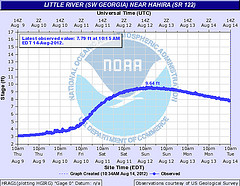
USGS Funding Agreement for HWY 122 Stream Gauge
(one of the four that

let us know about river flooding in Lowndes County
less than a month ago
),
a beer license, and approval of the

changes to the ULDC that were discussed in the recent Planning Commission meeting,

in the public hearing the public didn’t know about.
And more.


Here’s

the agenda.

LOWNDES COUNTY BOARD OF COMMISSIONERS

PROPOSED AGENDA

WORK SESSION, MONDAY, SEPTEMBER 10, 2012, 8:30 a.m.

REGULAR SESSION, TUESDAY, SEPTEMBER 11, 2012, 5:30 p.m.

327 N. Ashley Street – 2nd Floor

Continue reading

Change the Atomic Energy Act? How about change the Georgia Electric Territorial Act?

In reaction to

the NRC denying a nuclear permit for Calvert Cliffs,


some nuclear backers suggest

changing the
Atomic Energy Act of 1954 to permit majority foreign ownership
of nuclear reactors.

What will they suggest next?
Asking Iran to invest in U.S. nukes?

Steve Skutnik wrote for http://theenergycollective.com 5 September 2012,

A cost-free way to open up nuclear investment
,

If this seems entirely backward in a world of global production and
investment, that’s because it is. The current regulation is an


artifact of the Atomic Energy Act of 1954, which first authorized
private ownership of nuclear facilities. (Prior to this—per
the Atomic Energy Act of 1946, all nuclear technology was considered
a state secret, during the short time in which the U.S. enjoyed a
monopoly on the technology.)

Is there any real compelling reason for restrictions on foreign
ownership and investment in nuclear facilities to exist at a time
when the U.S. holding a monopoly on the technology has long since
passed? Issues of safety here of course are irrelevant—the
facilities would be licensed and regulated by the NRC, just as any
other nuclear facility is now. About the only salient objection is
the political one—i.e., the implications of a foreign entity
maintaining controlling ownership in key infrastructure. (Although
it’s hard to see anyone getting particularly upset about the
reverse—U.S. entities owning a controlling stake in
infrastructure in other nations.)

Yeah, sure, strict regulation
will deal with that, just like it prevents fracking from setting
drinking water on fire, or BP from poisoning the Gulf.
The new NRC head is

maybe well-meaning
,
but it’s the same NRC

that gave Vogtle 1 a clean bill just before it had to shut down

and the same NRC that’s ignoring

cancer in Shell Bluff.

Oh, by the way, the article gets to the main point eventually:

Continue reading

NRC rejects nuke permit for EDF in Maryland

French nuclear operator Électricité de France (EDF)



was denied a license last week for the proposed Calvert Cliffs

nuclear reactor in Maryland, because the
Atomic Energy Act of 1954 prohibits majority foreign ownership
of nuclear plants.
EDF now has 60 days to find a U.S. partner, or give up the project.
Who could the possible suitors be?
Hint: think southeast.

The handwriting was on the wall two years ago when
Constellation Energy pulled out of the project.
Jim Polson and Alan Katz wrote for Bloomberg 10 October 2010,

Constellation Drops Nuclear Plant, Denting EDF’s U.S. Plans
,

Constellation Energy Group Inc. pulled out of negotiations on a $7.5


billion loan guarantee to build a nuclear reactor in Maryland with
Electricite de France SA, potentially damaging the French utility’s
U.S. expansion plans and the companies’ partnership.

The cost of the U.S. government loan guarantee that the companies’
joint venture, UniStar Nuclear Energy, would need to build the
Calvert Cliffs 3 reactor is too high and creates too much risk for
Constellation, the Baltimore-based utility said in a statement
yesterday. The statement said the next step is up to EDF. Enlarge
image U.S. Deputy Energy Secretary Daniel Poneman

In a letter Oct. 8 to Daniel Poneman, deputy secretary of the U.S.
Department of Energy, Constellation said it received a government
estimate that the venture would have to pay about $880 million to
the U.S. Treasury for the loan guarantee, “dramatically out of
line with both our own independent assessments and of what the
figure should reasonably be.”

Constellation’s decision may make it more likely that the U.S.
utility will exercise a put option forcing EDF to buy as much as $2
billion of Constellation’s non-nuclear power plants, said Ingo
Becker, head of utilities sector research at Kepler Capital Markets.

“EDF very clearly said if they exercise the put, this thing is
over,” Becker said. “Constellation may have just turned
around the calendar and pulled out of the new build before
exercising the put, anticipating EDF’s reaction.”

In a letter Oct. 8 to Daniel Poneman, deputy secretary of the U.S.
Department of Energy, Constellation said it received a government
estimate that the venture would have to pay about $880 million to
the U.S. Treasury for the loan guarantee, “dramatically out of
line with both our own independent assessments and of what the
figure should reasonably be.”

Meanwhile, Southern Company

is still trying to reduce what it has to pay for its
$8.3 billion federal loan guarantee
.

Back in Maryland, the news got worse for the nuke last year.
EDF

asked for the state’s help
,
but didn’t get the answer it wanted.
Scott Dance wrote for Baltimore Business Journal 16 December 2011,

EDF: Constellation-Exelon settlement hurts Maryland nuclear industry
,

Continue reading