Tag Archives: Planning

Nuclear is over —Jeremy Rifkin


Economist, author, and advisor to governments

Jeremy Rifkin

told an agent of the world's largest uranium field operator
at a conference of global investors that there's no business
future in nuclear power.

Jeremy Rifkin answered a question at the

Wermuth Asset Management


5th Annual Investors Event
26 September 2012,

Nuclear Power is Dead,

I don't spend much time on nuclear technology, unless somebody asks


me about it, because frankly from a business perspective, I think
it's over….

Here's

the video,
followed by more transcript and discussion.

Nuclear power was pretty well dead in the water in
the 1980s after Three Mile Island and Chernobyl. It had a comeback.
The comeback was the industry said "we are part of the solution for
climate change because we don't emit CO2 with nuclear; it's
polluting, but there's no CO2".

Here's the issue though,

Continue reading

From 15 to 19 months late: Plant Vogtle nukes

Surprise!
The already-billing but not-built new nukes at Plant Vogtle
are going to be even later and cost even more.
In December they were to be
15 months late;
now it’s 19 months late,
and the cost overrun expected is $740 million.
History is repeating itself from

the last time Southern Company
and Georgia Power built nukes on the Savannah River.

How about we pass

HB 267
to stop Georgia Power from charging that cost overrun to customers?

Kristi Swartz wrote for the AJC yesterday,

Vogtle nuclear project to take longer, cost more
,

Georgia Power’s Plant Vogtle nuclear expansion project will take
about 19 months longer to complete than originally expected and cost
about $740 million more than originally thought, the company said
Thursday.


Joseph A. “Buzz” Miller, Executive Vice President – Nuclear Development Southern Nuclear Operating Company

Georgia Power said its share of the estimated $14 billion project
will rise to $6.85 billion, up from $6.11 billion, because of
increased capital costs and additional financing costs. Customers,
who have been paying the financing costs since 2011, now will pay
them for a longer period of time.

And the amount Georgia Power customers have to pay
for

Construction Work in Progress (CWIP)
keeps
ratchetting up:

Continue reading

Time Warner says you don’t want high speed Internet

After all, if all the people had fast Internet connections,
they might provide their own content, ranging from local sports
vidoed by fans to parties to local government meetings,
and then they wouldn’t be “consumers”, would they?
The people would be participants in their own community,
ranging from local to state, national, and global.
And the big cablecos and telcos wouldn’t be able to monopolize
access to information, which is their cash cow now.
It will take more than wishful thinking to get TW to help with affordable local high speed Internet access.

Klint Finley wrote for Wired 28 February 2013,

You Don’t Want Super-High-Speed Internet, Says Time Warner Cable
,

Time Warner Cable chief technology officer Irene Esteves says you


don’t really want the gigabit speeds offered by Google Fiber and
other high speed providers.

On Wednesday, at a conference in San Francisco, Esteves downplayed
the importance of offering a service to compete with Google, as
reported by The Verge. “We’re in the business of delivering
what consumers want, and to stay a little ahead of what we think
they will want…. We just don’t see the need of delivering that to
consumers,” she said, referring to gigabit-speed internet
connections.

Esteves thinks only business customers will need that kind of
bandwidth, and she noted that Time Warner already offers gigabit
connections for businesses in some markets.

Right, “in some markets”. How many of you around here can get a gigabit
Internet connection?
And

Time Warner Cable says

Irene Esteves is the Chief Financial Officer
,
which makes more sense than a Chief Technical Officer spreading this
doubtfire.

No, it’s

TW CTO Michael LaJoie
‘s job to argue against net neutrality.
Paul Rodriguez wrote for cabletechtalk at some unknown date,

Cable’s internal and external technology picture
,

Continue reading

Internet and Energy at the Bird Supper

Dear Bird Supper attendees,

Two things could greatly help south Georgia:
better Internet access and solar power.
You could help stop two telecommunications bills
and help pass two energy bills for jobs and education
in south Georgia.

Internet Access: help stop two telecommunications bills

The local Industrial Authority, Chamber of Commerce, Valdosta City Council,
and Lowndes County Commission have recently realized that
fast Internet access is essential to attract businesses,
for their employees to work at home, for applicants to apply for jobs,
for students to submit assignments, and for general quality of life.


  • HB 282 against muni broadband


    This bill would prohibit local governments from providing Internet access
    if any local census block has 1.5Mbps access.
    Localities may or may not want to do it themselves, but they shouldn't
    be prohibited from using this option now that it is obvious to everyone
    that the commercial incumbents are not doing the job.
    Legislators please vote this bill down.


  • HB 176 for higher cell towers with less local government oversight


    This really bad bill would let cell telephone companies build towers
    wherever they want to at any height, taking away local government
    power to regulate that.
    It could even let private companies exercise eminent domain.
    Legislators please vote this bill down.

Energy: help pass two energy bills

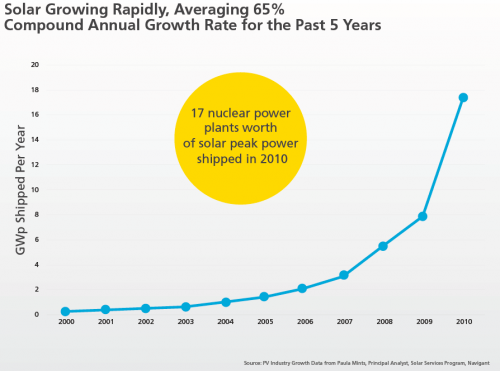
Solar power can be a
distributed source of jobs in south Georgia.

Antique laws and a subsidized nuclear boondoggle are hobbling solar power.


  • GA SB 51, The Georgia Cogeneration and Distributed Generation Act


    Senator Buddy Carter has introduced a Senate bill for the current session
    of the legislature, SB 51, "The Georgia Cogeneration and Distributed
    Generation Act of 2001". It attempts to fix Georgia's special solar
    financing problem, the antique 1973 Territorial Electric Service Act,
    which says you can only sell power you generate to your one and only
    pre-determined electric utility, at whatever rate that utility sets.


  • HB 267 Financing costs; construction of nuclear generating plant


    Stop Georgia Power from charging customers for cost overruns for Plant Vogtle,
    already 15 months behind schedule and a billion dollars overbudget for power
    that nobody has received, yet Georgia Power has already billed customers about
    $1.7 billion.
    Bipartisan cosponsors are Jeff Chapman (R—Brunswick) District 167 and
    Karla Drenner (D—Avondale Estates) District 85.
    This boondoggle on the Savannah River is what Georgia Power and Southern Company
    are doing instead of deploying solar inland and wind off the coast.

-jsq

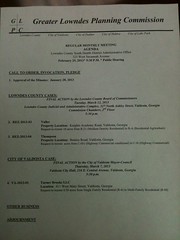
Agenda: 2 Lowndes County rezonings; 1 Valdosta @ GLPC 2013-02-25


Agenda

To get an agenda for tonight’s Planning Commission meeting,
apparently you have to go to the meeting; here it is.
It’s sloppier than usual:
Case REZ-2013-04 has neither a number of acres nor
a specific location.
Why is the Planning Commission not revealing this information?

Douglas O. Thompson owns two properties on Bemiss Road, but one
of them is in Valdosta taxing district, so presumably it’s
the other one, of 1.28 acres at 3432 Bemiss Road.
Why is this a secret?

Perhaps for the same reason that the county doesn’t just publish
PDF of this agenda on the web for all to see?

Here’s a summary of the cases.

Lowndes County,

Final action

Tuesday 12 March 2013
2. REZ-2013-03 Valler

Knights Academy Road, Valdosta

Request to rezone 10 acres from
R-21 (Medium Density Residential)
to
R-A (Residential Agriculture)
3. REZ-2013-04 Thompson

Bemiss Road, Valdosta

Request to rezone [?] acres from
C-H/c (Highway Commercial conditional)
to
C-H (Highway Commercial)
Valdosta,

Final Action

Thursday, 7 March 2013
4. VA-2013-01 Turner Brooks LLC

411 West Mary Street, Valdosta

Request to rezone 0.50 acres from
R-6 (Single Family Residential)
to
R-M (Multi-Family Residential)

-jsq

SGRC: New DCA Minimum Local Comprehensive Planning Standards


Local governments are now required to update their Comprehensive Plans
every five years (used to be every ten years).
Here’s video of

the new rules

and

a playlist
of the entire meeting at which this was discussed in Valdosta
on 7 February 2013.


facebook event
:

In response to concerns about the complexity of the 2005 Local
Government Planning Standards, Georgia DCA adopted new Rules for the
Minimum Standards and Procedures for Local Comprehensive Planning
(Chapter 110-12-1). The rules were adopted on November 1, 2012 and
became effective on January 1, 2013. The five workshops are held as
a continued education event around the region to familiarize all
local governments elected and appointed officials, government staff,
the development community, citizens and any other interested party
with the new rules, so that all may remain in compliance with those
rules.

This session was held Thursday, February 7th at the Valdosta City
Hall Annex Multipurpose room.

Additional sessions are scheduled for:

  • February 21, 2013 —Tifton
  • March 7, 2013—Douglas
  • March 21, 2013—Irwin County
  • April 4, 2013—Waycross

Sessions are geared toward community planners but they are open to
the public.

Here’s

a video playlist:

Continue reading

Let the Sun Shine: Fact versus Fiction —Michael G. Noll

LTE in the VDT today. I’ve added a few links. -jsq


Fox News recently claimed that “solar won’t work in America because
it’s not as sunny as Germany”. Such statements are common for a
network that has long lost its credibility. Unfortunately too many
take such gibberish at face value. Thus columns like

“environmentalism or obstructionism?”
are not
surprising, but in the end it’s the facts that matter:

  • Global warming is real. For years we have been experiencing record
    heat waves, droughts, wild fires, etc., and while seawater levels
    are rising, storms like hurricane Sandy become major threats

    to low lying areas along coast lines
    .
  • The main culprit for global warming are greenhouse gases like
    carbon dioxide, resulting from the burning of fossil fuels,
    especially coal and oil.
  • While China overall emits more than we do, the US leads in per
    capita emissions. The average US citizen produces three times more
    carbon dioxide than the average Chinese citizen.

Continue reading

Georgia Recreational Use Statute


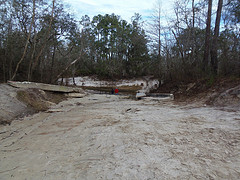
Suppose you owned land next to a river.
You might have concerns about liability for people getting out of
canoes or kayaks onto your land.
But you’re in luck!
Georgia state law says you’re not liable for most things that could happen.

The Georgia Recreational Use Statute is in

O.C.G.A. §51-3-20 through §51-3-26.

Here are a few excerpts.

§51-3-20. Purpose of article

The purpose of this article is to encourage owners of land to make
land and water areas available to the public for recreational
purposes by limiting the owners’ liability toward persons entering
thereon for recreational purposes.

Does that include boating?

Continue reading

ALEC again: GA HB 176 for higher cell towers with less local government oversight


After
massive public opposition

just fought off

a subdivision near Moody’s gate
,
do we want telephone cell towers popping up in Moody’s flight lines?

Trying to outlaw municipal broadband
isn’t the only thing telecom
companies and ALEC are up to in the Georgia legislature:
they’re also pushing a bill for higher cell towers with less
local government control over height or siting.
Do you want one next to you without even an opportunity for a local government hearing?

Here’s what ACCG says about

HB 176
,
renamed from ‘Advanced Broadband Collocation Act’ to
‘Mobile Broadband Infrastructure Leads to Development (BILD) Act’:


Cell Tower Siting Preemption Legislation Progresses

HB 176 passed a House Energy, Utilities and Telecommunications
Sub-Committee on Thursday. Representatives from ACCG, Cobb County,
Gwinnett County, GMA and several cities expressed concerns on the
impact this legislation will have on local cell tower siting
ordinances. This bill significantly preempts local governments in
reviewing and approving applications for both the modification of
existing cell towers and structures (collocation) and the
construction of new cell towers and structures local communities. As
HB 176 is the top priority of the wireless industry this session and
is being backed by many other influential groups including the
Americans for Prosperity and the Georgia Chamber of Commerce, it has
very strong momentum. Please have your county staff review the bill
and inform your House members of any negative implications it has on
your local zoning, land use or tower/equipment application review
processes. This legislation will likely be heard on the House floor
soon.

Guess who’s chair of the

Energy, Utilities & Telecommunications SubCommittee
?

Continue reading

Want to finance solar? Call GA Sen. Jack Murphy today about SB 51


A Georgia Senate committee needs to take it up
a bill that would greatly ease financing
solar power for your housetop or business roof.
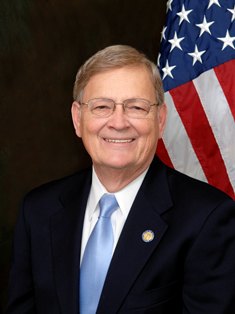
Sen. Jack Murphy is the chair, and you can contact him today.

GA SB 51,

The Georgia Cogeneration and Distributed Generation Act
,
was read to the Senate 16 January 2013
and referred to the Committee on

Regulated Industries and Utilities
.
Here’s contact information for the Chair of that Committee:

Continue reading