Category Archives: Renewable Energy

Fossil fuels get five times the subsidies of renewable solar and wind


Fossil fuels get more than $70 billion dollars a year in
U.S. government subsidies (tax breaks and direct spending),
while solar and wind get only about $12 billion,
so fossil fuels got more than five times as much,
while

nuclear got ten times as much
(especially
in Georgia
).
Even corn ethanol, that sounded-like-a-good-idea-at-the-time
boondoggle, gets more subsidies than solar and wind put together.

That’s without even going into the
externalities

such as healthcare costs due to polution, environmental destruction
through mountaintop removal for coal, tar sands oil drilling,
and fracking for natural gas, and wars for oil and uranium.

Continue reading

IKEA biggest solar in Georgia


The biggest solar rooftop installation in Georgia?
Not by mighty Georgia Power, not by an EMC, not even by GaSU:
it’s IKEA’s distribution center in Chatham County.
Chatham is also trailing only Atlanta in solar installations in general.

Mary Landers wrote for Savannahnow.com 7 January 2013,

New solar adds to Chatham’s growing inventory
,

Just in time for the new year, and for a tax break for the old one,
Consolidated Utilities began producing electricity from solar panels
at its water treatment plant in west Chatham County on the afternoon
of New Year’s Eve.

“When I left on Monday the meter was receiving power,”
said Tony Abbott, president of Consolidated Utilities, a private
local water company.

The 416-panel, 100-kilowatt system is big enough to power about 10
average homes for 25 years, said Julian Smith, of SolarSmith, which
installed the system. At the water treatment site, however, solar
will instead power the blowers that keep the sewage ponds aerated.
The panels occupy previously useless property in a flood zone, Smith
noted.

OK, the
Wiregrass Solar installation at Valdosta’s Mud Creek Wastewater
Treatment Plant
is larger, and the Valdosta City Council recently
voted to expand it further.
Go Valdosta!

But what about IKEA?

It’s not the largest solar installation in the county. That honor
still goes to the IKEA distribution center, which in October plugged
in its 1,460-kilowatt solar array on the roof of its distribution
center. That IKEA installation is in fact the largest in the state.

Back in July I mentioned that

IKEA was going to build that array
,
and IKEA was building almost as much solar as all of Georgia Power’s
parent Southern Company.
BusinessWire reported 9 Oct 2012

IKEA Plugs-In Georgia’s Largest Private Solar Rooftop Array on Savannah Distribution Center: Surpasses 75% U.S. Solar Presence
.

This installation represents the 34th
completed solar project for IKEA in the U.S., with five more
locations underway, making the eventual U.S. solar presence of IKEA
nearly 89% of its U.S. locations, generating with a total 38 MW.
IKEA owns and operates each of its solar PV energy systems atop its
buildings — as opposed to a solar lease or PPA (power purchase
agreement) — and globally has allocated €590 million to
invest in renewable energy, focusing on solar and wind during the
coming three years. This investment reinforces the long-term
commitment of IKEA to sustainability and confidence in photovoltaic
(PV) technology. More than 250,000 solar panels have been installed
on IKEA stores and buildings across the world. The company also owns
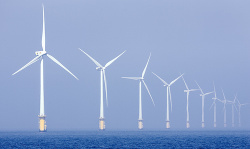
and/or operates approximately 110 wind turbines in Europe.

The Savannahnow article mentions something
happening in Chatham County but not so much yet in Lowndes County:

“What’s really going on in Chatham is that lots of homeowners
put solar on their rooftops,” Arora said. “The
excitement exists in Chatham for solar.”

-jsq

Arkansas tar sands oil spill


Will Exxon clean all these tar sands oil spills like BP “cleaned up” the Gulf?
Meanwhile, a solar spill is called a nice day.


June 2013, pipeline ruptured in
Alberta:
250,000 gallons spilled into the Red Deer River.

27 March 2013, train derailment in

Minnesota
: 15,000 gallons spilled.

“Only about 1,000 gallons has been recovered,” said Dan Olson, spokesman for the Minnesota Pollution Control Agency. “The remaining oil on the ground has thickened into a heavy tar-like consistency.”

30 March 2013, pipleline rupture,

Mayflower, Arkansas
: “thousands of gallons” spilled.

Kimberly Brasington, an Exxon spokeswoman, confirmed the oil from
the ruptured Pegasus pipeline originated in Canada. The oil is
“Wabasca Heavy Crude from Western Canada,” she said in
an e-mail Sunday. Canadian group CrudeMonitor describes Wabasca as a
blend of heavy oil production from the Athabasca region.


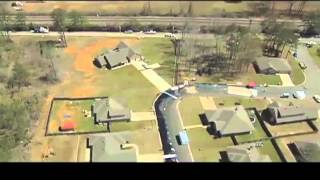
Aerial footage
of the Arkansas crude seeping through woods, waterways, streets, and yards:

Continue reading

NJ 1 GW Solar: GA #22

While Georgia

failed to reform its antique Territorial Electric Service Act

and

toyed with a solar monopoly
,


New Jersey, far to the north with far less sun,
finished installing a gigawatt (1,000 megawatts) of solar power.
The rest of the

U.S. installed 3.3 MW total
, slightly higher
than projections of 3.2 MW, but Georgia lagged behind.
When will the legislature and the Public Service Commission,
and perhaps more importantly, Georgia Power and Southern Company,
stop

stop wasting our money on that three-legged nuclear regulatory-capture boondoggle
at Plant Vogtle

and get on with solar in Georgia for jobs, for profit, and for clean air and water?

Pete Danko wrote for

Earth Techling
and Huffpo 20 March 2013,

New Jersey Solar Capacity Hits 1 Gigawatt
,

Continue reading

U.S. installed 3.3 Gigawatts of solar in 2012, on target

Moore’s law continues to drive solar costs down and installations up.
According to SEIA,

U.S. Market Installs 3,300 Megawatts in 2012; Driven by Record Fourth Quarter
,

2012 was a historic year for the U.S. solar industry. There were
3,313 megawatts (MW) of photovoltaic (PV) capacity installed
throughout the year, which represents 76% growth over 2011’s record
deployment totals. The fourth quarter of 2012 was also the largest
quarter on record as 1,300 MW came online, driven in part by
unprecedented installation levels in the residential and utility
markets. SEIA and GTM Research forecast that the market will
continue to grow at a steady clip with over 4,200 MW of PV and 940
MW of concentrating solar power (CSP) expected to come online in
2013. (All data from SEIA/GTM Research “U.S. Solar Market
Insight 2012 Year-In-Review” unless otherwise noted.)


And those new installations are driven by solar PV prices continually falling in

Moore’s Law for solar
:

Continue reading

Billions for Cape Wind

Wind, wind, blow away the NIMBYs.

David Richardson
wrote for Grist today,

Cape Wind wins billions in backing, launches offshore wind in the U.S.


What do you do when local opposition to an offshore wind farm
project dries up, when the NIMBY crowd runs out of steam, when the
federal government gives the green light and extends every permit
and courtesy the law will allow, when the technology is tested and
proven, and there’s nothing left to do but build it? Well, then you
go looking for money — lots of it. After more than a decade of
preparation, the Massachusetts wind energy company Cape Wind has
done just that — and the results are looking promising.

A $2 billion agreement with Bank of Tokyo-Mitsubishi UFJ penned last
week catapults Cape Wind to a commanding lead in the race to be the
first offshore wind project in the U.S. When complete, 130 turbines
in Nantucket Sound will generate 468 megawatts of electricity,
enough to power 100,000 to 200,000 households in the Cape Cod
region, depending on the season. If the company can get construction
started this year, Cape Wind’s clean power could begin turning on
lights from Buzzards Bay to Provincetown by 2015.

There’s more in
the article.

-jsq

HB 657, the Rural Georgia Economic Recovery and Solar Resource Act of 2014

The solar bill that’s been talked about for weeks has finally appeared in the
Georgia legislature:

HB 657
.
It’s better than I expected, because it’s about rural solar generation and distribution.
However, there is a catch: a “community solar provider” must be certified
by the Public Service Commission, instead of just setting up in business
as in most states, and the PSC could certify only one state-wide monopoly;
note the summary at the front says “an independent community solar
provider” as in only one.
But the body of the bill is more circumspect and says “any”.
Perhaps if we get enough installations
the benefits of solar will become obvious enough that
the PSC will certify a lot of community solar providers,
and we can get on with solar in Georgia,
including house and business rooftop solar.
Many thanks to Representatives Kidd of the 145th, Kirby of the 114th, Rogers of the 10th, Brockway of
the 102nd, Fullerton of the 153rd, and others.
And special credit to Robert E. Green, Shane Owl-Greason, and Ted Terry
of Georgia Solar Utilities (GaSU) for shepherding this bill
into the legislature.


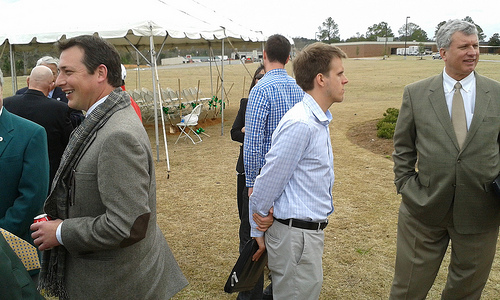
Shane Owl-Greason, Ted Terry, Robert E. Green


Shane Owl-Greason, Ted Terry, Robert E. Green
at the

Dublin High School solar groundbreaking
.

The bill requires the PSC to study changes in retail
rates
because of this bill.
Too bad it doesn’t go the rest of the way to

what North Carolina did
,
and require timely public posting of who buys and sells which types
of energy at which prices, but at least it’s a start.

Maybe HB 657 will help get

HB 503
passed for Renewable Portfolio Standards.
However, HB 657 is cleaner than either HB 503 or SB 51 because it does not mess around
with biomass or for that matter any other energy source:
HB 657 is about solar energy and nothing else.

The main part of HB 657 is in Section 1, but first here’s how it
shoehorns

Continue reading

Apple: from 35% to 75% renewable energy in two years


All it takes is the will to get it done, and Apple is doing it:

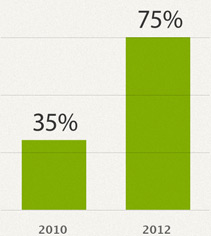
from 35% renewable energy in 2010 to 75% in 2012
, and 100%
at all Apple data centers.
Cost? They’ll save more than they spent.
Time for Georgia Power and Southern Company to stop dragging their feet
and help us get on with it in Georgia.

Peter Burrows wrote for Bloomberg Thursday that

Apple got nudged:

Continue reading

Renewable Portfolio Standards: GA, NC, and ALEC

Renewable Energy Portfolio Standards (RPS) are being proposed
in Georgia and ALEC is trying to do away with them in North Carolina.
If ALEC doesn’t like them, there must be something good about RPS.
Let’s get on with real renewable energy in Georgia.



In Georgia,

HB 503
,
sponsored by Karla Drenner, Carol Fullerton, Debbie Buckner, Scott
Holcomb, Spencer Frye, and Earnest Smith,
would create a Renewable Energy Credits Trading program as part of
renewable portfolio standards,
as Kyle wrote for Spencer Frye’s blog 10 March 2013,

Let the Sunshine In.

Unfortunately, HB 503 includes biomass as a renewable energy source.
Maybe they just mean landfill gas, which I consider a special case
since it’s being produced anyway, and since methane is worse as
a greenhouse gas than CO2, burning landfill gas makes some sense.
Nope, in

the actual bill, 46-3-71 (1)
:

‘Biomass material’ means organic matter, excluding fossil fuels and black liquor,
including agricultural crops, plants, trees, wood, wood wastes and residues, sawmill
waste, sawdust, wood chips, bark chips, and forest thinning, harvesting, or clearing
residues; wood waste from pallets or other wood demolition debris; peanut shells; cotton
plants; corn stalks; and plant matter, including aquatic plants, grasses, stalks, vegetation,
and residues, including hulls, shells, or cellulose containing fibers

The barn door in there is “harvesting”, which can mean whole trees,
but the rest isn’t much better.
We don’t need to be burning things that increase atmospheric CO2
and end up stripping our forests.
In

North Carolina they staretd with just tops and limbs and then tried to escalate
to whole trees
.
We already
fought off the biomass boondoggle here in south Georgia;
let’s not have it encouraged statewide.
Especially when we have better solutions: solar and wind power.
HB 503 isn’t going to get passed this year, since it didn’t make
crossover day, so maybe its sponsors can clean up that biomass mess
before they submit it again.

Speaking of North Carolina,

Continue reading

David defeats Goliath: Calvert Cliffs 3 nuke license denied, first ever by NRC


David (tiny five-person activist group NIRS with no lawyer)
defeated Goliath (the world’s biggest nuclear reactor manufacturer, Areva, and operator, EDF).
Previously

a committee terminated the licensing process

but the proposed operator wanted NRC review for the Calvert Cliffs 3
nuclear reactor.
For the first time ever, the Nuclear Regulatory Commission denied
a nuclear license, closing the book on Calvert Cliffs 3 for good,
and probably taking down
with it half a dozen or more other proposed reactors.

ENENEWS posted a roundup 12 March 2013,

NIRS: Victory! License denied for U.S. nuclear reactor — First time in history NRC has upheld denial

Who is this proposed nuclear operator?
The

NIRS press release explains:

Continue reading