Category Archives: Renewable Energy

Dragging Georgia behind in solar power: Georgia Power and Southern Company

As long as we leave it to Georgia Power and Southern Company, Georgia
will remain

far behind in solar power
jobs, profits, and energy independence.
Hear

Southern Company CEO Thomas A. Fanning say
:


We remain very bullish on solar. When we think about renewables, I
think renewables are exceedingly important to this nation’s future.
My sense is until we see significant technology innovation, my sense
is that that will probably very late in this decade or beyond that,
we still are gonna get by far the lion’s share of electricity from
central stations.
SO’s “bullish on solar” means nuclear, “clean coal”, and natural gas
big baseload power stations, and forget about solar or wind.
That’s why
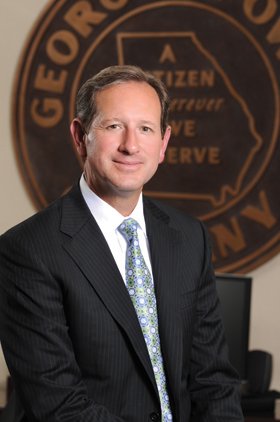


Georgia Power has raised customer rates to pay for gas and nuclear plants

while complaining about solar.
Here’s Georgia Power CEO Paul Bowers:

“Renewable (energy sources are) going to have a sliver,”
Bowers said of fuels to create electricity. “Is it going to be
2 or 4 percent? That’s yet to be determined. Economics will drive
that. But you always remember (that renewable energy is) an
intermittent resource. It’s not one you can depend on 100 percent of
the time.”

What is to be done?

-jsq
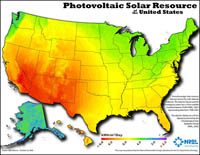
Georgia behind Maryland and Massachusetts in solar power


California and Texas ahead of Georgia in solar power, sure,
but Maryland and Massachusetts,
small and far to the north with less sun?
Does that seem right to you?


According to the Solar Energy Industries Association (SEIA),

Georgia should be number 5
.
Georgia should be moving up the rankings as fast as any state except
maybe Arizona or Colorado, according to

an Arizona State University study of two years ago that said
Georgia was third among state that would
benefit from solar deployment through generating and exporting energy to other states
.
The U.S. as a whole

keeps installing far more solar power each year
,
but Georgia Power and Southern Company keep holding Georgia back.


It’s great that Valdosta will soon get

2 more megawatts of local solar power
.
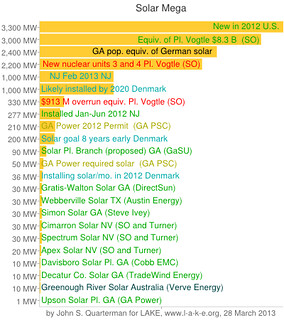
But while we’re waiting for Georgia Power to slowly get around to doling out

277 megawatts
over several years,

New Jersey has 1,000 megawatts already installed
.


Georgia is #22
, behind #21 Connecticut.
Why do we let that continue?

-jsq

Videos: audit, solar, office, and more @ VLCIA 2013-04-16


Interesting stuff (audit and internal controls,
many meetings,

2 megawatts
of solar power,
searching for and
finances of a new office
from
a mysterious seller)
in the items missing from the posted agenda yet presented anyway,
while two staff were elsewhere.

Here’s
the agenda
with a few notes and some links to the videos.
* marks items that were not in the posted agenda.

Valdosta-Lowndes County Industrial Authority

Agenda

Tuesday, April 16, 2013 5:30 p.m.

Industrial Authority Conference Room

2110 N. Patterson Street

Continue reading

Two more megawatts of local solar power! @ VLCIA 2013-04-16

One megawatt at DuPont
and one megawatt at Valdosta’s Mud Creek Wastewater Treatment Plant:
that’s two more megawatts of solar power coming to Valdosta and Lowndes County!
This was revealed at the

16 April 2013 Board Meeting

of the Valdosta-Lowndes County Industrial Authority.


Project Director Allan Ricketts was on a speaker phone,
so Executive Director Andrea Schruijer gave the

Existing Industry and Project Report
.
She thinks maybe three existing industry expansions in second and third quarter 2013.
They’ve continued working with a pharmaceutical company about locating here;
more on that later.
Continued work with three renewable and sustainable energy companies,
and Georgia Power is cooperating.

We did receive notification that two of those advanced solar initiatives
have been approved by Georgia Power Company.

One of them is a megawatt solar expansion at DuPont.
The other is a megawatt solar expansion at the City of Valdosta’s Mud Creek
Wastewater Plant.

She didn’t mention that in most states such projects

wouldn’t have to be approved for doled-out quotas by a power company
.

Schruijer also talked about Continue reading

Solar rooftops in a New Orleans neighborhood

Want people to get rooftop solar?
Put solar on rooftops where people can see it.
Cities and power companies and even NGOs like Habitat for Humanity
can help with that.


Andri Antoniades wrote for Takepart.com 10 November 2012,

Katrina-Ravaged Neighborhood Reemerges as ‘Largest Solar Housing Development in Southeast’:
The former St. Thomas Housing Projects are reborn into a square mile of solar-powered homes,

The St. Thomas Housing Project in New Orleans used to be known best
as a high-crime area, until Hurricane Katrina swept it it all away.
But seven years after the fact, St. Thomas has been reborn as the
mixed-income River Garden Apartments, which has once again gained
notoriety, but this time as the “largest solar neighborhood in the
Southeast.”

The River Garden Apartments encompass eight blocks that cover about
one square mile of New Orleans. The brightly colored homes are
topped with solar panels and according to Clean Technica, the
development is Louisiana’s largest solar project to date.

And also in Oakland, California:

Continue reading

Gulf 3 years ago; Caspian 5 years ago: BP oil well blowouts


Two years before

BP’s Deepwater Horizon oil rig poisoned the Gulf of Mexico

(Saturday was the third anniversary),
apparently BP had a very similar disaster in the Caspian Sea
and covered it up.
Is this a company or this the

13 spills in 30 days

industry we want piping tar sands crude across
America to the Gulf

for all of 35 permanent jobs and CO2 emissions like 51 coal plants
?
There’s a cleaner, cheaper, and more energy-independent way:

solar

and

wind
power can power the U.S. and the world.

Greg Palast wrote for EcoWatch 19 April 2013,

BP Covered Up Blow-out Two Years Prior to Deadly Deepwater Horizon Spill
,

Two years before the Deepwater Horizon blow-out in the Gulf of
Mexico, another BP off-shore rig suffered a nearly identical
blow-out, but BP concealed the first one from the U.S. regulators
and Congress.

This week, EcoWatch.org located an eyewitness with devastating new
information about the Caspian Sea oil-rig blow-out which BP had
concealed from government and the industry.

The witness, whose story is backed up by rig workers who were
evacuated from BP’s Caspian platform, said that had BP revealed the
full story as required by industry practice, the eleven Gulf of
Mexico workers “could have had a chance” of survival.
But BP’s insistence on using methods proven faulty sealed their
fate.

One cause of the blow-outs was the same in both cases: the use of a
money-saving technique—plugging holes with
“quick-dry” cement.

By hiding the disastrous failure of its penny-pinching cement
process in 2008, BP was able to continue to use the dangerous
methods in the Gulf of Mexico—causing the worst oil spill in
U.S. history. April 20 marks the second anniversary of the Gulf oil
disaster.

There’s more in

the article
, such as this:

Continue reading

BP: the beaches are open for everyone to enjoy!


BP must be getting desperate about people catching onto what they did to the Gulf.
A BP video ad has been replaying itself every few minutes beside various
news stories since yesterday, claiming two years after the oil disaster
(“spill” doesn’t describe it) “the beaches are open for everyone to enjoy!”

BP’s website

says “We are helping economic and environmental restoration efforts in the Gulf Coast as part of our ongoing commitment to the region following the Deepwater Horizon accident in 2010”.
Neither the ad nor the website says BP actually cleaned up the oil.
Because they didn’t.
It’s still there, as is the even more toxic “dispersant” Corexit BP
dumped on top of the oil to make it sink.
Both are busily poisoning dolphins, fish, birds, and humans.

Antonia Juhasz wrote for The Nation 7 May 2012,

Investigation: Two Years After the BP Spill, A Hidden Health Crisis Festers
,

Continue reading

Southern Company Stockholder Meeting @ SO 2013-05-22


Spring means soon time for the Southern Company Stockholder meeting!
See what one of the biggest electric utilities in the world is up to,
and maybe make a few suggestions.

Here are
videos of what you missed last year,
and here is the official SO notice for this year
(I got a link to it because I’m a shareholder):

Notice of Annual Meeting of Stockholders of The Southern Company

DATE: Wednesday, May 22, 2013
TIME: 10:00 a.m., ET
PLACE: The Lodge Conference Center at Callaway Gardens

Highway 18

Pine Mountain, Georgia 3182


It includes a list of Items of Business, which doesn’t mention that
stockholders are usually allowed to ask questions.
Those questions are usually answered by Thomas A. fanning,
Chairman, President, and Chief Executive Officer,
who included a letter (text below) in which he recites

his usual list
of energy sources, in his usual order: Continue reading

Electric utiltiies know about Moore’s Law for solar power

And they know compound annual growth, even at a low 22% rate,
is going to cause them a heap of trouble.


More from the

Edison Electric Institute
January 2013 report,

Disruptive Challenges: Financial Implications and Strategic Responses to a Changing Retail Electric Business
(rehosted on the LAKE web server, since it disappered from the EEI server),


The decline in the price of PV panels from $3.80/watt in 2008 to
$0.86/watt in mid-20121. While some will
question the sustainability of cost-curve trends experienced, it
is expected that PV panel costs will not increase (or not increase
meaningfully) even as the current supply glut is resolved. As a result,
the all-in cost of PV solar installation approximates $5/watt, with
expectations of the cost declining further as scale is realized;

Sure, costs won’t continue to drop forever, but Continue reading

Solar could burn utility business model


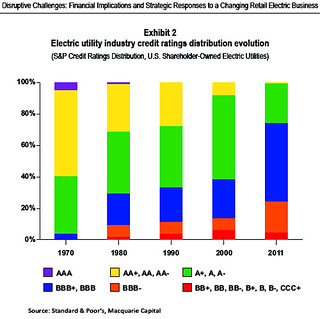
Exhibit 2

Utilities say that like it’s a bad thing.
The same utilities that

left millions without power
in the U.S.

repeatedly
last

year
, and that

gouge ratepayers for 10% or more profits
.
Moore’s Law continues

to drive solar costs down and installations up
,
with increasingly more each like compound interest.
Utilties need to adapt or get out of the way.

Last November Moody’s reported that solar and wind were eroding
credit for coal and gas power plants, and were already having

‘a profound negative impact’ on the competitiveness of thermal generation companies
.
That was in Europe.
David Roberts wrote for Grist yesterday,

Solar panels could destroy U.S. utilities, according to U.S. utilities
,

The thing to remember is that it is in a utility’s financial
interest to generate (or buy) and deliver as much power as possible.
The higher the demand, the higher the investments, the higher the
utility shareholder profits. In short, all things being equal,
utilities want to sell more power. (All things are occasionally not
equal, but we’ll leave those complications aside for now.)

And they want to produce that power

from big baseload power stations

for their economy of scale while the monopoly power utilities
get guaranteed profits, not to mention huge ratepayer and loan-guaranteed

boondoggles like the new nukes at Plant Vogtle
.
(Electric Member Cooperatives are somewhat different.)

Now, into this cozy business model enters cheap distributed solar
PV, which eats away at it like acid.

Continue reading