Category Archives: Oil

Energy Policy Act of 2005 considered harmful


The same Energy Policy Act of 2005 that

subsidized dirty oil and fracked methane including LNG exports

also funded

that oxymoron “clean” coal
such as Southern Company’s Plant Ratcliffe
in Mississippi,

ethanol production
lining the pockets of Monsanto, and

the $8.3 billion loan guarantee
to Georgia Power for the new nukes at Plant Vogtle
.


2005 was a very long time ago in solar PV years:

prices are halved, and installed solar power production is up more
than ten times
and growing exponentially like compound interest.
We need to stop throwing money at dirty, water-sucking,
centralized baseload 20th century non-solutions and get on with
clean 21st century distributed solar and wind power
for jobs, for energy independence, and for clean air and water,
not to mention less climate change.

-jsq

The fragility of centralized energy systems

All

thermal power generation requires water for cooling
,
with nukes so vulnerable no private insurer will cover them anyway
and failing frequently in recent heat waves.
“Natural” gas is no better than coal or oil for water use;
maybe worse because all those pipelines vulnerable to backhoes
or corrosion or attack.
Even hydro is vulnerable to lack of rainfall.
Carbon sequestration doesn’t get good marks, while
conservation and efficiency get rave reviews from
a study of insurance perspectives on power generation.
What’s the one power source this article about insurance risks does not say
is fragile in the face of climate change?
Hint: look up.


Limiting Liability in the Greenhouse:
Insurance Risk-Management
Strategies in the Context of
Global Climate Change
,
by
Christina Ross, Evan Mills, and Sean B. Hecht,
Stanford Environmental Law Journal and the Stanford Journal of International Law,
Symposium: on Climate Change Risk, Vol. 26A/43A:251, 2007.


Supply-side energy choices that may be made to reduce the
carbon-intensity of energy services have their own distinctive
liability characteristics. For example, switching to lower-carbon
electricity generation technology based on thermal power plant
technology (e.g., by substituting natural gas for coal) results in
systems that are still heavily dependent on water resources for
cooling. The Electric Power Research Institute has documented
considerable risks to traditionally cooled power generation systems
as a result of climate
change-induced droughts.242 Similarly, “zero-emissions” hydroelectric
generating systems are also sensitive to rainfall patterns.

242
Denis Albrecht,

Electric Power Research Institute
, Presentation:
Climate Impact on Water Availability for Electricity Generation
(April 11, 2006) (presentation slides associated with the Electric
Power Research Institute).

Centralization considered harmful

Continue reading

ICLEI and sustainability

Have you heard there’s a U.N. agency going around getting
local governments to sign “Agenda 21” into ordinances that
will take away your private property through eminent domain?
If not, you’ve avoided the propaganda put out by
fossil fuel companies to subvert sustainability.
If you have, here’s why it’s bunk.

There is an organization that promotes measures for
sustainability to local governments.
Sustainability as in arranging for local resources to
be available for us and our children and grandchildren.
Clean air, clean water, forests, education, and private property
rights including not letting developers or big corporations
damage your private property.
Are you against any of those things?

An organization promoting sustainability with local governments is called

ICLEI–Local Governments for Sustainability
.
ICLEI says it is:


the leading global network devoted to local governments engaged in
sustainability, climate protection, and clean energy initiatives. The
organization was formerly known as the International Council for Local
Environmental Initiatives.

ICLEI has heard about the conspiracy theories and has written up

a rebuttal
. Continue reading

VSU up there with Harvard about fossil fuel divestment


VSU is with the big schools, leading the stigmatization of fossil fuel
companies and the exodus from those stranded assets.
Students are leading on that and related issues,
more than our local elected bodies, but there’s an election going on.

Mary Schellentrager posted for PowerShift 29 April 2014,

NATIONAL PHOTO ROUND-UP: BOLD ACTION FOR #BEYONDEARTHDAY
: Continue reading

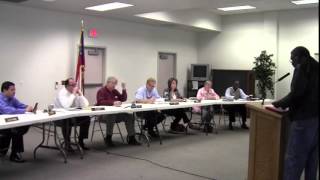
Videos: church parking withdrawn @ ZBOA 2014-04-01


North Valdosta Church of God
came to a decision.
Plus

a house variance
in
Lowndes County was approved unanimously,
and

a gas station variance
got its building variance approved, but its other variance requests denided, all on a split vote.
in
Valdosta.
See

the Meeting Results Summary
,
which also lists all of ZBOA members as present.

Here’s

the agenda
, with links to the videos and a few notes.
The City of Valdosta puts ZBOA agendas and minutes

online in real PDFs
. Continue reading

VSU new special committee on sustainability to investigate fossil fuel divestment

PR from Students Against Violating the Environment (S.A.V.E.) today. -jsq

Hi everyone,


I’m very glad to announce that under the direction of President
McKinney, there will soon be a new special committee on
sustainability. One of the goals of it will be to investigate fossil
fuel divestment and create a report that will be presented to the
Board of Trustees. The description is as follows:

“The Valdosta State University President’s Special Committee on
Sustainability is charged with Continue reading

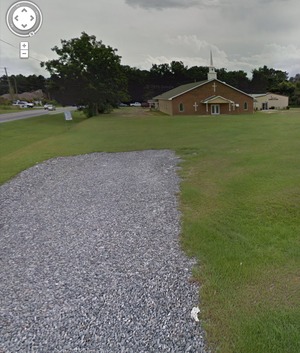
Church parking back yet again @ ZBOA 2014-04-01


North Valdosta Church of God

is back for perhaps the fourth time about the parking lot for their new building.
Plus

a house variance
in
Lowndes County
and

a gas station variance

in
Valdosta.

Here’s

the agenda
.
The City of Valdosta puts ZBOA agendas and minutes

online in real PDFs
.

Continue reading

Whom do you serve? A question for local government

A question asked about big oil and Mobile is just as relevant
to every local and state government along the proposed Sabal Trail
fracked methane pipeline,
and Transco and Florida Southeast Connection, too.
A couple of local elected officials and several candidates did make
public statements Saturday (stay tuned), so maybe we’re starting to
get some answers to this question in Lowndes County, Georgia.
Some other locations have already been getting answers.

Brad Nolen wrote for New American Journal 28 March 2014,

How Big Oil Controls Local Governments:
Whom Do You Serve? Thoughts on Local Government and Dirty Industries
,


Now, it should go without saying that the purpose of councils,
commissions and public office in general is to represent the varied
interests of the citizens, and hopefully through consensus- seeking
achieve some semblance of collective wisdom; and then, if we’re
really lucky to apply said wisdom in charting our course toward a
Mobile our great grandchildren will be proud to inherit.

Yet, when it came to finding a voice to protect our drinking water
from Big Oil, we heard nothing substantive from our local leaders,
even though we marched on their doorsteps in boots that are still
wet with BP oil.

And now, Continue reading

Time to call it: Carbon Crash, Solar Dawn

Another observer gets it that

green solar power is winning
.
Letting a fracking deliver company turn us into “stakeholders” in a white
elephant methane pipeline would be an even huger waste after the
pipeline stopped being used in a decade or so because

sun, wind, and water power everything
by then,
winning like the Internet did.

Paul Gilding wrote on his blog 19 March 2013,

Carbon Crash Solar Dawn
,


I think it’s time to call it. Renewables and associated storage,
transport and digital technologies are so rapidly disrupting whole
industries’ business models they are pushing the fossil fuel
industry towards inevitable collapse.

Some of you will struggle with that statement. Most people accept
the idea that fossil fuels are all powerful — that the
industry controls governments and it will take many decades to force
them out of our economy. Fortunately, the fossil fuel industry
suffers the same delusion.

In fact, probably the main benefit of the US shale gas and oil
“revolution” is that it’s keeping the fossil fuel
industry and it’s cheer squad distracted while renewables, electric
cars and associated technologies build the momentum needed to make
their takeover unstoppable — even by the most powerful
industry in the world.

Why are the fossil fuel companies still pushing, then? Continue reading

100% sun, wind, and water can power each U.S. state and the world –Stanford study


We have all the technology right now that we need to power
the U.S. state by state and the world with solar, wind, and water power.
No burning coal or oil or fracked natural gas and no nukes.
No need for any new destructive and hazardous methane pipelines.
No waiting for batteries.
All we have to do is get on with it.


100% RENEWABLE ENERGY IS FEASIBLE AND AFFORDABLE, ACCORDING TO STANFORD PROPOSAL
,


Stanford University researchers led by civil engineer Mark Jacobson
have developed detailed plans for each state in the union that to
move to 100 percent wind, water and solar power by 2050 using only
technology that’s already available. The plan, presented recently at
the

AAAS conference
in Chicago, also forms the basis for

The Solutions Project
nonprofit.

“The conclusion is that it’s technically and economically
feasible,” Jacobson told Singularity Hub.

The plan doesn’t rely, like many others, on dramatic energy
efficiency regimes. Nor does it include biofuels or nuclear power,
whose green credentials are the source of much debate.

The proposal is straightforward: eliminate combustion as a source of
energy, because it’s dirty and inefficient. All vehicles would be
powered by electric batteries or by hydrogen, where the hydrogen is
produced through electrolysis rather than natural gas.
High-temperature industrial processes would also use electricity or
hydrogen combustion.

The rest would simply be a question of allowing existing fossil-fuel
plants to age out and using renewable sources to power any new
plants that come online….

“The greatest barriers to a conversion are neither technical
nor economic. They are social and political,” the AAAS paper
concludes.

For
Georgia,
that’s 40% solar PV plants, 35% offshore wind, 13% rooftop PV (6% residential and 7% commercial), 5% concentrating solar plants, 5% onshore wind, and 1% each wind, tide, and conventional hydro power.
Plus 210,200 construction jobs and 101,000 operation jobs.
And saving $14.3 billion per year Continue reading