Tag Archives: Wind

BP: the beaches are open for everyone to enjoy!


BP must be getting desperate about people catching onto what they did to the Gulf.
A BP video ad has been replaying itself every few minutes beside various
news stories since yesterday, claiming two years after the oil disaster
(“spill” doesn’t describe it) “the beaches are open for everyone to enjoy!”

BP’s website

says “We are helping economic and environmental restoration efforts in the Gulf Coast as part of our ongoing commitment to the region following the Deepwater Horizon accident in 2010”.
Neither the ad nor the website says BP actually cleaned up the oil.
Because they didn’t.
It’s still there, as is the even more toxic “dispersant” Corexit BP
dumped on top of the oil to make it sink.
Both are busily poisoning dolphins, fish, birds, and humans.

Antonia Juhasz wrote for The Nation 7 May 2012,

Investigation: Two Years After the BP Spill, A Hidden Health Crisis Festers
,

Continue reading

Southern Company Stockholder Meeting @ SO 2013-05-22


Spring means soon time for the Southern Company Stockholder meeting!
See what one of the biggest electric utilities in the world is up to,
and maybe make a few suggestions.

Here are
videos of what you missed last year,
and here is the official SO notice for this year
(I got a link to it because I’m a shareholder):

Notice of Annual Meeting of Stockholders of The Southern Company

DATE: Wednesday, May 22, 2013
TIME: 10:00 a.m., ET
PLACE: The Lodge Conference Center at Callaway Gardens

Highway 18

Pine Mountain, Georgia 3182


It includes a list of Items of Business, which doesn’t mention that
stockholders are usually allowed to ask questions.
Those questions are usually answered by Thomas A. fanning,
Chairman, President, and Chief Executive Officer,
who included a letter (text below) in which he recites

his usual list
of energy sources, in his usual order: Continue reading

Electric utiltiies know about Moore’s Law for solar power

And they know compound annual growth, even at a low 22% rate,
is going to cause them a heap of trouble.


More from the

Edison Electric Institute
January 2013 report,

Disruptive Challenges: Financial Implications and Strategic Responses to a Changing Retail Electric Business
(rehosted on the LAKE web server, since it disappered from the EEI server),


The decline in the price of PV panels from $3.80/watt in 2008 to
$0.86/watt in mid-20121. While some will
question the sustainability of cost-curve trends experienced, it
is expected that PV panel costs will not increase (or not increase
meaningfully) even as the current supply glut is resolved. As a result,
the all-in cost of PV solar installation approximates $5/watt, with
expectations of the cost declining further as scale is realized;

Sure, costs won’t continue to drop forever, but Continue reading

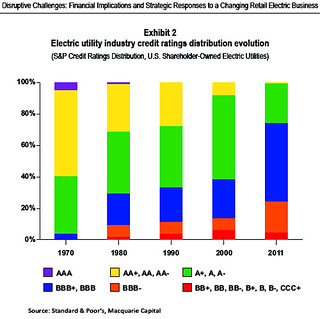
Solar could burn utility business model


Exhibit 2

Utilities say that like it’s a bad thing.
The same utilities that

left millions without power
in the U.S.

repeatedly
last

year
, and that

gouge ratepayers for 10% or more profits
.
Moore’s Law continues

to drive solar costs down and installations up
,
with increasingly more each like compound interest.
Utilties need to adapt or get out of the way.

Last November Moody’s reported that solar and wind were eroding
credit for coal and gas power plants, and were already having

‘a profound negative impact’ on the competitiveness of thermal generation companies
.
That was in Europe.
David Roberts wrote for Grist yesterday,

Solar panels could destroy U.S. utilities, according to U.S. utilities
,

The thing to remember is that it is in a utility’s financial
interest to generate (or buy) and deliver as much power as possible.
The higher the demand, the higher the investments, the higher the
utility shareholder profits. In short, all things being equal,
utilities want to sell more power. (All things are occasionally not
equal, but we’ll leave those complications aside for now.)

And they want to produce that power

from big baseload power stations

for their economy of scale while the monopoly power utilities
get guaranteed profits, not to mention huge ratepayer and loan-guaranteed

boondoggles like the new nukes at Plant Vogtle
.
(Electric Member Cooperatives are somewhat different.)

Now, into this cozy business model enters cheap distributed solar
PV, which eats away at it like acid.

Continue reading

Fossil fuels get five times the subsidies of renewable solar and wind


Fossil fuels get more than $70 billion dollars a year in
U.S. government subsidies (tax breaks and direct spending),
while solar and wind get only about $12 billion,
so fossil fuels got more than five times as much,
while

nuclear got ten times as much
(especially
in Georgia
).
Even corn ethanol, that sounded-like-a-good-idea-at-the-time
boondoggle, gets more subsidies than solar and wind put together.

That’s without even going into the
externalities

such as healthcare costs due to polution, environmental destruction
through mountaintop removal for coal, tar sands oil drilling,
and fracking for natural gas, and wars for oil and uranium.

Continue reading

Arkansas tar sands oil spill


Will Exxon clean all these tar sands oil spills like BP “cleaned up” the Gulf?
Meanwhile, a solar spill is called a nice day.


June 2013, pipeline ruptured in
Alberta:
250,000 gallons spilled into the Red Deer River.

27 March 2013, train derailment in

Minnesota
: 15,000 gallons spilled.

“Only about 1,000 gallons has been recovered,” said Dan Olson, spokesman for the Minnesota Pollution Control Agency. “The remaining oil on the ground has thickened into a heavy tar-like consistency.”

30 March 2013, pipleline rupture,

Mayflower, Arkansas
: “thousands of gallons” spilled.

Kimberly Brasington, an Exxon spokeswoman, confirmed the oil from
the ruptured Pegasus pipeline originated in Canada. The oil is
“Wabasca Heavy Crude from Western Canada,” she said in
an e-mail Sunday. Canadian group CrudeMonitor describes Wabasca as a
blend of heavy oil production from the Athabasca region.


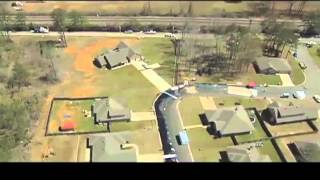
Aerial footage
of the Arkansas crude seeping through woods, waterways, streets, and yards:

Continue reading

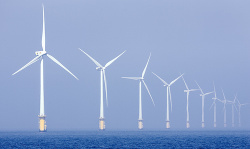
Billions for Cape Wind

Wind, wind, blow away the NIMBYs.

David Richardson
wrote for Grist today,

Cape Wind wins billions in backing, launches offshore wind in the U.S.


What do you do when local opposition to an offshore wind farm
project dries up, when the NIMBY crowd runs out of steam, when the
federal government gives the green light and extends every permit
and courtesy the law will allow, when the technology is tested and
proven, and there’s nothing left to do but build it? Well, then you
go looking for money — lots of it. After more than a decade of
preparation, the Massachusetts wind energy company Cape Wind has
done just that — and the results are looking promising.

A $2 billion agreement with Bank of Tokyo-Mitsubishi UFJ penned last
week catapults Cape Wind to a commanding lead in the race to be the
first offshore wind project in the U.S. When complete, 130 turbines
in Nantucket Sound will generate 468 megawatts of electricity,
enough to power 100,000 to 200,000 households in the Cape Cod
region, depending on the season. If the company can get construction
started this year, Cape Wind’s clean power could begin turning on
lights from Buzzards Bay to Provincetown by 2015.

There’s more in
the article.

-jsq

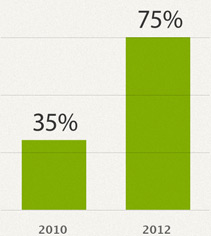
Apple: from 35% to 75% renewable energy in two years


All it takes is the will to get it done, and Apple is doing it:

from 35% renewable energy in 2010 to 75% in 2012
, and 100%
at all Apple data centers.
Cost? They’ll save more than they spent.
Time for Georgia Power and Southern Company to stop dragging their feet
and help us get on with it in Georgia.

Peter Burrows wrote for Bloomberg Thursday that

Apple got nudged:

Continue reading

Renewable Portfolio Standards: GA, NC, and ALEC

Renewable Energy Portfolio Standards (RPS) are being proposed
in Georgia and ALEC is trying to do away with them in North Carolina.
If ALEC doesn’t like them, there must be something good about RPS.
Let’s get on with real renewable energy in Georgia.



In Georgia,

HB 503
,
sponsored by Karla Drenner, Carol Fullerton, Debbie Buckner, Scott
Holcomb, Spencer Frye, and Earnest Smith,
would create a Renewable Energy Credits Trading program as part of
renewable portfolio standards,
as Kyle wrote for Spencer Frye’s blog 10 March 2013,

Let the Sunshine In.

Unfortunately, HB 503 includes biomass as a renewable energy source.
Maybe they just mean landfill gas, which I consider a special case
since it’s being produced anyway, and since methane is worse as
a greenhouse gas than CO2, burning landfill gas makes some sense.
Nope, in

the actual bill, 46-3-71 (1)
:

‘Biomass material’ means organic matter, excluding fossil fuels and black liquor,
including agricultural crops, plants, trees, wood, wood wastes and residues, sawmill
waste, sawdust, wood chips, bark chips, and forest thinning, harvesting, or clearing
residues; wood waste from pallets or other wood demolition debris; peanut shells; cotton
plants; corn stalks; and plant matter, including aquatic plants, grasses, stalks, vegetation,
and residues, including hulls, shells, or cellulose containing fibers

The barn door in there is “harvesting”, which can mean whole trees,
but the rest isn’t much better.
We don’t need to be burning things that increase atmospheric CO2
and end up stripping our forests.
In

North Carolina they staretd with just tops and limbs and then tried to escalate
to whole trees
.
We already
fought off the biomass boondoggle here in south Georgia;
let’s not have it encouraged statewide.
Especially when we have better solutions: solar and wind power.
HB 503 isn’t going to get passed this year, since it didn’t make
crossover day, so maybe its sponsors can clean up that biomass mess
before they submit it again.

Speaking of North Carolina,

Continue reading

Fukushima still broken 2 years after

Tomorrow is the second anniversary of the earthquake and tsunami
that heavily damaged four of the six nuclear reactors at


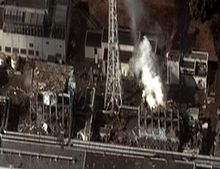
Fukushima Dai-ichi in Japan on 11 March 2011, also known as 3/11.
The broken reactors at Fukushima continue to leak radioactive substances into
groundwater, the sea, and the air, where it is carried across oceans
to the U.S. and elsewhere.
And it could still get much worse:

if the No. 4 reactor pool, still suspended in the air, collapses and causes

the disintegration of spent fuel rods from all the other reactors there,
Tokyo, 200 miles away, will have to be evacuated.
Fukushima’s GE reactors are the same GE Mark I design as Southern Company’s
Plant Hatch 1 and 2 only 100 miles from here at Baxley, GA,
and about 200 miles from Atlanta and Charleston.
Hatch

is leaking radioactive tritium
into our groundwater again.
Five more reactors

within 500 miles of here

are also GE Mark I.


Among the 311 or so facebook pages and websites about Fukushima
or against nuclear power is this concise one,

Unplug Nuclear Power
,
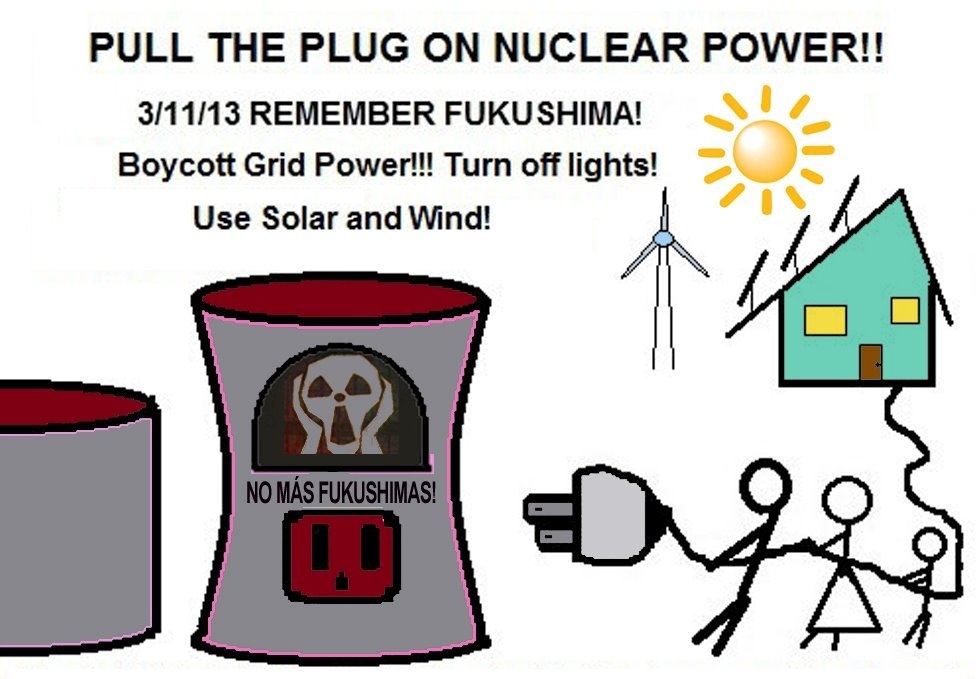
which offers a simple action anyone can take tomorrow:

On 3/11, we will mark Fukushima day by using as little utility
supplied electricity as possible. This direct Action is designed to
punish the utility companies for continuing to push for nuclear
power even after the Fukushima disaster has proven that it is just
too dangerous. On that day, we will punish them in the only way that
they understand, by denying them our money. There will be four
levels of participation, go to the website,

www.unplugnuclearpower.com
for a more complete description. Also, be
sure to join the Event. Finally, if you are in a group our
organization that can endorse this Action, please let us know.

As

Jeremy Rifkin so concisely spelled out,

nuclear power is over

Continue reading