Power companies’ main stated objection to solar or wind is that they are not “capacity” or “baseload”
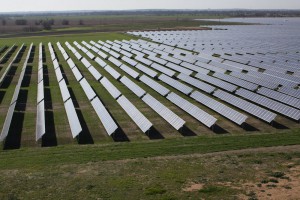
generation because sometimes the sun does not shine and the wind does not blow. And those utilities are required by various state, regional Energy Regulatory Commissions right up to the Federal Energy Regulatory Commission (FERC) to supply capacity or baseload power. That’s their main excuse for coal and nuclear plants. Well, the Chairman of FERC thinks we may not need baseload, nor any new coal nor nuclear plants, either.
While /the grid power was out during and after the March F2 tornado (F3 in Lanier County), the lights at our place never blinked, because we have solar panels and batteries. George Mokray has a video that expands on that point.
Solar IS Civil Defense—what we are all supposed to have on hand in case of emergency—flashlight, cell phone, radio, extra set of batteries—can be powered by a few square inches of solar electric panel. Add a hand crank or bicycle generator and you have a reliable source of survival level electricity, day or night, by sunlight or muscle power.
Solar IS Civil Defense PSA Valdosta, Lowndes County, Georgia, . Video by for Lowndes Area Knowledge Exchange (LAKE).
This is also entry level electrical power for the 1.5 billion people around the world who do not yet have access to electricity. Civil defense at home and economic development abroad can be combined in a “buy one, give one” program like the Bogolight (http:// www.bogolight.com) which is a solar LED light and AA battery charger.
Here are videos of the entire 11:11 minute 24 April 2012 Regular Session of the Lowndes County Commission. They time at 0:57 (before call to order; doesn’t count), 0:42 (mostly dead air), 0:33 (invocation and pledge: not business), 0:29, 0:37, 0:40, 0:10, 0:46, 1:09, 0:46, 0:53, 1:22, 2:08, 1:30, and 0:08: eleven minutes and eleven seconds total. And that’s including the invocation and pledge and the two citizens who spoke (3:38 for those last two). It would seem a good guess that the Commissioners and staff discussed more in the previous morning’s work session, but not really; you can see for yourself.
A Commissioner asked a question! Before they accepted a bid for mowing Bemiss Road, Joyce Evans wanted an explanation of the timeframe of the cutting of the grass. Public Works Director Robin English wanted to know work time or response time? County Manager Joe Pritchard and somebody else simultaneously said “response time”. Hm, how did they know that? In what open meeting was that question previously raised? Also, Pritchard demonstrated he could speak into the microphone and be heard when he wanted to. English clarified the response times quoted by the bidders, and Evans moved to go with the low bidder, which the Commissioners approved, unanimously as usual.
Videos, Regular Session Regular Session, Lowndes County Commission (LCC), Valdosta, Lowndes County, Georgia, 24 April 2012. Videos by Gretchen Quarterman for Lowndes Area Knowledge Exchange (LAKE).
Here are videos of the entire ten and a half minute 23 April 2012 Work Session of the Lowndes County Commission. As you can see, these videos time at 1:01, 0:33, 0:44, 1:07, 1:45, 1:40, 0:33, 2:59, and 0:10, and that’s with a camera that stops and starts almost instantaneously. Those times add up to 10 minutes and 32 seconds. Is that adequate discussion for the county’s business?
Finance Director Stephanie Black said the county sent out an RFP for banking services to local banks. Three responded, and one was incomplete. The two complete bids were Regions Bank and SunTrust. Regions will waive charges with $6M balance; SunTrust will waive charges $2.8M balance.
On the FDIC charge, Regions will charge .135 per thousand dollars; SunTrust is waiving that.
She said that was currently about $3500 or $4500 per month. Commissioner Powell asked who they were currently using. Answer: Regions. There’s more in the video, and there was a written report the Commissioners were looking at.
Apparently the county’s own water isn’t good enough for Commissioners and staff,
Continue reading →
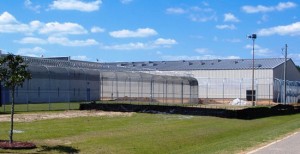
A business our Industrial Authority wanted to get us into still risks bankrupting Irwin County: a private prison. Maybe we should do better due diligence around here and invest in better business ventures.
A privately owned detention center that houses hundreds of illegal immigrants in south Georgia is struggling with finances, and narrowly avoided being auctioned this year.
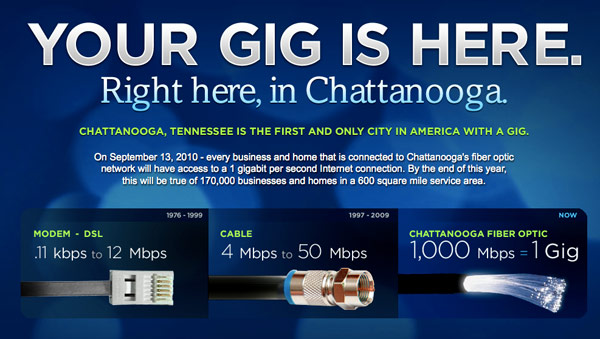
So we heard about Chattanooga all during the school “unification” referendum. I turns out Chattanooga really does have something that attracts business (no, not a unified school system; if you want to go back into that, I’ve got the references available). What really attracts businesses to Chattanooga is fast Internet broadband access.
While on a site selection visit in Chattanooga, a CEO asked about broadband access. When told that the slowest tier on Chattanooga’s community fiber network was 30 megabits per second, he turned to his IT adviser for a translation. Upon hearing “that’s more than we can get in our headquarters presently,” the company cancelled its other planned visits and located its new site in Chattanooga.
That’s right, Chattanooga really does have one thing going for it: high speed Internet access.
Wonder why Southern Company couldn’t get private financing for its new nukes at Plant Vogtle? Because back in June 2009 bond-rater Moody’s said this:
But from a credit perspective, the risks of building new nuclear generation
are hard to ignore, entailing significantly higher business and operating risk profiles, with construction risk, huge capital costs, and continual shifts in national energy policy.
In case that wasn’t clear enough, they spelled it out further.
Nuclear’s “bet-the-farm” risk
The NRC says about 14 companies to date have submitted COL applications, proposing numerous new nuclear reactors for power generation. The first of these COL’s is expected to be approved beginning in mid-2011. Many of the COL license applications include partners, but the next table lists the primary holding company entity behind each project, and our view of the activity level associated with the endeavor.
From a credit perspective, companies that pursue new nuclear generation will take on a higher business and operating risk profile, pressuring credit ratings over the intermediate- to long-term.
Moody’s wraps up with some reassuring words for financiers, but maybe not so reassuring to we the taxpayers:
The only two U.S. reactor projects now technically under construction are on the brink of death for financial reasons.
If they go under, there will almost certainly be no new reactors built here.
The much mythologized “nuclear renaissance” will be officially buried, and the U.S. can take a definitive leap toward a green-powered future that will actually work and that won’t threaten the continent with radioactive contamination.
Those are the stakes. And in that high-stakes poker game, it seems Southern Company is doing a little bluffing.
Why is it so hard to get a company like Georgia Power or The Southern Company to get on with solar and wind power for clean energy, for national energy independence, and, most importantly to such corporations, for their own profit? Why instead do they keep investing in coal and natural gas and wasting our tax and customer dollars on nuclear financial boondoggles? Why did Cobb EMC back new coal plants until they had their nose rubbed in national shame about corruption and do nothing about solar until their shareholders revolted and changed a majority of their board? We don’t even need to wait for that forensic audit the new Cobb EMC board wants to get the big picture. Such companies consider what they’re used to to be low risk, and anything new to be risky. Why are they so stodgy, and how do we change that?
These companies have many decades of experience with coal and natural gas, so they consider them less financially risky. (Details like neighbors dying disproportionately from cancer cost a little bit to buy up property, but that’s nothing compared to readily predictable profits.) Even nuclear such companies consider not risky to them, since they’ve got the federal government and their own customers guaranteeing all the financial risk through Construction Work in Progress charges on their bills for power they’re not even receiving from the new nukes and agreement from Georgia PSC that cost overruns like those caused by concrete sinking into the dirt can be passed on to the customers.
The illusion of eliminating uncertainty from corporate decision-making is not merely a question of management style or personal preference. In the legal environment that has developed around publicly traded corporations, managers are strongly discouraged from shouldering any risks that they know about—or, in the opinion of some future jury, should have known about—even if they have a hunch that the gamble might pay off in the long run. There is no such thing as “long run” in industries driven by the next quarterly report. The possibility of some innovation making money is just that—a mere possibility that will not have time to materialize before the subpoenas from minority shareholder lawsuits begin to roll in.
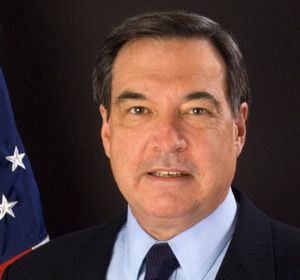 generation because sometimes the sun does not shine and the wind does not blow. And those utilities are required by various state, regional Energy Regulatory Commissions right up to the Federal Energy Regulatory Commission (FERC) to supply capacity or baseload power. That’s their main excuse for coal and nuclear plants. Well, the Chairman of FERC thinks we may not need baseload, nor any new coal nor nuclear plants, either.
the chairman of the Federal Energy Regulatory Commission said today.