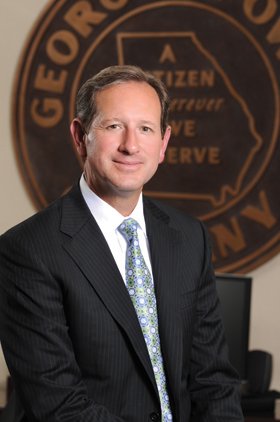
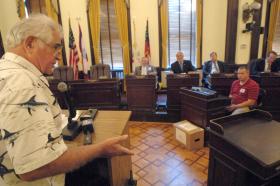
David A. Staples
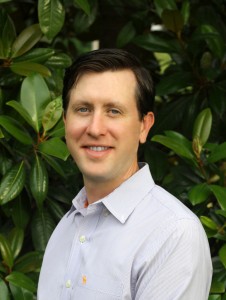
running for the Georgia Public Service Commission for District 5,
talked about the ethical conflicts of the incumbents who take
almost all of their campaign contributions from people associated
with the utilities they regulate.
Then he mentioned that the new nuclear reactors Georgia Power
is building for Southern Company at Plant Vogtle
have
another $3.5 billion in cost overruns coming.
The Georgia Sierra Club sent a questionnaire to all candidates for
Georgia Public Service Commission.
None of the incumbents answered.
The two challengers did.
Here’s the one from Steve Oppenheimer
for District 3.
-jsq
As a Candidate for Public Service Commission, what is your campaign strategy for achieving 50% +1 of the votes cast?
[I’m omitting the answers to this question. -jsq]
How should the Public Service Commission consider and
weight the impacts to community health (asthma, cancer rates, etc.)
and on Georgia’s environmental (water quantity, air quality etc.)
when making decisions about a utility’s generation portfolio?
The PSC has a major role shaping energy policy for Georgia. I would
like to schedule PSC hearings on the relationship of power
production and our air, water, morbidity and mortality and our
general quality of life. My professional background in dentistry &
health care provides a keen understanding of the relationship of
power generation and health. Dr David Satcher, former US Surgeon
General and Executive Director Satcher Health Leadership Institute
at Morehouse University has become a friend and part of my
professional network during the campaign. I would like to see PSC
convene hearings on the topic. Georgians for a Healthy Future, a
relatively new, broad based, organization would provide another
forum for discussion of these issues. Membership in Georgians for a
Healthy Future includes Georgia Legislators on both sides of the
aisle. The PSC must be a leader on these issues—as the
legislature as a body will likely not be progressive on these
issues.
The Georgia Sierra Club sent a questionnaire to all candidates for
Georgia Public Service Commission.
None of the incumbents answered.
The two challengers did.
Here’s the one from David A. Staples for District 5.
-jsq
As a Candidate for Public Service Commission, what is your
campaign strategy for achieving 50% +1 of the votes cast?
[I’m omitting the answers to this question. -jsq]
How should the Public Service Commission consider and weight the
impacts to community
health (asthma, cancer rates, etc.) and on Georgia’s environmental
(water quantity, air quality
etc.) when making decisions about a utility’s generation portfolio?
Impacts to community health and the environment have to be considered
very carefully. I know
there are a number of different ways of viewing the situation but the
explanation I’ve found
that works best with Republicans in trying to get their support is that
it comes down to a private
property matter. The right to swing ones fist ends at the other
person’s nose. Does anyone have
the right to pollute the air that I breathe or the water that I drink?
If I buy a piece of property for
instance along the Savannah River or Ogeechee River, does someone
upstream from me have
the right to pollute the water that then flows onto my land, carrying
those pollutants with it?
So if Southern Company is a “great, big company” similar to Australia,
why did Australia just deploy a solar farm ten times the size of
the biggest one SO has in Georgia?
From an energy standpoint, Southern Company is a little bit smaller,
but similar to, the energy production profile of the nation of
Australia. We are a great, big company from an energy production
standpoint.
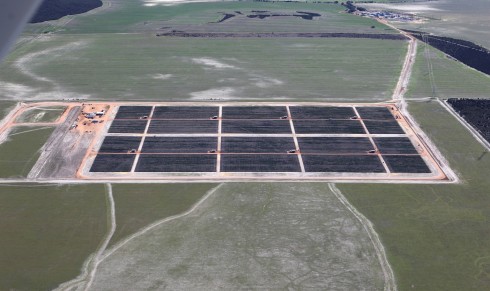
At about 11am local time near the Western Australian town of
Geraldton this morning, Australia’s first-utility scale solar farm
was officially switched on.
It was a suitably sunny day (blighted by three million flies) and
although just 10MW in size, and built courtesy of funding from the
local government, a state-owned utility and by one of the wealthiest
companies on the planet, it may presage a dramatic change in the way
this country produces energy.
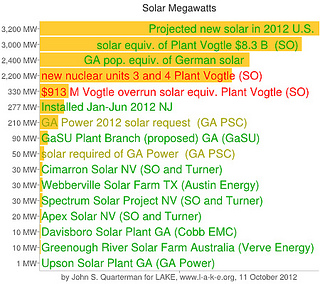
So what’s SO or Georgia Power’s biggest solar plant in Georgia?
You remember,
1 MW in Upson.
OK, to be fair, that’s just Georgia Power.
SO does have larger solar farms elsewhere, including
One of the most frequent topics that comes up in political
conversation these days is ethics. On July 31st, Georgians
overwhelmingly voted that there needs to be a cap on the amount of
gifts our elected officials are allowed to accept. However, there
are many of us who believe that even a $100 per day cap is still too
much—that perhaps $0 is a better cap. After all, looking at
the Georgia Government Transparency and Campaign Finance Commission
website, one can see that while the $150 rounds of golf and several
hundred dollar dinners for the official and their spouse may be
eliminated, there are many more of the smaller lunches, dinners, and
various other goodies that would still be allowed. Would you be
surprised to hear that some Public Service Commissioners walk out of
their office or a hearing at lunch time and say “I’m hungry, where’s
a lobbyist”?
However, there is one completely legal process by which we can
eliminate all gifts
A proposal from a start-up business promises to lower electricity
rates by rebating profits to customers if given a chance to compete
as Georgia Power Co.’s “mirror image.”
To proceed with its long-range plan of developing 2 gigawatts of
solar power, the start-up, Georgia Solar Utilities Inc., wants to
start by building an 80-megawatt “solar farm” near
Milledgeville as soon as it gets a green light from the Georgia
Public Service Commission. GaSU filed its request last week, and as
of Monday, it’s still too fresh for public evaluation.
So radical is the proposal that spokespersons for Georgia Power and
the Georgia Solar Energy Association said they still were evaluating
it and could not comment.
Groups that normally advocate for customers also are staying quiet.
GaSU executives recognize such a big change won’t come easily.
“Renewable (energy sources are) going to have a sliver,”
Bowers said of fuels to create electricity. “Is it going to be
2 or 4 percent? That’s yet to be determined. Economics will drive
that. But you always remember (that renewable energy is) an
intermittent resource. It’s not one you can depend on 100 percent of
the time.”
One time you can depend on it is hot summer days when everybody is
air conditioning, which is why
Austin Energy flipped in one year
from spouting such nonsense to deploying the most aggressive solar rooftop
rebate program in the country.
Austin Energy did the math and found those rebates would cost
about the same as a coal plant and would generate as much energy.
And when it is needed most, unlike the fossilized baseload grid,
which
left millions without power in the U.S. in June
and
hundreds of millions without power in India in July.
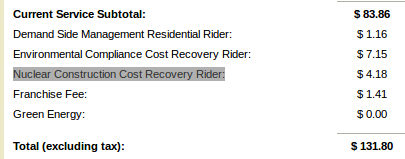
A captive Public Service Commission that
rubber-stamps costs for Plant Vogtle.
In case there was any doubt as to the PSC’s role in legitimizing those new nukes,
the very next day Fitch reaffirmed Southern Company’s bond ratings.
Southern Company’s regulated utility subsidiaries derive predictable
cash flows from low-risk utility businesses, enjoy relatively
favorable regulatory framework in their service territories, and
exhibit limited commodity price risks due to the ability to recover
fuel and purchased power through separate cost trackers.
To get a decent deal on streetlights, a small Georgia city may have
to help change the Georgia Public Service Commission.
Or, an energy concern in Hahira happened to coincide with
a visit by PSC candidate Steve Oppenheimer.
Ralph Clendenin, City Council member, is looking into converting
Hahira's streetlights to LEDs or maybe solar.
He has discussed that with Georgia Power, which will do it for
$250,000 up front.
At a savings of $1,000 a month, that would take quite a while to pay back:
more than 20 years.
Just like you're looking at options the city might do for better choices for lighting
in terms of serving the people and meeting your budget, as Georgians we need that, too.
He indicated that there are more solutions than we're being told.
To me what's improtant are homeowners rights,
and we get control over the power rates,
because our residential rates and small business rates have gone up about 31% in five years.
What it comes down to is people like you in this room in the small communities
figuring out what pieces do we put together to make our community better for tomorrow.
Afterwards in the entranceway,
Ralph Clendenin showed Steve Oppenheimer how
he'd figured out that Georgia Power was charging about 73% maintenance
above the electricity cost of the streetlights.
Oppenheimer said there were many options.
Clendenin suggested one:
The option I see right now is, the Commission somehow, has got to change the rules
on how Georgia Power… structures payments.
Oppenheimer suggested a way to get there:
We need a commission with some new leadership,
with some separation from industry, that doesn't have the
apparent conflicts of interest.
Ralph summed it up pithily:
Ralph Clendenin: 73% is that forever payment to Georgia Power.
Steve Oppenheimer: It's a great deal, if you're on the right end of it.
[laughter]
What say we change the end of the stick we the taxpayers are getting from the PSC?