Tag Archives: energy efficiency

Georgia Power plans to change all streetlights to LEDs

Terri Lupo. South Region Vice President at Georgia Power,
has provided further information on

Valdosta converting to LED streetlights
.


She said on the telephone yesterday that
Georgia Power met with Valdosta City Manager Larry Hanson last week.
Georgia Power plans over next four years to change out all the streetlights
in Georgia, from high pressure sodium (or whatever they’re currently using)
to LED lighting.
She says that will be more efficient, and will provide more
light, with a better pattern of coverage.
Valdosta had already expressed interest, so they were one of the first
to join this LED streetlight program.

She said it’s not surprising

Tim Carroll was a little vague on the details
,
since Georgia Power is Continue reading

China can go 80% sun, wind, water power by 2050 –WWF


300x424 Cover, in China's Future Generation, by WWF, February 2014

If the most populous country in the world can do it,
even the Sunshine State and the rest of the world can do it.
With no new nuclear,
depending heavily on on energy efficiency and conservation,
using China’s huge number of rooftops for solar power,
with almost as much wind power, plus a bit more hydropower,
China can go 80% renewable energy by 2050.
While reducing energy use per capita and increasing
GDP per capita.
So this path will not only improve Chinese quality of life
by getting rid of massive pollution by

reducing emissions 90%
from
otherwise-projected levels; it will also give Chinese citizens
more money in their pockets.
China has no more sunshine than the U.S. or much of Canada does,
so there’s no reason the Canada, U.S., and pretty much every country can’t do this, too. Continue reading

Slight changes at Southern Company @ SO 2014-05-28


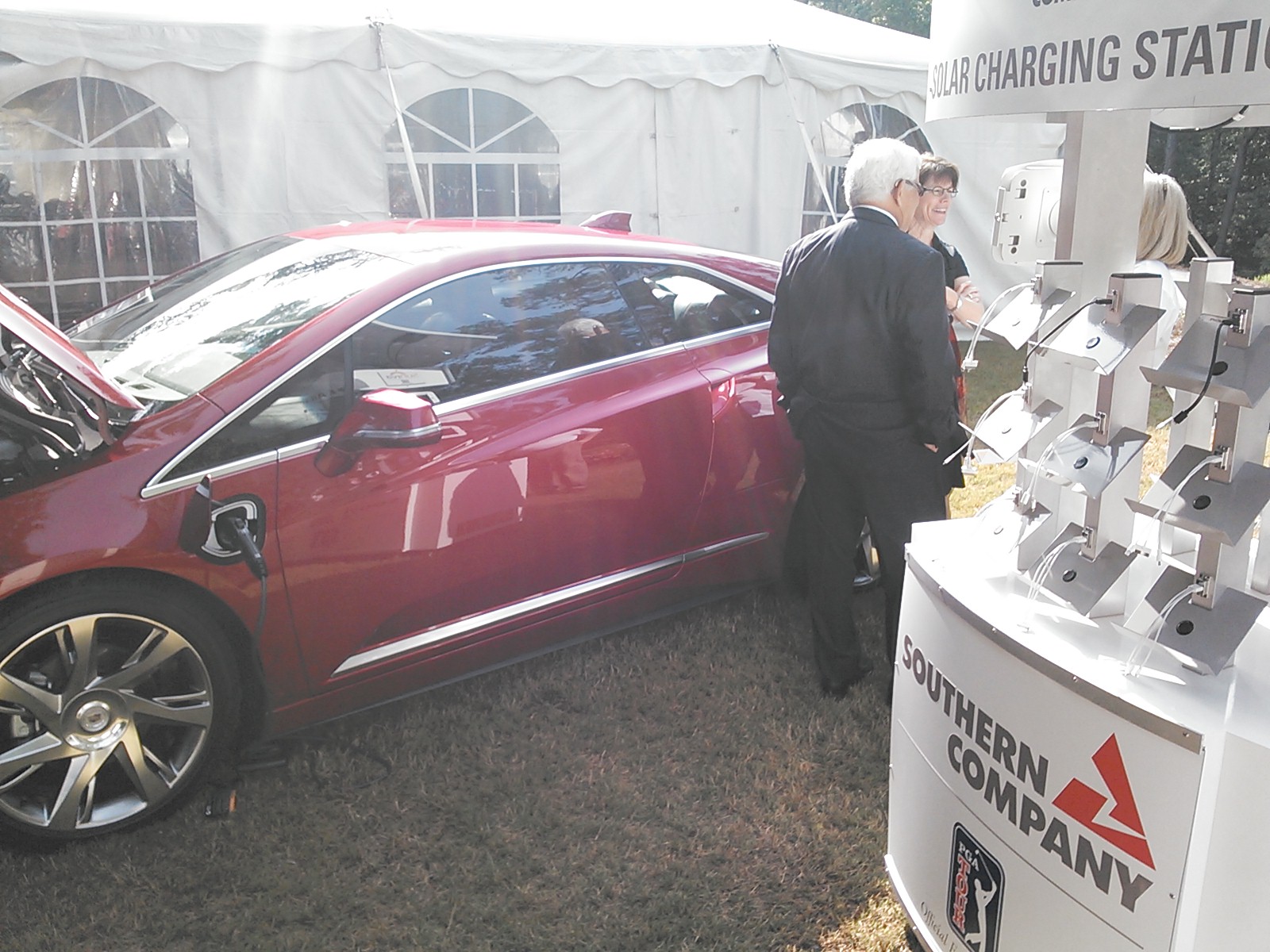
Solar car charging station at the

Southern Company Stockholder Meeting
:
that’s new.
Other solar changes were detectable, if you knew what to look for,
and with hints from

SO CEO Tom Fanning
and

new R&D VP Larry Monroe

here are some, while we’re waiting on SO for video and transcript.

Two demonstration solar charging cars were on the lawn outside the breakfast tent: Continue reading

Southern Company Stockholder Meeting @ SO 2014-05-28

If you owned Southern Company stock on 31 March 2014 (I did),
you should have gotten

a letter to Stockholders from SO CEO Tom Fanning
:


The board of Southern Company

You are invited to attend the 2014 Annual Meeting of Stockholders at
10 a.m. ET on Wednesday, May 28, 2014, at The Lodge Conference
Center at Callaway Gardens, Pine Mountain, Georgia.

Tom Fanning is a most congenial host, always ready with an answer to any question, as you can see in these videos from the Continue reading

The fragility of centralized energy systems

All

thermal power generation requires water for cooling
,
with nukes so vulnerable no private insurer will cover them anyway
and failing frequently in recent heat waves.
“Natural” gas is no better than coal or oil for water use;
maybe worse because all those pipelines vulnerable to backhoes
or corrosion or attack.
Even hydro is vulnerable to lack of rainfall.
Carbon sequestration doesn’t get good marks, while
conservation and efficiency get rave reviews from
a study of insurance perspectives on power generation.
What’s the one power source this article about insurance risks does not say
is fragile in the face of climate change?
Hint: look up.


Limiting Liability in the Greenhouse:
Insurance Risk-Management
Strategies in the Context of
Global Climate Change
,
by
Christina Ross, Evan Mills, and Sean B. Hecht,
Stanford Environmental Law Journal and the Stanford Journal of International Law,
Symposium: on Climate Change Risk, Vol. 26A/43A:251, 2007.


Supply-side energy choices that may be made to reduce the
carbon-intensity of energy services have their own distinctive
liability characteristics. For example, switching to lower-carbon
electricity generation technology based on thermal power plant
technology (e.g., by substituting natural gas for coal) results in
systems that are still heavily dependent on water resources for
cooling. The Electric Power Research Institute has documented
considerable risks to traditionally cooled power generation systems
as a result of climate
change-induced droughts.242 Similarly, “zero-emissions” hydroelectric
generating systems are also sensitive to rainfall patterns.

242
Denis Albrecht,

Electric Power Research Institute
, Presentation:
Climate Impact on Water Availability for Electricity Generation
(April 11, 2006) (presentation slides associated with the Electric
Power Research Institute).

Centralization considered harmful

Continue reading

U.S. electric demand still going down, while solar goes up like a rocket

If we need less electricity and we already getting almost all new energy from solar power,
why not shut down some more coal, oil, and nuclear plants,
and not build any destructive, hazardous, and unnecessary natural gas pipelines?


See

U.S. Electricity Use is Declining and Energy Efficiency May be a Significant Factor

by American Council for an Energy-Efficient Economy,
February 25, 2014.
See also

Changes in Electric Power Annual (EPA) 2012
by the U.S. Energy Information Association (eia),
especially

Table 1.1. Total electric power industry summary statistics
,
which says U.S. electric power net generation from all sources went down by 1.3% from 2011 to 2012.
The biggest declines were in Petroleum Coke (30.6%), Hydroelectric Pumped Storage (22.9%), Petroleum Liquids (16.7%), Coal (12.7%), and Nuclear (2.6%).
The biggest increases in generation were from Wind (17.2%),
Natural Gas (20.9%), and Solar (138%). Continue reading

100% sun, wind, and water can power each U.S. state and the world –Stanford study


We have all the technology right now that we need to power
the U.S. state by state and the world with solar, wind, and water power.
No burning coal or oil or fracked natural gas and no nukes.
No need for any new destructive and hazardous methane pipelines.
No waiting for batteries.
All we have to do is get on with it.


100% RENEWABLE ENERGY IS FEASIBLE AND AFFORDABLE, ACCORDING TO STANFORD PROPOSAL
,


Stanford University researchers led by civil engineer Mark Jacobson
have developed detailed plans for each state in the union that to
move to 100 percent wind, water and solar power by 2050 using only
technology that’s already available. The plan, presented recently at
the

AAAS conference
in Chicago, also forms the basis for

The Solutions Project
nonprofit.

“The conclusion is that it’s technically and economically
feasible,” Jacobson told Singularity Hub.

The plan doesn’t rely, like many others, on dramatic energy
efficiency regimes. Nor does it include biofuels or nuclear power,
whose green credentials are the source of much debate.

The proposal is straightforward: eliminate combustion as a source of
energy, because it’s dirty and inefficient. All vehicles would be
powered by electric batteries or by hydrogen, where the hydrogen is
produced through electrolysis rather than natural gas.
High-temperature industrial processes would also use electricity or
hydrogen combustion.

The rest would simply be a question of allowing existing fossil-fuel
plants to age out and using renewable sources to power any new
plants that come online….

“The greatest barriers to a conversion are neither technical
nor economic. They are social and political,” the AAAS paper
concludes.

For
Georgia,
that’s 40% solar PV plants, 35% offshore wind, 13% rooftop PV (6% residential and 7% commercial), 5% concentrating solar plants, 5% onshore wind, and 1% each wind, tide, and conventional hydro power.
Plus 210,200 construction jobs and 101,000 operation jobs.
And saving $14.3 billion per year Continue reading

EU could cut 40% emissions with little cost: and we can, too


If Europe can do it, the U.S. can do it.
And we know

Georgia can get a third of its power from wind
,
and even Spain is north of Mississippi, Alabama, Georgia, and Florida,
which have a lot more sun for solar power than anywhere in Europe.
Solar power

is already winning, even in Georgia
.
Let’s help it win even faster, plus wind.

PR from Potsdam Institute for Climate Impact Research (PIK) 16 January 2014,

EU could cut emissions by 40 percent at moderate cost
,


The costs of achieving a more ambitious EU climate target are
estimated to be moderate. Upscaling greenhouse-gas emissions
reduction from the current 20 percent by 2020 to 40 percent by 2030
would be likely to cost less than an additional 0.7 percent of
economic activity.

And that apparently doesn’t count the additional economic activity
that would be produced by all those wind and solar deployments,
not to mention related activities like electric cars.
This is actually a pessimistic study, because it doesn’t account
for such likely positive corollaries.


Many options to choose from—wind power could expand sevenfold

Continue reading

Two more nukes cancelled: Darlington in Ontario

Two cancelled, excuse me, “defer construction”, two others
may not be refurbished, and six more may get shut down soon.
Yay Ontario!

Jim Ostroff wrote for Platts today,

Ontario to indefinitely defer new Darlington nuclear reactors: energy plan
,


Ontario will indefinitely defer construction of two new nuclear
power reactors at Ontario Power Generation’s Darlington site; back
away from firm plans to refurbish operating units at Darlington and
Bruce Power’s Bruce A site; and may order the shutdown of OPG’s
six-unit Pickering plant prior to the units’ scheduled 2020 closing
date, the provincial government said in a long-term energy plan
issued late Monday.

The province, which owns OPG, said that advances in energy
conservation, enhanced efficiency and a slowdown in electricity
demand growth have prompted it to revise a 2010 long-term energy
plan that called for building two new reactors at Darlington, as
well as refurbishment of 10 units combined at that station and at
Bruce A.

Hm, conservation and efficiency.
Not even shale gas.

We already know

Georgia could get on with efficiency and conservation if Southern Company
and Georgia Power would get out of the way
.
Which they will once they admit

Plant Vogtle (new and old) has always been a boondoggle
.

-jsq

LEDs vs. the entire U.S. nuclear fleet (and gas pipeline)

All U.S. nuclear power reactors could be replaced by LED lighting
with a few clever on-off controls.
More evidence Plant Vogtle is a boondoggle good for nothing but

propping up profits for Georgia Power and Southern Company
.

Michael Kanellos wrote for Forbes 28 October 2013,

Can LED Bulbs Make Nuclear Plants Obsolete?

One $7 billion nuclear plant like one of Georgia Power’s 1.2 GW
units would add a little over 1 percent of capacity. The bulb
solution would cost $60 billion, and around $36 billion two years
from now, and require only that consumers know how to screw in a
light bulb. Nuclear would cost $105 billion, probably more, and take
decades.

So maybe it’s not

just weather
that’s pushing down your demand, Southern Company:
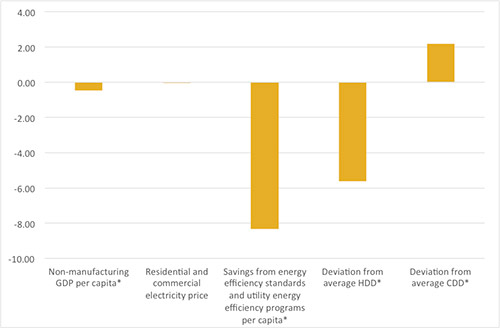
maybe Continue reading