Category Archives: Forestry

Nix on biomass plant in Traverse City, Michigan

Looking farther afield

in Cadillac, Michigan
than schools and realtors,

there are some people who aren’t completely pleased with the local biomass plant:


Complaints are more frequent along Mary Street, a short stretch a few hundred yards south of the plant. Residents there deal with more intense noise and odors.

Craig Walworth’s home is among the closest to the plant. He walked up to his Jeep — a vehicle he cleaned the day before — and dragged his finger through a layer of film on the hood.

“Every morning, you have that to look forward to,” he said. “I clean my screens three times a year during the summer because they clog up.”

Nonetheless he didn’t say it affected his property values.
However, that’s not the only issue.

Meanwhile, about an hour north on the edge of Lake Michigan,

in Traverse City
local activism caused cancellation of a proposed biomass plant:

Continue reading

Whole trees as biomass?


Previously
I promised to come back to the subject of whole trees.
Allan Ricketts asserted in the VLCIA meeting with concerned citizens
on 10 June 2010
that the biomass plant Wiregrass LLC proposed for Valdosta will never
burn whole trees because it would be economically unfeasible for it to do so.
While I have no doubt that Col. Ricketts is acting on the best information
given to him, there are reasons to be sceptical about what will happen
in the future.

Continue reading

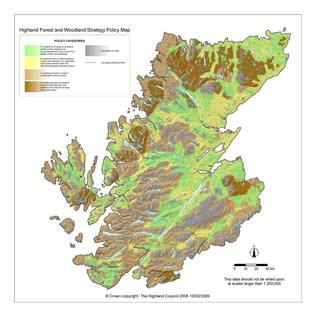
Highland Renewable Energy Strategy


Previously writing about biomass and carbon dioxide I said I’d supply an example of the sort of thing I’m looking for as a regional analysis for renewable energy, including biomass, solar, wind, wave, tides, and others.
Here it is: the Highland Renewable Energy Strategy
approved by the Highland Council at its 4 May 2006 meeting.
It’s a 58 page document about renewable energy strategy and planning guidelines,
considering numerous types of renewable energy, pros and cons
of each, power distribution, effects on environment, protected
areas, etc., illustrated copiously with detailed maps.
And updated:

Continue reading

Biomass and Carbon Dioxide

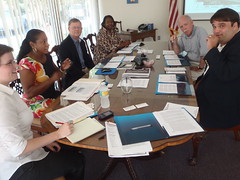
Natasha Fast, Angela Manning, Allan Ricketts (Project Manager), Geraldine Fairell, Ken Klanicki, Brad Lofton (Executive Director)


Natasha Fast (SAVE), Pastor Angela Manning (New Life Ministries), Allan Ricketts (Project Manager), Geraldine Fairell, Ken Klanicki, Brad Lofton (Executive Director), picture by John S. Quarterman (LAKE)

Pictured is a group of concerned citizens meeting about the
proposed biomass plant with Valdosta-Lowndes County
Industrial Authority (VLCIA)
Project Manager Allan Ricketts
and Executive Director Brad Lofton.
Ricketts and Lofton gave a two-hour presentation,
took some action items, and have provided a schedule
on which they will fulfill them.
I thank them for that and look forward to the further materials.

Lying in the center of the table in the picture is this document:


Biomass carbon neutrality in the context of forest-based fuels and products


by Reid Miner, NCASI, Al Lucier, NCASI

The copy on the table is dated April 7, 2010; the online version
is dated May 2010.
It’s a powerpoint presentation that makes many good points,
among them that coal doesn’t grow back, while trees do.
So in theory it would be possible, by organizing harvesting of biomass
over a region to make burning biomass for electricity carbon neutral.

The document comes right out and says:

At point of combustion, CO2 emissions per unit of energy produced
are generally higher for biomass fuels than for fossil fuels.

Continue reading

Hahira Teachers Learn Trees


Jade Bulecza reports for WALB that

Teachers take outdoor learning to the classroomTeachers take outdoor learning to the classroom
:

About 25 teachers from Lowndes County schools were out at the Pine Grove Farm in Thursday identifying trees and looking at leaves.

It’s part of project learning tree, an environmental education program.

Renee Galloway says students don’t really get out of the classroom in language arts and reading, so she’s glad she’ll have new lessons to bring to her class.

Maybe later they could even take the students out to the trees!

“Hopefully, our teachers can take back the importance of the timber industry to Georgia’s economy to their classrooms,” said Joy Cowart, a Project Learning Tree facilitator.

That’s one good lesson.
Others might be the diversity of native forests and
the economic and natural benefits of reforestation.

Effects of proposed biomass plants in Massachusetts

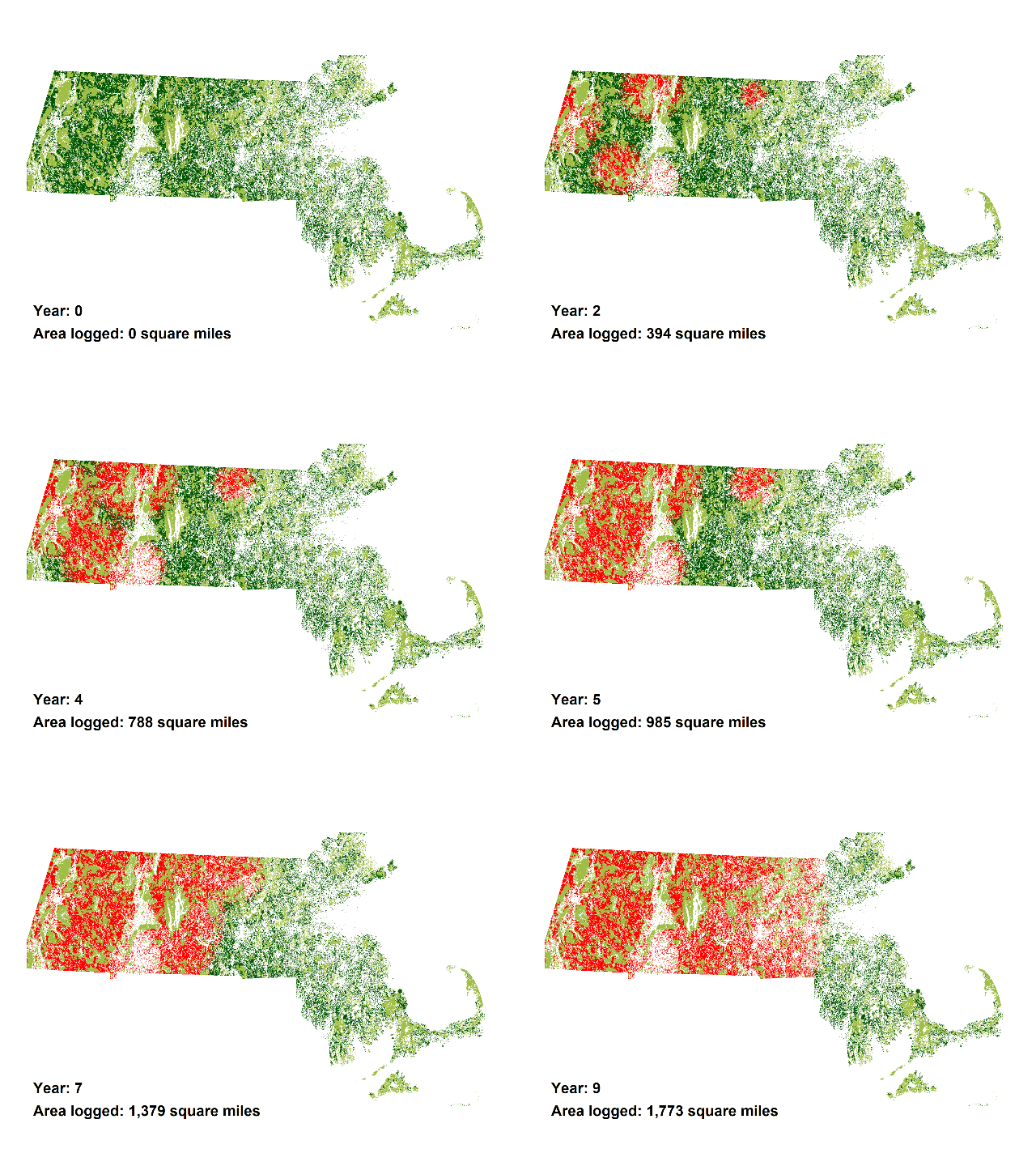
Very interesting projection of

Massachusetts Forest Impacts if Proposed Biomass Incinerators Are Allowed

by Chris Matera, P.E., and Ellen Moyer, Ph.D, P.E., with
GIS analysis and programming by Gordon Green:


The animations add the demand for wood for 5 proposed biomass incinerators in Massachusetts to the current wood demand, which is mainly for lumber and cord wood. The animations demonstrate the land area in western and central Massachusetts that would be required to be logged to satisfy the total demand for these 5 plants which would add only about 1 percent to Massachusetts’ electrical generating capacity (see calculations below).

Quite a price for such a small percentage of electricity generation.
Solar, wind, and wave could generate far more electricity,
even in far northern Massachusetts.

And the animation above is a conservative projection.
Follow

the link
for

…the extreme case where all forested land in central and western Massachusetts would be made available for biomass cutting – including rare species habitat, scenic landscapes, public “protected” land, and other protected open space. In this case, all forested land in central and western Massachusetts would be logged in only 16 years.

In Georgia, that would include places like Reed Bingham State Park.

-jsq

Biomass Permit Expected Fortnightly


The VDT published on May 18

Projects in the works:
Industrial Authority reviews and discuss items at meeting
,
by Kara Ramos,
in which there is this paragraph:

WIREGRASS POWER, LLC

The project should be approved and issued an air quality operating permit in the next 14 days, according to Lofton. A power purchase agreement should also be complete by June 1, 2010. The VLCIA granted an eight month extension for the project to begin construction.

(VLCIA is the Valdosta-Lowndes County Industrial Authority.
Brad Lofton is its executive director.)

We know from previous reports that this wood and sewage sludge
incinerator is expected to produce a maximum of 25 long-term jobs.
Many questions were asked at the air quality hearing about particulates,
CO2, mercury, and other pollutants.

The answers
ranged from “we don’t monitor that” to

Continue reading

Impervious cover increase, Lowndes County


Sixty eight percent (68%)
from 1991 to 2005, 22% of that from 2001 to 2005.
Tree canopy change from 1991 to 2005: minus fourteen percent (-14%),
almost all of it between 2001 and 2005.

Where’s all this change coming from and going to?


Source: NARSAL, UGA’s Natural Resources Spatial Analysis Lab

The dark green is labeled “Evergreen Forest” and decreased from 31.81% in 1991
to 26.47% in 2005.
Meanwhile, the light pink labeled “Low Intensity Urban” went from
5.37% to 8.57%.
Other changes include the red “High Intensity Urban” slice going from 1.15% to 1.98%.
But the biggest change is piney woods being paved over for urban sprawl.

Could this have some effect on flooding?

-jsq

John S. Quarterman

WCTV on Biomass

A couple of biomass plant stories from WCTV.

On April 28 Deneige Broom wrote,
Proposed Plant Raises Air Quality Questions
:

A Biomass plant could bring business and money to the area. But some want to be assured their health won’t suffer in the name of progress.

Some good quotes in there:

Dr. Brad Bergstrom attended the hearing wants concrete answers.

“There’s not going to be anything in the permit that will say, you can only burn this much sewage sludge,” said Bergstrom. “The company plans to only burn a small percentage but once they get their permit, that could change.”

Continue reading

South Losing Trees


Doyle Rice writes in USA Today about
U.S. losing trees faster than other heavily forested nations:

Out of seven of the most heavily forested nations on Earth, the United States experienced a greater percentage of forest loss from 2000 to 2005 than did any of the other countries, a study said Monday.

But what part of the U.S.?

The one part of the contiguous USA that experienced the most forest loss was the Southeast, a large chunk of which lost more than 10% of its forest cover from 2000 to 2005, the year for which the most recent data were available.

Compared to what?

Continue reading