Tag Archives: Wind

Farmers and other people own most of Germany’s reneable energy production

Power companies aren’t the only possible owners of solar power farms,
and centralized isn’t the only power distribution model.
In Germany, most renewable energy production is owned by
people, not power companies.

Matthew McDermott wrote for Treehugger 6 January 2011,

Over Half of Germany’s Renewable Energy Owned By Citizens & Farmers, Not Utility Companies

Germany’s promotion of renewable energy rightly gets singled out for


its effectiveness, most often by me as an example of how to do
things well versus the fits and starts method of promotion common in
the US. Over at Wind-Works, Paul Gipe points out another interesting
facet of the German renewable energy saga: 51% of all renewable
energy in Germany is owned by individual citizens or farms, totaling
$100 billion worth of private investment in clean energy.

Breaking that down into solar power and wind power, 50% of Germany’s
solar PV is owned by individuals and farms, while 54% of its wind
power is held by the same groups.

Not only is that more distributed, but it also may be a faster
way to get solar deployed:

In total there’s roughly 17 GW of solar PV installed in
Germany—versus roughly 3.6 GW in the US (based on SEIA’s
figures for new installations though the third quarter of 2011 plus
the 2.6 GW installed going into the year).

Remember, Germany now produces slightly over 20% of all its
electricity from renewable sources.

Nothing prevents Georgia Power or Colquitt Electric
or any of the other power companies operating in Georgia from
leading the solar pack.
For example, power companies concerned that solar doesn’t produce
at night could still deploy solar peak load generation,
thus dispensing with natural gas peak load generation.

While the power companies are not leading,
private organizations such as
Tabby Solar,
founded by a pair of doctors,
are forging ahead anyway.

-jsq

Vermont Comprehensive Energy Plan

Georgia can do this if it wants to,

Final Comprehensive Energy Plan 2011


The Comprehensive Energy Plan (CEP) addresses Vermont’s energy
future for electricity, thermal energy, transportation, and land use.
This document represents the efforts of numerous state agencies and
departments, and input from stakeholders and citizens who shared their
insights and knowledge on energy issues over the past ten months. The plan
can be downloaded from this website or may be viewed at the Department
of Public Service, 112 State Street, Montpelier during regular business
hours.

More about those public comments:

The release of the Final CEP 2011 includes the CEP Public Involvement
Report II (above). This document summarizes the written comments received
during the second public comment period, between the release of the CEP
Public Review Draft (CEP) on September 13, 2011 and the close of the
public comment period on November 4, 2011. Over 1,380 written comments
were received via email, the Comprehensive Energy Plan website, and
hard copy between July 15 and November 4. Approximately 350 stakeholder
groups, including municipal, business, and non-profit entities, submitted
comments. Over 830 form-letter comments were signed and submitted by
members of at least three different organizations. Over 200 comments
were submitted by individual members of the general public.

Real input from the entire state. Imagine that!

Vermont’s population is about 622,000, or the size of a single
Congressional district, so maybe it’s easier for them than for Georgia.
On the other hand, maybe a regional south Georgia energy policy,
or even a county policy, would be possible.

-jsq

No coal plant in Early County: LS Power withdraws all permit requests

Persistence by the local community
and environmental groups has paid off in Early County, Georgia:
the company that wanted to build a coal plant there has given up.

Press release from GreenLaw, 6 December 2011,

Longleaf Defeat Marks End to Nation’s Longest Running Fight Against Coal Plant
: Agreement Marks Milestone of 160 Coal Plants Canceled,

The country’s longest-running campaign against construction of a new


coal plant ended today as LS Power, a New Jersey-based power company,
announced that it will cancel plans to build the Longleaf Energy Station
in Blakely, GA. Sierra Club, Friends of the Chattahoochee and GreenLaw
have been organizing against the Longleaf coal plant since it was first
proposed in 2001. This victory comes as part of a legal agreement between
LS Power and Sierra Club.

This victory marks the 160th proposed coal plant canceled since
Sierra Club launched its Beyond Coal campaign in 2005. This victory is
particularly noteworthy because the struggle lasted for a decade and
involved numerous hearings and appeals, and sustained local opposition by
hundreds of Georgia residents. Longleaf was one of the very first plants
proposed when, in 2001, the coal industry attempted to block clean energy
development by building more than 150 new coal plants across the US,
a move which would have effectively locked the nation into dependence
on coal-fired electricity for the foreseeable future. Longleaf was one
of the last remaining new coal projects proposed anywhere in the United
States, counting 160 proposals that have now been defeated or abandoned
in the past decade.

Several times over the past decade it looked like LS Power would move

Continue reading

Warren Buffett thinks there’s money in solar

Cassandra Sweet wrote for the WSJ yesterday,

Solar Plant Sold to Berkshire Unit
,

First Solar Inc. is selling one of its large California solar farms to


MidAmerican Energy Holdings Co., ending the solar-panel maker’s search
for a buyer.

The sale places MidAmerican Energy, a unit of Warren Buffett’s
Berkshire Hathaway Inc., in the solar-power business for the first
time. MidAmerican operates fleets of wind farms and conventional
power plants.

The companies didn’t disclose terms of the deal Wednesday, but said the
Topaz solar-power plant, in San Luis Obispo County, is worth more than
$2 billion.

That’s more evidence there is private financing available for solar power.

-jsq

PS: Owed to Harry DeLano.

Financing for renewable energy projects

Most of the cost of a corporate or personal renewable energy installation
can be funded through federal and state rebates, but the remainder
is what stops most people. Here is what I know about that.
There are many other sources of information.

Federal 30% and Georgia 35% rebates add up to 65% (see below under
DSIRE).
That’s for solar (PV or hot water), wind, and some other related items.

The other 35% is what stops most businesses and people.
35% of a $25,000 house solar system is still $8,750.
People like that it will pay itself off in 9-15 years,
but most people don’t have $8,750 to invest.

That’s a business opportunity for some enterprising local bank or banks.
As

Dr. Noll has explained,

if you pay for that remainder yourself,
the system will pay itself off in about 9 years.
If you get a bank to finance it, more like 15 years.
And local banks currently require collateral other than the system itself
(they like real estate as collateral).
The simplest business opportunity is for a local bank to accept
the solar equipment itself as collateral.
After all, it’s worth 65/35 or 185% of the total loan amount.


The
Georgia Solar Energy Association (GSEA)

can probably tell you more.

Other ways to finance renewable energy projects include:

Continue reading

Solar: Infinite and Clean —Michael Noll

In today’s VDT. -jsq

If we are to believe Fox News and the Tea Party, solar doesn’t work


because the solar panel manufacturer Solyndra went belly up, despite the
fact that it received $535 million in subsidies. While wasting an enormous
amount of tax dollars on a company with a flawed business concept should
raise everyone’s eyebrows, the conclusion that the Solyndra mess means
“solar doesn’t work” is mind-boggling. It’s like saying “cars don’t
work” because Chrysler went bankrupt in 2009, or “T-shirts don’t work”
because Fruit of the Loom filed for Chapter 11 in 1999.

Solar is one of the most attractive renewable sources of energy throughout

Continue reading

Gov. Deal: the ugly on energy

Gov. Nathan Deal said he’s a free-enterprise person and doesn’t


want to subsidize renewable energy, but he maybe doesn’t know
that the state of Georgia subsidizes Georgia Power’s new nuclear
plants through an indirect tax, and that fossil fuels are far
more subsidized than renewable energy.
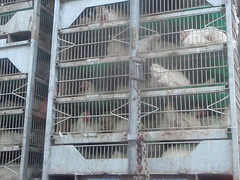
That plus the chickens.

Continuing
Gov. Deal: the good, the ugly, and the bad on prisons
,
quoting again from
David Rodock’s interview with Gov. Nathan Deal

in today’s VDT.

The Ugly

Continue reading

Let’s put Lowndes County on the Clean Economy Map!

Look where

those clean economy jobs
are:

Among regions, the South has the largest number of clean economy jobs
though the West has the largest share relative to its population. Seven
of the 21 states with at least 50,000 clean economy jobs are in the
South. Among states, California has the highest number of clean jobs
but Alaska and Oregon have the most per worker.


A per-county map is included, on which you can see North Carolina
and Atlanta, but nothing in south Georgia.
Let’s put Lowndes County on the clean energy map!

The gigaom article recommends:

To help boost the clean energy economy even more, the Brookings report
suggests that Congress could pass a national clean energy standard, put
a price on carbon, use the government as a chief customer of cleantech
goods (Obama has been strong on this), find more ways to help proven
clean technologies pass the so-called Valley of Death, as well as
increase funding for basic science and early-stage high risk projects
(like the Department of Energy’s ARPA-E program).


That’s good stuff, but we don’t have to wait for the feds.
The

Wiregrass Solar plant

sets a precedent that we can build on.
That plant is readily

expandable to an additional megawatt
.


It can also be used to attract financing for other projects,
projects that can use local labor, for example

solar electricity and hot water like the example in Quitman.

Lots of places have forged ahead into real clean energy on their own,
such as
Birmingham, England

and

San Antonio.

Sure, we’re not nearly as big as those places, or so local “leaders” remind me.
So let’s find some projects of our scale that we can do, and let’s do them!
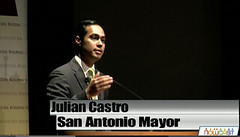
A real leader might say, as

Mayor Julian Castro of San Antonio did
, that
renewable energy is


“…the nexus between sustainability and job creation. Every now
and then, perhaps once in a generation, there presents itself a moment,
an opportunity, for those cities that are willing to seize it, to truly
benefit the region for generations to come.”

That opportunity is right here in south Georgia, waiting for us to seize it.

-jsq

Clean jobs exceeding fossil fuel jobs

Qualified good news.

Katie Fehrenbacher wrote 12 July 2011 for gigaom,

The clean economy employs more workers than fossil fuels
,


The green technology and clean power industries are currently employing
more workers than their dirty fossil fuel peers. That’s according to a
report released from the

Brookings Institution,
which has crunched the
numbers of jobs created in the U.S. by sectors like solar, wind, waste
water recycling, public transportation and energy efficiency retrofits.

Qualified because Brookings includes not only wastewater and mass transit
(good stuff, albeit a bit odd fit) but also biomass (ick).

However, even during the recession,

…newer clean economy establishments— especially those in young
energy-related segments such as wind energy, solar PV, and smart
grid—added jobs at a torrid pace, albeit from small bases.

Not just jobs, but good-paying jobs:

The clean economy offers more opportunities and better pay for low- and
middle-skilled workers than the national economy as a whole. Median
wages in the clean economy—meaning those in the middle of the
distribution—are 13 percent higher than median U.S. wages. Yet a
disproportionate percentage of jobs in the clean economy are staffed by
workers with relatively little formal education in moderately well-paying
“green collar” occupations.

Yeah, but what does that mean to us?
See

next post.

-jsq

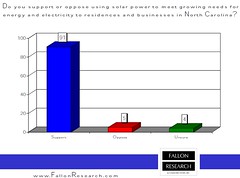
91% of voters support using solar power in NC —Ivan Urlaub of NCSEA

Like

the previous speaker
,
Ivan Urlaub of the

North Carolina Sustainable Energy Association (NCSEA)

pointed out there are downsides to too many incentives, such as
too much dependence on them which means if they end, so can the industry.
So how to generate demand?

They’ve done it in North Carolina:


91% of voters support using solar power to meet our growing needs for energy and electricity

Solar is hands down the most popular energy source across NC,
across parties, ages, genders, etc.
Coal and nuclear are the politically charged energy sources,
and neither got a majority.
Number 2 was offshore wind with 83% and number 3 was onshore wind
with 82% support.
Here’s the

NCSEA press release.

Here’s

the survey.

How did they do this?

Continue reading