Tag Archives: Brad Lofton

Leigh Touchton wonders what Brad Lofton is hiding

This message was sent to me by the author, who requested I blog it.

-jsq

Subject: My response to Brad Lofton, why doesn’t he want his correpondence in
the Valdosta Daily Times? What is he hiding?

From: Leigh Touchton

To: blofton@industrialauthority.com

Date: Thu, 16 Sep 2010 20:53:56 EDT

(Please see
correspondence below mine which I am responding to:

Mr. Brad Lofton’s email to his “stakeholders”

which he doesn’t want to put in the newspaper )

Mr. Lofton:

My title is President of the Valdosta-Lowndes branch of the NAACP, I am not
the Chairperson. I have a Master’s in Science in Biology from the
University of Virginia, I have taught Environmental Science classes at the
college level. It is incorrect and furthermore rude for you to refer to the
President of the NAACP as part of the “misinformation on the street.”

I would be happy to deconstruct your arguments on the trip to Cadillac,
Michigan, and how “green” Biomass Incineration can be. I invite readers to
research all the Biomass incinerators around the country that have been shut
down. They are banned in Massachusetts. They have been blocked in
Florida. They show up in areas of the country where wealthy industrialists
control the government and environmental regulations are lax. All the major
environmental organizations in this country oppose them because they burn
more wood that can be sustainably harvested. In the decade that is the
hottest on record, in a crucial period in human history when life literally
hangs in the balance over Global Climate Change, the Lowndes County
Industrial Authority has decided to implement a Biomass Incinerator which
spews more carbon dioxide than a coal plant.

Continue reading

Industrial Authority Response to Two Letters to the Editor

The appended message from a tax-supported public official
to many people about official business was forwarded to me;
perhaps the public would also like to see it.

The CCA press conference he mentions seems to have been
covered by the VDT in this article:
to be about
Private prison company picks Valdosta as potential site
.

The rest of the letter is about issues related to the

biomass plant

proposed for Lowndes County by Wiregrass Power LLC
(wholly owned by Sterling Energy Assets of Atlanta)
and backed by the

Valdosta-Lowndes County Industrial Authority (VLCIA)
,
of which Brad Lofton is the Executive Director.
Here’s the letter from Leigh Touchton of the NAACP to which he refers.

-jsq


From: Brad Lofton [mailto:blofton@industrialauthority.com]

Sent: Thursday, August 19, 2010 4:37 PM

To: ‘Brad Lofton’

Subject: Industrial Authority Response to Two Letters to the Editor Yesterday

Importance: High

Good afternoon everyone:

Thanks to all of you that were able to attend our CCA press conference and
breakfast yesterday. We’ve had positive feedback today from around the
region, and we’ve received congratulations from most of the other 15
communities competing for the project.

After reading the two letters to the editor yesterday, I felt compelled to
e-mail our stakeholders to provide you an update with facts and information
related to the biomass plant. We have intentionally avoided a response in
the paper because we do not want to energize a forum for continued
misinformation. Despite numerous town hall meetings and other meetings
we’ve facilitated for two years, there is still plenty of misinformation on
the street.

Continue reading

LTE: Biomass is Environmental Racism

This is a letter to the editor that appeared in the VDT on about 17 August 2010.

-jsq

When Wiregrass Power chose the site for their Biomass plant, they put
it near one of Valdosta’s most affluent black communities. There are
at least six black churches:  New Life Ministries, Morning Star,
Evangel Temple, Southside Church of Christ, Church of Prophecy, Church
at Pine Hill. Two predominantly black elementary schools are in the
area: Southeast and Moulton Branch. A large senior citizen assisted
living community, Sands Horizon, is located in the affected area and
serves over 60 families. Scott Park, where the Sands Horizon residents
enjoy outings and the local children enjoy baseball games, is located
nearby. Huge apartment complexes with several buildings, Park Chase
and Brittany Woods, whose residents are primarily people of color, are
located near the proposed site.

Continue reading

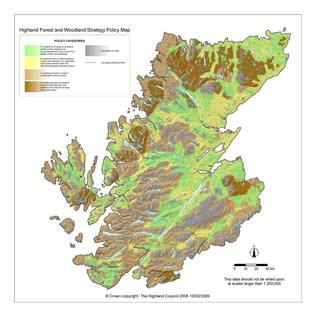
Highland Renewable Energy Strategy


Previously writing about biomass and carbon dioxide I said I’d supply an example of the sort of thing I’m looking for as a regional analysis for renewable energy, including biomass, solar, wind, wave, tides, and others.
Here it is: the Highland Renewable Energy Strategy
approved by the Highland Council at its 4 May 2006 meeting.
It’s a 58 page document about renewable energy strategy and planning guidelines,
considering numerous types of renewable energy, pros and cons
of each, power distribution, effects on environment, protected
areas, etc., illustrated copiously with detailed maps.
And updated:

Continue reading

Biomass and Carbon Dioxide

Natasha Fast, Angela Manning, Allan Ricketts (Project Manager), Geraldine Fairell, Ken Klanicki, Brad Lofton (Executive Director)


Natasha Fast (SAVE), Pastor Angela Manning (New Life Ministries), Allan Ricketts (Project Manager), Geraldine Fairell, Ken Klanicki, Brad Lofton (Executive Director), picture by John S. Quarterman (LAKE)

Pictured is a group of concerned citizens meeting about the
proposed biomass plant with Valdosta-Lowndes County
Industrial Authority (VLCIA)
Project Manager Allan Ricketts
and Executive Director Brad Lofton.
Ricketts and Lofton gave a two-hour presentation,
took some action items, and have provided a schedule
on which they will fulfill them.
I thank them for that and look forward to the further materials.

Lying in the center of the table in the picture is this document:


Biomass carbon neutrality in the context of forest-based fuels and products


by Reid Miner, NCASI, Al Lucier, NCASI

The copy on the table is dated April 7, 2010; the online version
is dated May 2010.
It’s a powerpoint presentation that makes many good points,
among them that coal doesn’t grow back, while trees do.
So in theory it would be possible, by organizing harvesting of biomass
over a region to make burning biomass for electricity carbon neutral.

The document comes right out and says:

At point of combustion, CO2 emissions per unit of energy produced
are generally higher for biomass fuels than for fossil fuels.

Continue reading

Biomass Permit Expected Fortnightly


The VDT published on May 18

Projects in the works:
Industrial Authority reviews and discuss items at meeting
,
by Kara Ramos,
in which there is this paragraph:

WIREGRASS POWER, LLC

The project should be approved and issued an air quality operating permit in the next 14 days, according to Lofton. A power purchase agreement should also be complete by June 1, 2010. The VLCIA granted an eight month extension for the project to begin construction.

(VLCIA is the Valdosta-Lowndes County Industrial Authority.
Brad Lofton is its executive director.)

We know from previous reports that this wood and sewage sludge
incinerator is expected to produce a maximum of 25 long-term jobs.
Many questions were asked at the air quality hearing about particulates,
CO2, mercury, and other pollutants.

The answers
ranged from “we don’t monitor that” to

Continue reading

PCA’s building the greenest mill in the country –CEO

Malynda Fulton
writes in the VDT that,

according to its CEO Paul Stecko, Packaging Corporation of America (PCA)
is building

…the greenest mill in the U.S. and possibly the least costly to operate.
This mill will become the mill of the future instead of the mill from the past.

This is at the PCA plant in Clyattville.


View Larger Map

Why green?

Through the new boilers, PCA was able to eliminate the use of fossil fuel and run the boilers on renewable energy, Stecko explained.

In other words, it’s a biomass plant.
The article doesn’t say whether the biomass is entirely materials that
would otherwise have been discarded, nor how efficient it is.

The article does say:

Continue reading