If we want good clean industry for jobs for local people, we need good clean local government, too.
Why do our local government bodies
hide when they discuss public goods like waste disposal,
try to
avoid stating public positions on issues,
and
fail to publish minutes of elected bodies?
A little reading in local histories of the area or talking to people
who were involved even a generation or two back indicates that Lowndes
County has always been a cliquish sort of place, mostly run by old boys,
for reasons that made some sense in the early days (lack of resources,
mainly), but doesn’t so much anymore in these days of I-75 and I-10,
airport, railroads that still go everywhere, Moody AFB, VSU as a regional university, technical and community colleges,
two hospitals and medical industry, TitleTown, Grand Bay WMA, Wild Adventures,
and south Georgia sunshine we can export to Atlanta and points north.
Here are a few books about the old days, all available in local libraries
and possibly in local bookstores:
-
Valdosta and Lowndes County: A Ray in the Sunbelt
by Louis Schmier, Valdosta and Lowndes County Chamber of Commerce, 1988.
Easy read, lots of pictures, and much useful information.
If you want one book to read to get the picture, this is it,
with everything from the County Commission going into debt to feed people
during the Great Depression to the role of television in the local
civil rights movement.
It directly discusses the old boy networks of the old days.
Yes, I’m praising a Chamber of Commerce publication, because this one is good. -
Pines and Pioneers: A History of Lowndes County, Georgia, 1825-1900,
Jane Shelton, Cherokee Publishing Company, 5/1/1976, 308 pages, ISBN-13: 9780877970347
Gone with the Wind it’s not, but lots of solid information in there. -
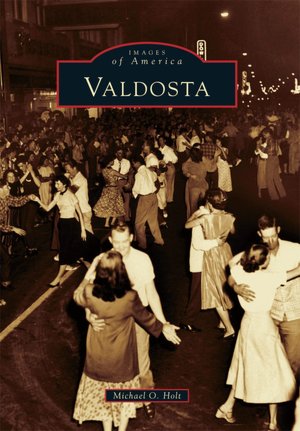
Valdosta, Georgia (Images of America Series),
by Michael O. Holt.
Pictures with a little bit of text. -
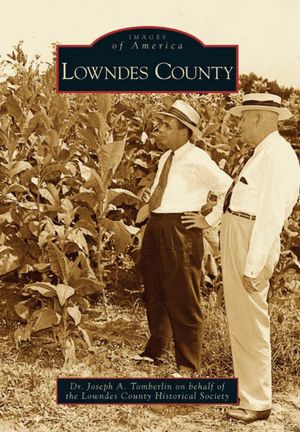
Lowndes County, Georgia (Images of America Series)
by Joseph A. Tomberlin,
Lowndes County Historical Society Staff
Pictures with a little bit of text.
Those last two help show that the county is not the same as the city.
Only a generation ago, the general understanding was that
a couple of local families said frog and all the local elected bodies hopped.
Nowadays I’m told by some in the know that it’s a bit more
broad-based than that.
Unfortunately, some of the slightly more broad-based old boys
have hooked up with
a source of top-down autocracy in DC:
ALEC.
That’s where
the pushes for private prisons, charter schools, school consolidation,
and some other shadowy things
we’ve been shining a light on have been coming from,
sprayed like pesticides around here and as far as the statehouse
by certain of our state- and nationally-prominent newer old boys.
Fortunately, as we’ve also seen recently, the old boys are no longer
monolithic, and have disagreed about matters including biomass,
school consolidation, and the private prison.
Maybe diversity of opinion is gaining a foothold.
Maybe local activism is having some effect
even if some of our appointed bodies’ employees deny it.
(Sorry; I’m still chuckling about that one.)
If we want to attract knowledge-based jobs and workers and educate
our own youth for such jobs, we also need more open government.
Nobody wants to locate a high-tech clean industry in a place
where the old boys are likely to dump a private prison or a
biomass plant next to it.
How about solar panels at the exits from I-75, on Valdosta City Hall, on the county palace, and on the warehouses in Hahira?
Public criticism of local government
is a cost of being a place where good industry
wants to be.
That’s one reason they call it public service.
-jsq