Tag Archives: Wind

Georgia Power Away from Coal?


Walter Jones writes about how

Georgia Power aims to rely less on coal
:

For years, solar and wind were described as unsuited for the South’s weather conditions and geography, although Georgia Power is now taking another look at them in this year’s version of it’s integrated-resource plan, a document it updates every three years.

I suppose late is better than never.
However, Georgia Power is turning more to nuclear and natural gas.

But why is it turning away from coal at all?

Stricter environmental regulations are also changing the economics of
coal. Even without a “carbon tax” or “cap and trade” passing in
Congress, the federal government is stepping up its existing authority
over power plants. And an ongoing court case related to a proposed power
plant owned by an independent company, Longleaf, could open the door
in Georgia to regulation of carbon dioxide emissions. Any combination
of those factors could lead regulators to force Georgia Power to shut
down more of its older coal plants.

“The financial outlook for coal is grim,” Thompson said.

People are finally wising up that coal is bad for us, and the company
sees that affecting its bottom line.

-jsq

Center of Innovation – Energy

Where’s Waldo?
And where’s the

state renewable energy strategy for Georgia, or for the southeast, or for just south Georgia?
Valdosta-Lowndes County Industrial Authority (VLCIA)
Project Manager Allan Ricketts

found another candidate.

“Forests Dominate Georgia’s Land Use”


That’s the title of slide 10 of 21 in

Center of Innovation – Energy
(CIE)
by Jill Stuckey, Director.
Actually, massively pesticided planted pines dominate south Georgia’s land use;
not the same as actual forests with species diversity and diverse ages of trees.
The same CIE slide equates

Georgia Forestry = Biomass Energy

That is what the state government seems to want it to be.

Back on slide 9, solar is defined as a southwestern regional energy
source; nevermind that the solar map on that page shows Georgia
with the same insolation as most of Texas (more on that later).
And wind is defined as a central U.S. regional strength,
nevermind that even Georgia Power has started exploring the
possibility of wind off the Georgia coast.

I get it that Georgia has trees and forestry is a big industry in Georgia.
I’m a tree farmer myself.
I’d love to be convinced that biomass from trees is one good way to go.
But at what costs?
And compared to what?

Continue reading

State Energy Strategy of Georgia

Among the questions local citizens asked the
Valdosta-Lowndes County Industrial Authority (VLCIA) was

where is the south Georgia, state, or southeast U.S. renewable energy strategy?

VLCIA Project Manager Allan Ricketts looked, and he couldn’t find it, either.


He did find
this list of “renewable energy strategy”
hits from a GEFA search.

At least one of those links points us to http://www.georgiaenergyplan.org/,
which now gets us

Are you interested in buying this domain name?

The state has apparently abandoned that domain.
Is that an indication of how seriously Georgia takes renewable energy?

Here’s something that looks promising:

State Energy Strategy for Georgia
(SESG),
December 14, 2006, Governor’s Energy Policy Council, GEFA.
It says it’s an energy strategy, but it’s mostly
about transportation of existing fuels such as natural gas.
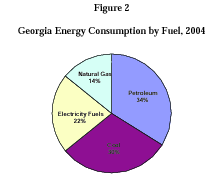
Towards the end of the document in Figure 2 (shown above) the SESG illustrates
the pit we’re in: about a third of Georgia’s energy comes from coal,
another third from petroleum, a sixth from natural gas, and so little
from renewable sources they apparently weren’t worth putting on the pie chart.

The SESG does contain this:

Continue reading

Highland Renewable Energy Strategy


Previously writing about biomass and carbon dioxide I said I’d supply an example of the sort of thing I’m looking for as a regional analysis for renewable energy, including biomass, solar, wind, wave, tides, and others.
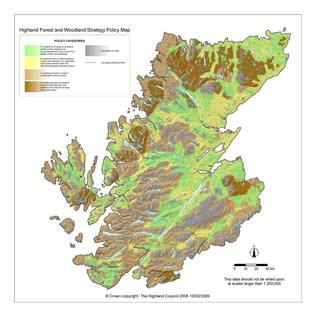
Here it is: the Highland Renewable Energy Strategy
approved by the Highland Council at its 4 May 2006 meeting.
It’s a 58 page document about renewable energy strategy and planning guidelines,
considering numerous types of renewable energy, pros and cons
of each, power distribution, effects on environment, protected
areas, etc., illustrated copiously with detailed maps.
And updated:

Continue reading

Effects of proposed biomass plants in Massachusetts

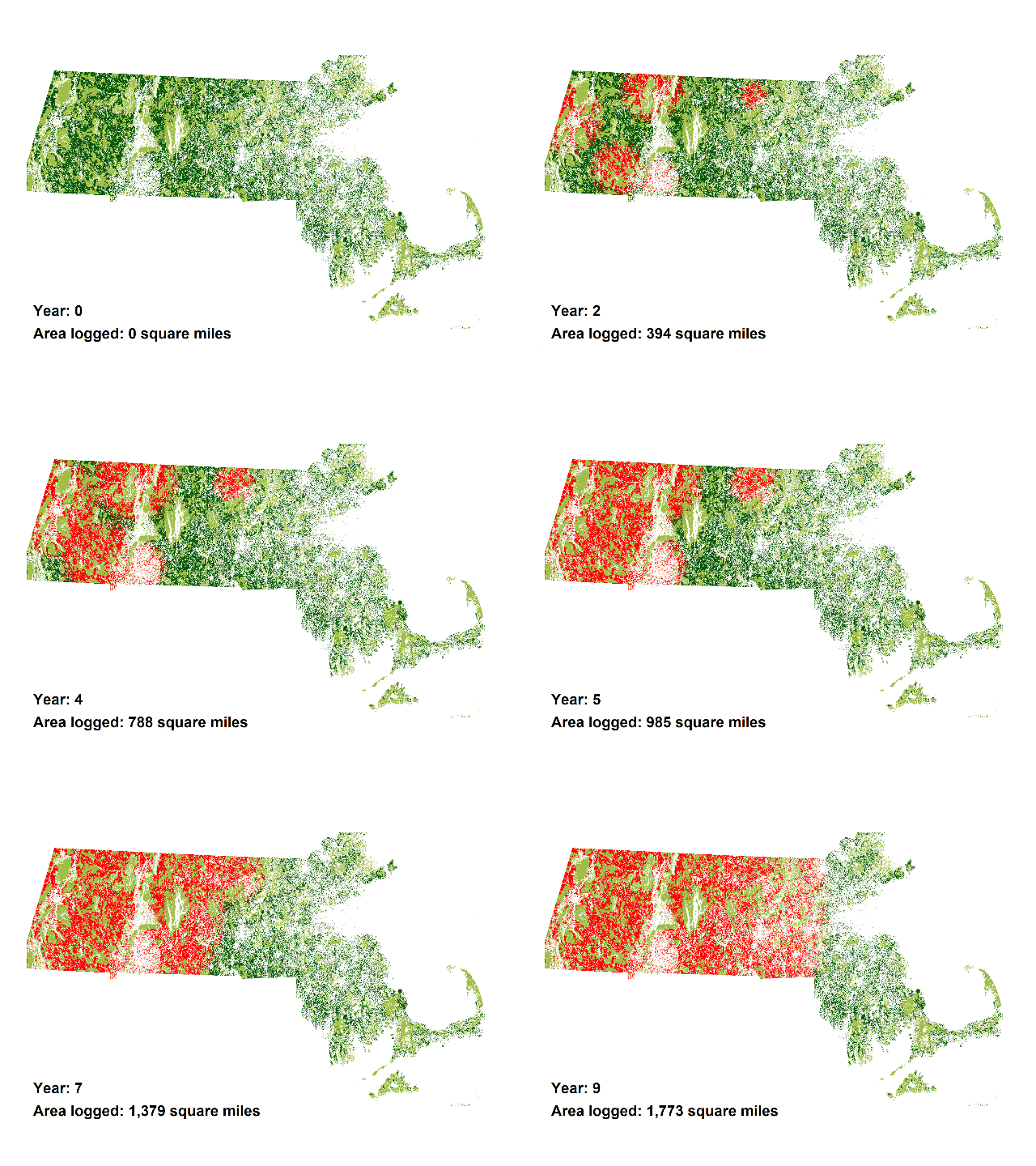
Very interesting projection of

Massachusetts Forest Impacts if Proposed Biomass Incinerators Are Allowed

by Chris Matera, P.E., and Ellen Moyer, Ph.D, P.E., with
GIS analysis and programming by Gordon Green:


The animations add the demand for wood for 5 proposed biomass incinerators in Massachusetts to the current wood demand, which is mainly for lumber and cord wood. The animations demonstrate the land area in western and central Massachusetts that would be required to be logged to satisfy the total demand for these 5 plants which would add only about 1 percent to Massachusetts’ electrical generating capacity (see calculations below).

Quite a price for such a small percentage of electricity generation.
Solar, wind, and wave could generate far more electricity,
even in far northern Massachusetts.

And the animation above is a conservative projection.
Follow

the link
for

…the extreme case where all forested land in central and western Massachusetts would be made available for biomass cutting – including rare species habitat, scenic landscapes, public “protected” land, and other protected open space. In this case, all forested land in central and western Massachusetts would be logged in only 16 years.

In Georgia, that would include places like Reed Bingham State Park.

-jsq