Tag Archives: Wind

Energy reliability: let’s do the study for Georgia

Which energy source is really more reliable?
Nuclear, coal, or wind, water, and sun?


As Plant Vogtle and others

have just demonstrated,

nuclear power isn’t as reliable as we might have thought.
Mark Z. Jacobson says we can generate reliable power from
wind, water, and sunlight alone.
Will that work in Georgia?

Elsevier’s policy of charging for peer-reviewed articles from
scientific journals is controversial, and some people find $19.95
prohibitive to access Mark Z. Jacobson and Mark A. Delucchi’s

Providing all global energy with wind, water, and solar power, Part I: Technologies, energy resources, quantities and areas of infrastructure, and materials

from Energy Policy
Volume 39, Issue 3, March 2011, Pages 1154-1169.
Fortunately, the same authors wrote an earlier version for
Scientific American, 26 October 2009,

A Plan to Power 100 Percent of the Planet with Renewables:
Wind, water and solar technologies can provide 100 percent of the world’s
energy, eliminating all fossil fuels. Here’s how

A new infrastructure must provide energy on demand at least as reliably
as the existing infrastructure. WWS technologies generally suffer less
downtime than traditional sources. The average U.S. coal plant is offline
12.5 percent of the year for scheduled and unscheduled maintenance. Modern
wind turbines have a down time of less than 2 percent on land and less
than 5 percent at sea. Photovoltaic systems are also at less than 2
percent. Moreover, when an individual wind, solar or wave device is down,
only a small fraction of production is affected; when a coal, nuclear
or natural gas plant goes offline, a large chunk of generation is lost.

Continue reading

Nuclear reactor Vogtle 1 at August shut down

Nuclear really more reliable than wind or solar?
What’s with the unscheduled shutdowns?

Colin McClelland reported for Bloomberg 21 April 2011,

U.S. Nuclear Output Falls as Vogtle Reactor in Georgia Shuts


U.S. nuclear-power output remained near a 4½-year low for a fourth day
as the Vogtle 1 reactor in Georgia shut down unexpectedly, the Nuclear
Regulatory Commission said.

Power generation nationwide decreased 538 megawatts to 71,781 megawatts
from yesterday, or 71 percent of capacity, the smallest amount since
Oct. 22, 2006, according to an NRC report today and data compiled by
Bloomberg. Twenty-nine of the nation’s 104 reactors were offline.

Southern Co. (SO)’s 1,109-megawatt Vogtle 1 reactor automatically
tripped offline yesterday at 5:34 p.m. when it was at full power. The
cause is under investigation, the NRC said.

The shutdown was ironically two days after

an NRC public meeting “to discuss Plant Vogtle’s annual safety evaluation and assessment.”

That would be the same location where,
according to

Tice Brashear back in 18 March 2009
:

Continue reading

Conversation for jobs —Cristobal Serran-Pagan @ VCC 7 April 2011


Dr. Serran-Pagan suggests
we have a conversation among all types of people and do the math.
Let’s put the money where it will produce jobs.
Solar, wind, why haven’t we been doing it?
Real clean renewable sources of energy.
He brings up the water the biomass plant would use.

Water is precious.
Air is precious.
Oil, coal, is not precious.
Biomass is not precious.
We have plenty of good clean, renewable sources of energy.
Let’s do that….
and get rid of old models,
and let’s try to do what is right
for community,
for our economy,
and for public interest.

Here’s

the video:


Conversation for jobs —Cristobal Serran-Pagan @ VCC 7 April 2011

Regular monthly meeting of the Valdosta City Council (VCC),

Valdosta, Lowndes County, Georgia, 7 April 2011,

Videos by Gretchen Quarterman for LAKE, the Lowndes Area Knowledge Exchange.

-jsq

Why solar cuts it better than any other energy source


Solar power is the fastest growing industry in the world,
and south Georgia is an excellent place for it to grow
and produce jobs, with plenty of rooftops and parking lots
for solar panels.

This is despite the misinformation
people with vested interests in other energy sources put out
about solar power.
After Dr. Matthew Richard

made some points about solar vs. biomass
,
one of the members of the 6 December 2010 panel that

VLCIA spent more than $17,000 to assemble to defend biomass

responded that he was in favor of the nearby 300kWatt solar plant, but:
well, I’m going to interleave his buts with what he’s ignoring.

Continue reading

Big oil tax subsidies: $9 billion / year —API

After last night’s Valdosta City Council meeting,
someone told me he thought all renewable energy sources
required subsidies, and that was the problem.
Well, I think the real problem is the much larger
subsidies to big oil.

Dan Froomkin wrote in huffpo

How The Oil Lobby Greases Washington’s Wheels
:


Despite astronomical profits during what have been lean years for
most everyone else, the oil and gas industry continues to benefit from
massive, multi-billion dollar taxpayer subsidies. Opinion polling shows
the American public overwhelmingly wants those subsidies eliminated.

That’s at least $4 billion a year to big oil while Congress debates cutting
Social Security and Medicare and maybe shutting down the government.
According to the American Petroleum Institute (API),

Continue reading

“I’d put my money on the sun and solar energy.” –Thomas Alva Edison

Sometimes he was a prophet:


“We are like tenant farmers chopping down the fence around our house for
fuel when we should be using Nature’s inexhaustible sources of energy —
sun, wind and tide. … I’d put my money on the sun and solar energy. What
a source of power! I hope we don’t have to wait until oil and coal run
out before we tackle that.”

— Thomas Alva Edison talking to Henry Ford and Harvey Firestone in 1931


Source: as quoted in Uncommon Friends : Life with Thomas Edison, Henry
Ford, Harvey Firestone, Alexis Carrel & Charles Lindbergh (1987) by
James Newton, p. 31


-jsq

Nuclear (Stewart Brand) vs. renewable energy (Mark Z. Jacobson) at TED


Stewart Brand of Whole Earth Catalog fame is a long-time environmentalist
who in recent years decided nuclear was necessary.
(He also decided

no-till
was necessary, which was enough
to convince me he’s gone barmy.)
Here
at TED
he debates Mark Z. Jacobson,
whose new study says we can

power the world with wind, water, and sun.

I think Jacobson should reconsider including building more hydroelectric dams,
but his study does demonstrate that we don’t need nuclear or biomass.
But watch it and see what you think:

Here is my critique of Brand’s arguments:

Continue reading

Solar and wind: All that is lacking is the political will

Mike Childs wrote in the Guardian on 27 March 2011,

Our green energy potential is huge, but gets little support:
The crisis at Fukushima calls into question our nuclear power policy


Nuclear power is a gamble we don’t need to take. Studies show that the
UK can meet its energy needs and tackle climate change without resorting
to nuclear power or burning fossil fuels – all that is lacking is the
political will.

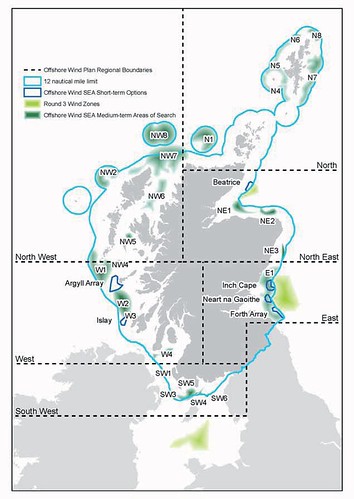
Studies like

this one for Scotland

and

this one for the whole world.

And the U.K. is way north of Georgia.
Georgia gets a lot more sunlight and has plenty of wind off the coast.
All that is lacking here, too, is the political will.

If Atlanta won’t lead, why not Valdosta and Lowndes County?

-jsq

Scotland planning more offshore wind power than needed for all its homes

Aaron Colter wrote 23 March 2011:

5 GW Of Offshore Scottish Wind Power By 2020?

The Scottish Government has released a

plan for offshore wind

that


highlights six areas
for potential development. The original plan
had selected ten regions for offshore renewable energy, however, four
were ultimately abandoned due to predicted negative environmental and
economic impact.

The six sites still in the running have an estimated energy potential of
nearly five gigawatts by 2020, or enough to power 3 million homes. Richard
Lochhead, Rural Affairs and Environment Secretary, said that Scotland’s
commitment to offshore wind production could generate over $11 billion
for the country’s economy and support up to 28,000 jobs over the next
ten years.

For comparison, Scotland has about

370,000 households
.
According to the General Record Office for Scotland,

Estimates of Households and Dwellings in Scotland, 2009
:

In mid-2009, there were 2.34 million households in Scotland

That’s right, they’re talking eight 1.28 times as much power as all
of Scotland’s homes could use.
I would guess this means they plan to export some of that power,
perhaps to England.

It seems renewable energy planning has spread beyond
the Highlands
to the rest of Scotland.

-jsq

Update 6:45 PM 3 Apr 2011: Fixed total household number; thanks to Malcom Smith for catching this typo.

How to power the world with Wind, Water, and Sun


…a

new study just published in the journal Energy Policy

states that the
world can provide for all of its energy needs, including electric power,
transportation, heating/cooling, etc using only wind, water, and solar
(WWS) energy by the year 2030.

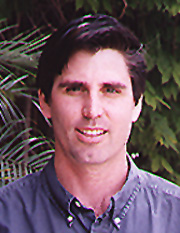
By water the study authors,
Mark Z. Jacobson (pictured)
Mark A. Delucch,
mostly mean hydroelectric power,
which would involve building
more dams, with all their environmental problems.
Still, it’s an interesting study demonstrating that true renewable
energy could power the world: no coal, no oil, no nuclear.

-jsq