Category Archives: Nuclear

We’re just ripe for solar power –Cobb EMC

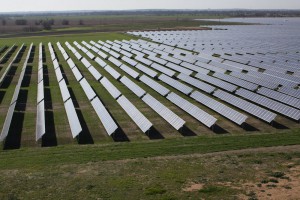
We already saw that private investment is funding a 100 acre 10 MW solar farm with Cobb EMC as a customer. What does that mean for Cobb EMC’s direction? How big is Cobb EMC, anyway? And what does all this mean for Georgia Power, and for solar power in Georgia and all the jobs it can produce? What does it mean for everyone running for the Georgia legislature?

Chip Nelson, CEO of Cobb EMCKristi E. Swartz wrote for the AJC 16 April 2012, Solar project could be a catalyst for more if policies allow it,

“I always thought solar power was something further out for Georgia. We just weren’t in the right time,” said Chip Nelson, chief executive officer of Cobb EMC. “The way things have been moving in the utility industry, particularly the last two or three years, I find that we’re just ripe for it.”

Ripe indeed! Coal is dead. Nuclear is going down. 30 MW solar farm near Austin Solar will eat the lunch of utilities that don’t start generating it. It’s time for utilities to get out in front and generate their own solar power. Austin Energy continues to show the way in Texas with a 30 MW solar farm. Now Cobb EMC can do the same for Georgia.
Nelson isn’t some fresh outsider: he’s a Cobb EMC lifer. According to Patty Rasmussen in Georgia Trend February 2012, Power Players: Taking Over At Cobb EMC,

Nelson worked for Cobb EMC for 37 years, most recently serving as chief operations officer. He stepped in as interim CEO in February 2010 and decided to apply for the full-time position.

And Cobb EMC is not small. According to Kim Isaza in MDJonline.com 20 July 2011 New Cobb EMC chief Nelson ready to ‘turn page’ on past costly litigation, divisiveness,
Continue reading

Bulgaria cancelled a new nuke

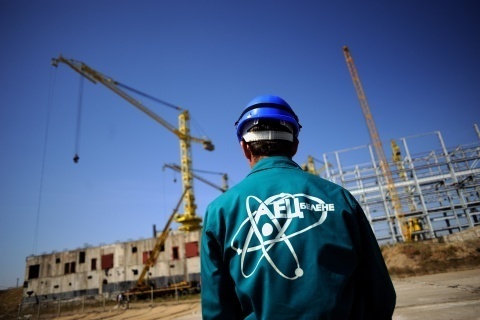
If Bulgaria can do it, Georgia can do it: end a new nuke boondoggle. Bulgaria started opposition when building the plant seemed irreversible, yet they reversed it. We can, too. And we can get on with solar and wind.

Rayna St. wrote for Global Voices 31 March 2012, Bulgaria: Construction of the Nuclear Power Plant “Belene” Cancelled,

On March 28, Bulgaria officially announced the cancellation of its newest nuclear power plant (NPP) “Belene” construction. The Parliament has stopped this controversial project after years of discussion and more than half a billion euros invested in the construction of the first reactor.

Nuclear opponents in Bulgaria undid a done deal, starting with this:

Continue reading

Missouri has defeated CWIP: so can Georgia

A veteran of the original No Nukes movement calls Plant Vogtle
and CWIP like he sees it.

Harvey Wasserman wrote Friday for EcoWatch,

Nuclear Power’s Green Mountain Grassroots Demise
,

The accelerating revolution in renewables has allowed solar, wind


and other green sources to outstrip atomic reactors in cost, time to
build, ecological impact and safety. As billions pour into
Solartopian sources, private investment in atomic energy has all but
disappeared—except where there are massive taxpayer subsidies.

Even that’s not enough. In 2011, President Obama handed $8.33
billion in federal loan guarantees to the builders of two reactors
at Georgia’s Vogtle. But Peach State ratepayers are already being
soaked for billions more in pre-payments, and the cost of the
project is soaring. A parallel financial disaster looms at the
Robinson site in neighboring South Carolina. Though the industry
assumes these four reactors will eventually be finished, economic
realities may say otherwise.

Cost estimates for new nukes have been soaring even before
construction begins. Even with federal money, the builders still
demand that state ratepayers foot the bill as the process proceeds,
meaning consumers are on the hook for multiple billions even if the
reactors never open. Pitched battles over this Construction Work in
Progress scam have already been won by consumers in Missouri and are
being fought in Iowa and elsewhere. As the years of building drag
on, costs will escalate while renewables continue to become cheaper.
Sooner or later, construction is likely to stop, as it did at
numerous projects in the 1970s and 1980s which were never finished.

We can end CWIP in Georgia.
It will benefit Georgia Power and the EMCs as well as all the rest of us
when we stop wasting tax and customer dollars on boondoggles like Plant Vogtle
or biomass or private prisons and get on with clean, profitable, job-creating
renewable energy in Georgia: wind off the coast and sun inland.

-jsq

How to ban CWIP in Georgia

A one-paragraph law can do it; that’s all it took in New Hampshire
to ban

Construction Work in Progress (CWIP)


after

Three Mile Island.

OK, plus a state Supreme Court ruling, but that would be easier in Georgia
since the New Hampshire Supreme Court already set a precedent of upholding
the NH law.
After Fukushima,

Georgia could ban CWIP
and end the new Plant Vogtle construction.
The we could

get on with building solar
.

Here’s the text of the NH law, taken from

the NH Supreme Court ruling:

“378:30-a Public Utility Rate Base; Exclusions. Public utility rates or
charges shall not in any manner be based on the cost of construction
work in progress. At no time shall any rates or charges be based upon
any costs associated with construction work if said construction work is
not completed. All costs of construction work in progress, including,
but not limited to, any costs associated with constructing, owning,
maintaining or financing construction work in progress, shall not be
included in a utility’s rate base nor be allowed as an expense for rate
making purposes until, and not before, said construction project is
actually providing service to consumers.”

Simple enough.
The

Georgia legislature
could do it.
Knowing the NH CWIP ban caused PSNH

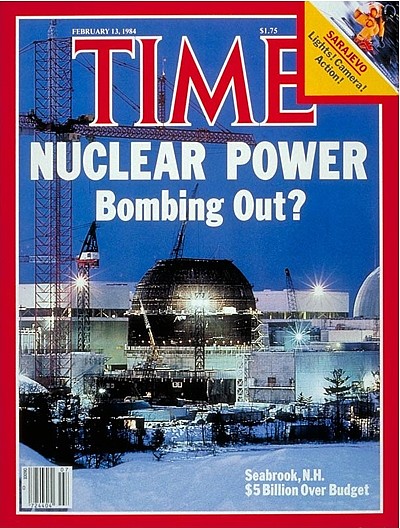
to go bankrupt on costs for the Seabrook nuclear plant
,
Georgia Power might back off on Plant Vogtle rather than have such a law passed.

-jsq

What we can learn from no nukes and solartopia of 30 years ago

Why were only 12% of the projected 1000 nuclear plants built in the U.S. by
the year 2000?
Because of the no nukes movement started in Seabrook, New Hampshire
in 1977.
And because New Hampshire banned CWIP.
Here in Georgia in 2012 we can cut to the chase and do what they
did that worked.

Harvey Wasserman wrote for The Free Press 13 May 2007,

How creative mass non-violence beat a nuke and launched the global green power movement
,

Thirty years ago this month, in the small seacoast town of Seabrook,
New Hampshire, a force of mass non-violent green advocacy collided


with the nuke establishment.

A definitive victory over corporate power was won. And the global
grassroots “No Nukes” movement emerged as one of the most important
and effective in human history.

It still writes the bottom line on atomic energy and global warming.
All today’s green energy battles can be dated to May, 13, 1977, when
550 Clamshell Alliance protestors walked victoriously free after
thirteen days of media-saturated imprisonment. Not a single US
reactor ordered since that day has been completed.

How effective?

Richard Nixon had pledged to build 1000 nukes in the US by the year
2000. But the industry peaked at less than 120. Today, just over a
hundred operate. No US reactor ordered since 1974 has been
completed. The Seabrook demonstrations—which extended to
civil disobedience actions on Wall Street—were key to keeping
nearly 880 US reactors unbuilt.

The only new nukes ordered since then are the ones Georgia Power
wants to build at Plant Vogtle on the Savannah River, for which

Georgia Power customers are already getting billed Construction
Work in Progress (CWIP).

Thirty years later, some things haven’t changed:

Continue reading

How and why did New Hampshire ban CWIP?

After years of protests and the Three Mile Island nuclear accident
in Pennsylvania,
the New Hampshire legislature passed a law that denied
the Public Service Company of New Hampshire (PSNH)

Construction Work in Progress (CWIP)
charges
before the Seabrook nuclear plant


provided electricity to its customers.
One of two planned Seabrook reactors did finally go into service in 1990,
more than a decade late and far over budget.
Meanwhile,
the New Hampshire Supreme Court ruled the anti-CWIP law was constitutional,
and PSNH went bankrupt in 1988:

the first
investor-owned utility since the Great Depression to declare
bankruptcy.

Seabrook was the last nuclear reactor built in the United States.
Until now.
In Georgia.
Which has CWIP.
Maybe we should
change that.

Here’s an excerpt from

a corporate history of

Public Service Company of New Hampshire (PSNH):

By January 1972 PSNH had decided not only to build a nuclear plant
at Seabrook but also to have it consist of two 1,150-megawatt units,
to be completed in 1979. PSNH was to own 50 percent of the $1.3 billion
project and share the remaining investment with other New
England utilities. In January 1974 the New Hampshire Site Evaluation
Committee, the Public Utilities Commission (PUC) and other
regulatory bodies had issued the basic permits, but interveners in
the case succeeded in having the New Hampshire Supreme Court
overturn these permits. After repeated appeals and rehearings PSNH
received its construction permit in July 1976—and experienced
its first protest at the planned site.

There followed a decade of other protests at the site, inside
regulatory chambers, and in New Hampshire and Washington courtrooms.
The 1979 accident at the Three Mile Island nuclear-power plant in
Pennsylvania—to name but one event that triggered concern

Continue reading

Can Georgia ban Construction Work in Progress (CWIP)?

Georgia Power

charges its customers
Construction Work in Progress (CWIP)
for the nuclear plants
it is constructing at Plant Vogtle on the Savannah River.
This while
claiming a solar energy commodity market would raise rates for its customers.

If nuclear is so great, why does it need to be pre-funded by customers?
Can Georgia ban CWIP?
Other states have.

This interesting

survey by Wisconsin
, courtesy of


National Association of Regulatory Utility Commissioners (NARUC)
,
says Illinois, Montana, New Hampshire, Ohio, and Oregon
ban CWIP (except in certain cases for some of those states)
and North Carolina and Washington in practice do not use it.

Appended below is the first question from the survey and the answers.
The entire survey is
on the LAKE website.

Here’s
who in the Georgia state government
you can contact about CWIP.

-jsq


CURRENT RETURN ON CWIP

VERSUS AFUDC [Allowance for Funds Used During Construction]

REGULATORY SURVEY RESULTS

March 2006

The Wisconsin
Commission is relooking at its current practice for allowing a
current return on construction work in progress (CWIP). We
would appreciate it if you or someone else from your agency could
respond to the following questions.

Continue reading

Stop Georgia Power from stopping you from affording solar

Why can’t you do this?


Say you own a coffee shop. You’d like to install solar panels on
your roof but can’t afford them. A company offers to install and
lease you the equipment, provided you sign a long-term contract. The
company will sell you energy at a cheaper rate than you already pay
Georgia Power. No longer would you be so susceptible to spikes in
electricity prices. Nor would your money be helping to support
burning coal or nuclear power.

Georgia law says you can’t do that.

That’s why

SB 401 is in the Georgia Senate
.
It’s

a common-sense measure that would put people to work, create a new
sector in Georgia’s economy, and promote clean energy. In addition,
the legislation would help shield people from increases in
electricity rates, which, according to the U.S. Department of
Energy, have risen nearly 50 percent over the last seven years.

Why would Georgia Power not like that?

Continue reading

After Fukushima: Fewer nukes most places; More in Georgia

Most countries are not building more nuclear power plants,
and some are shutting down some of the ones they have,
because Fukushima has confirmed what Chernoby and Three Mile Island
already told us: maybe the physics is sound, but the business
model leads to unsafe plants.
But in the U.S. and Georgia, it’s full speed ahead for new nukes,
regardless of the risks of radiation leaks or cost overruns.

Christopher Joyce wrote for NPR today,

After Fukushima: A Changing Climate For Nuclear

“We don’t see Fukushima as having a significant impact on the


U.S. industry,” says Scott Peterson, vice president of the industry’s
Nuclear Energy Institute. “The Nuclear Regulatory Commission was renewing
10 licenses for U.S. plants, extending them 20 years in operation. We
were continuing to move forward in examining new reactor designs.”

Nevermind that those extensions mostly go well beyond the design
lifespans of the plants extended.

Marc Chupka, who advises electric utilities as an economist with the
Brattle Group in Washington, wonders who’s going to pay for them.

“Right now, just the plain economics of nuclear power are
underwater,” he says. He notes that over the past decade,
construction costs have skyrocketed and natural gas got more
plentiful and cheaper.

“Things change significantly over relatively short periods of time,”
Chupka says, noting that it takes about a dozen years to plan and
build a new nuclear plant. “That makes it an incredibly challenging
environment to plan for the long term. And that adds to the risk and
it makes investors understandably skittish.”

So we could do what Germany is doing:

Germany says the same: The government will throw its weight and
wealth into solar and wind energy to replace nuclear power.

Or we could listen to the same old excuse:

Continue reading

Southern Company claims to be incompetent regarding new EPA rules

Why can’t Southern Company do what other power companies can do
in implementing the new coal plant pollution control rules EPA
is about to promulgate?


Elizabeth Shogren wrote for NPR today,

EPA To Unveil Stricter Rules For Power Plants
.
She described new rules for coal plants EPA is going to release in the next
few weeks, including controls on mercury, “arsenic, acid gases and other pollutants.”
Southern Company doesn’t like that.

“It’s physically impossible to build the controls, the generation, the


transmission and the pipelines needed in three years,” says Anthony
Topazi, chief operating officer for Southern Company, which provides
electricity to nearly 4 million homes and hundreds of thousands of
businesses in the Southeast.

Topazi says electricity rates will go up, putting marginal companies out
of business. He says unless his company gets six years, it will not be
able to keep the lights on.

“We will experience rolling blackouts or rationing power if we don’t
have simply the time to comply,” Topazi says.

Other power companies see no problem:

Continue reading