WCTV does what VDT dares not:
Greg Gullberg mentioned last year’s biomass protests in the first sentence of this
story about the Industrial Authority threatening to sue Sterling Planet
to get clear title to the former proposed biomass plant site.
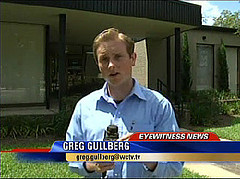
Greg Gullberg reported for WCTV yesterday,
Dispute Over Land For Proposed Biomass Plant,
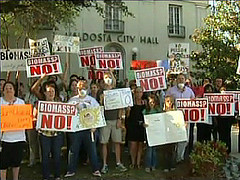
The vocal protests in Valdosta are long gone, but the controversy
over the proposed Biomass plant lingers. This time not for concerns
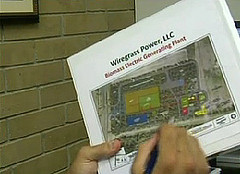
of health safety, but over the land.The Valdosta-Lowndes County Industrial Authority plans to sue
Wiregrass Power LLC to end its contract.

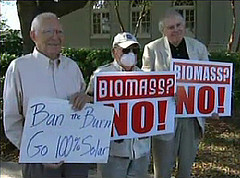
Ban the Burn Go 100% Solar.
The proposed Biomass Plant was supposed to be a low-cost source of
efficient energy. Supporters say it would have created hundreds of
jobs. But opponents say the health risks include cancer, lung
disease and respiratory disease.
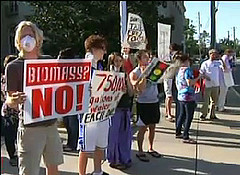
750,000 gallons of water each day
Tell me, Col. Ricketts, doesn’t it feel better to be visibly on the side
of the people, instead of having to defend a bad business deal?
“The Industrial Authority has taken this action to ensure that we
have a clear title to the land that was originally proposed to
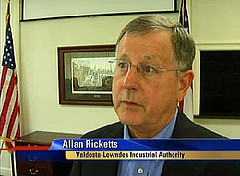
Wiregrass Power,” said Allan Ricketts, Project Manager for the
Industrial Authority. “So that we can pursue economic development
opportunities to create jobs and capital investments in Valdosta and
Lowndes County.”
-jsq
Wiregrass Activists for Clean Energy (WACE) have made it clear from the start that biomass plants have a number of issues: 1) biomass plants bear significant health risks; 2) biomass plants waste enormous amounts of water; 3) biomass plants are risky investments in an increasingly competitive energy sector; and 4) biomass plants contribute to global warming.
In the light of rising global temperatures, worsening drought conditions, and dropping prices for solar panels, an increasing number of people are understanding these simple truths.
The Industrial Authority has to be congratulated for the courage to admit that energy from biomass plants is indeed more expensive than energy from solar plants, and we have not even figured in the costs associated with the consequences of air pollution coming from biomass plants.
(For more information on biomass plants, here a testimony I recently gave: http://www.bredl.org/pdf3/120828_WACE-Comments-Docket_NO-E-100_SUB113.pdf)
Although this point has already been made earlier, note again that solar plants are much better alternatives, economically and environmentally: they do not pollute our air, they do not need any water, and a huge spill of solar energy is simply called a sunny day … of which we have plenty here in the south.