SO CEO Tom Fanning didn’t budge from nuclear and coal,
but he did announce a tiger team to get on top of
distributed solar and wind through a smart grid,
headed by SO’s COO,
at the
22 May 2013 Southern Company Stockholder Meeting.
Mr. John S. Quarterman from Lowndes County, Georgia, and he holds
220 shares of Southern Company.TF: Hello, John. Good to see you again this year.
jsq: Hi. I’ve come to compliment Tom Fanning and Paul Bowers. Last
year, Tom Fanning was so persuasive I ran out and bought $10,000
worth of stock.TF: Bless you.
[Applause]

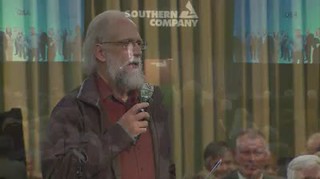
However,
apparently because of
SO’s admission a few minutes before in that same meeting
that it was going to have to eat Kemper Coal cost overruns,
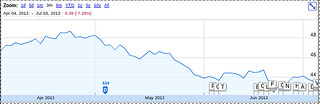
SO stock tanked that same day,
causing my stock to stop out,
and Standard & Poor’s downgraded SO the following day
because of Kemper Coal, noting that if the same thing happened
with SO’s nuclear project at Plant Vogtle, S&P’s would probably
downgrade SO again.
I have bought SO stock back since then,
figuring it had bottomed out after
two analysts downgraded it in June, also because of Kemper Coal
and Plant Vogtle, plus one of them explicitly said also because of
SO’s “lack of meaningful contribution from renewable energy”
In the current age of growing emphasis on ‘environment friendly or
green’ energy, the company may be forced to divert cash flow to
ensure regulatory compliance, which can adversely impact
profitability.
Don’t get the wrong impression: I want SO stock to go up.
I want it to go up because SO changes direction and gets
serious about renewable energy.
jsq: Very good. And I like reliable, predictable and sustainable. That
stock in the last six months has — well, it’s getting about a
4 percent dividend a yield, not too shabby, and it’s gone up by
about 7 percent, that’s excellent.
After all the downgrades, SO stock lost that 7% and more.
Not so reliable after all.
Or regular, as in the mantra Tom Fanning had repeated earlier in the
meeting:
…the way this company is built — regular, predictable, and
sustainable financial results is our objective and we do it with one
of the lowest risk profiles achievable.
He had also remarked a few minutes before
to Stephanie Coffin
that:
One of the reasons that you as stockholders — I’m glad you own
Southern Company stock or you wouldn’t be here — but I bet you
own other stocks. You don’t put all your eggs in one basket.

And I had already given him and Paul Bowers a heads-up before the meeting
that SolarCity stock was of interest to me, as it was to them.
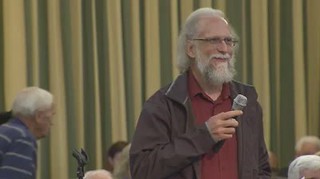
jsq: As you mentioned, I do own other stock. For example, SolarCity stock.TF: Yeah.
jsq:
Yes. Which in the last six months has gone up by — I’ve lost
track, about 200 percent.TF:
Yeah, it’s been on a run.
SolarCity (SCTY) stock went on up to about 300% above its IPO price,
then dropped to around 200%.
I stopped out of SCTY, too, but have since bought it back, too.
It will go up more, I expect.
jsq:
Right. Now, nobody expects a company with the economy the size of
Australia to — for its stock price to move that quickly.
Last year
Tom Fanning remarked to Sam Booher:
From an energy standpoint, Southern Company is a little bit smaller,
but similar to, the energy production profile of the nation of
Australia. We are a great, big company from an energy production
standpoint.

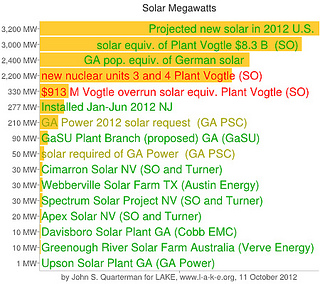
In
October I pointed out that
“Great, big” SO is 1/10 Australia for solar farm deployment in Georgia.
And the main point here is that Southern Company really is a very large
company that can’t be expected to have stock price rocketing like a
tiny upstart such as SolarCity.
However, that sheer size means SO is capable of a lot more than it is doing.
However, I want to compliment Southern Company for
jsq: this baby step of
getting into solar and Campo Verde.


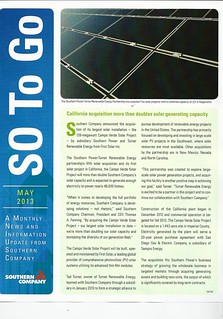
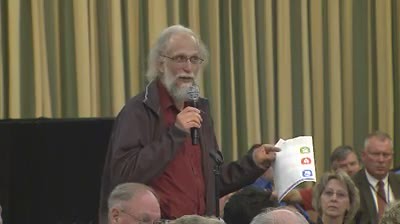
I was holding up
this Campo Verde flyer
from the meeting materials.
Tom Fanning had a few minutes earlier
told Gloria Tatum
As you correctly mentioned, a lot of people in Europe tended to, I
think, run scared from nuclear. I think that is poor policy and I’m
not sure, you know, for the benefit of America, I don’t want to use
Europe as any of my models.

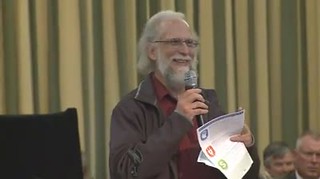
So I called his bluff and made him laugh:
jsq: Now, 139 megawatts doesn’t sound
like a baby step, but I don’t like using New Jersey as a model,
but —TF: [Laughter]
jsq:
as I’m sure the board of Southern Company is aware, New
Jersey already has 1,000 megawatts deployed — not just
planning,
already deployed — a whole gigawatt.And,
what does that compare to? One of the two planned reactors at Plant
Vogtle is about 1.2 gigawatts, and I’m sure I’ll be corrected if I
get these numbers wrong. And that gigawatt in New Jersey was put in
without any need for
an $8.3 billion loan guarantee from the Feds
[as for Plant Vogtle] or
any
state-guaranteed bonds [as for Kemper Coal] or
construction-work-in-progress [as for both].
Okay, so
— and there’s a lot of economic advantages to Campo Verde. In
this longer version of the press release, and I’m talking about
building the economy, 239 million over the next 30 years to the
local county, $17.5 million in local tax revenue, 250 construction
jobs. Unfortunately, that’s in California.
However,
we can have that right here in the Southeast,
which is where I want to compliment
Paul Bowers at Georgia Power because Georgia Power is helping
connect
two megawatts of solar power coming into Valdosta, Georgia,
in the near future and perhaps some more. And Georgia Power is
helping connect
the megawatt on the roof of Dublin High School in
Dublin, Georgia. Which, by the way, is going to use
MAGE solar
panels; that’s a German company but it’s manufacturing in Dublin,
Georgia. And I believe some of those panels going in in Valdosta are
Suniva panels, manufactured in Norcross, Georgia.TF:
A Georgia Tech guy developed those.
jsq:
Very good. Excellent. So that is going along an excellent direction
and I’m glad you mentioned Edison Electric Institute, and I’m sure
you’ve read
their recent report,

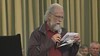

Tom Fanning nodded his head to indicate he had read it.
jsq: which is the — leads to the
question I want to raise.
Edison Electric Institute pointed out that
the sustainability of the big baseload utility model — big
plants like Plant Vogtle, like Kemper coal, like Plant Scherer, and
even like Campo Verde — big plants like that may not be the
way to the future. Why is that?
I’m glad you mentioned the Internet.
For the
same reason that most of us have a supercomputer, connected to the
Internet in our pocket, bigger than IBM could build a few decades
ago. It’s — the price of solar power is decreasing along the
same kind of path. I know you know what Moore’s Law is;
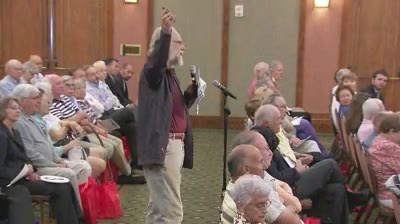
I knew this because
detailed biographies say
Tom Fanning was
Chief Information Officer
for SO at one point.
That position is responsible for information technology,
including Internet access, and it would be very difficult
to do that job withough knowing about
Moore’s Law.
He nodded his again to indicate he did know about it.
jsq: I won’t
explain here. So according to the Edison Electric Institute, the
sustainability of the current business model of Southern Company
is
being disrupted probably in the very near future — that’s what
they predict — by solar power. Now, Southern Company is in a
position
to get out in front and lead that instead of being
disrupted by it.
Our host was shifting from foot to foot at this point.
He’s very aware of this disruptive distributed solar power issue.
jsq: One thing that Southern Company can do that
SolarCity cannot do — that Google cannot do — is it can
do a reliable, sustainable, adaptable grid. It was very refreshing
that presentation about distributed solar and offshore wind.
Southern Company is the very company that could do that. It has the
financial resources; it has the biggest R&D operation, if I’ve heard
you correctly,TF: Right.
jsq: of any private company in the U.S.
The
flip side
of that Campo Verde flyer from the handouts notes:
ENERGY INNOVATION
Industry leader in researching and developing better energy technologies
- Managed $740 million in environmental R&D over the past decade
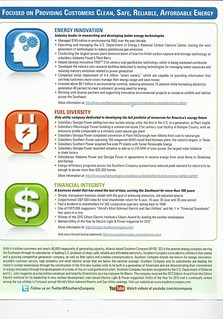
Now SO is counting Kemper Coal and some other dubious stuff in there,
but it’s also counting smart grid work.
SO could do more of that.
As
Dan Everett had just remarked,
SO’s $10 million last year spent on conservation was relatively modest
compared to what SO spends on other things.
jsq: And my question
is, what is Southern Company’s plan? I mean, I liked what you said
earlier. I think you’re being too modest. Southern Company could
make the Southeast a net exporter of the energy from solar and wind
within a decade and could lead the entire country and the world.
What is your plan — what is Southern Company’s plan — to
make that happen?TF:
So, John. Boy, great stuff there. Let me — let me hit you on a
couple of issues.
One of the things that I couldn’t agree more with
you on is kind of the importance of the change in the franchise
— not in the franchise law — but in the franchise of
central station power sometime in the future. And I’ve been very
public about this — I’ve always been bullish on solar for that
reason. I’m not particularly as much a fan of wind, but solar I
think has the potential in the application of distributed generation
to be a bit of a game changer.
Now we need to do a couple of things
in order to make that a reality. First of all, we need to make sure
we encourage solar generation to kind of develop that way. We need
to see a continued improvement in cost curves and a continued
improvement in the translation of sunlight into electricity
so that
— and I’ve always estimated kind of maybe by 2018 or so maybe
20, by the end of this decade, we could see distributed generation
becoming a more widespread manner, economic and beneficial to our
customers.



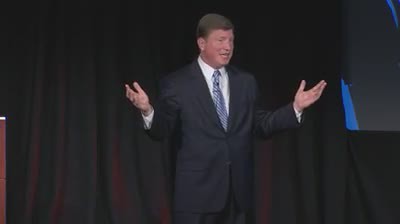
Yes, that’s what he’s been saying, but Edison Electric Institute
is saying that’s way too conservative.
So is missing a huge opportunity for its stockholders
if it sticks to that old plan.
TF: To that end, you talk about trying to invent the future.
Mark Crosswhite, our
COO who’s located in Birmingham, Alabama, is
tasked with putting together what I call a tiger team that he has a
number of people working across the system — representation on
every system company — to develop a business model where
Southern Company can now promote, play offense, on distributed
generation.
Sam Booher, where are you? There he is. Every time Sam
Booher always says, I want to buy my solar panel from you. Well
— and we appreciate that. Sam’s a great friend of the company;
he comes every year. One of the things we’re trying to figure out is
to have the vision and courage to kind of think about the future and
how do we participate in a constructive way. We’re getting about
that business right now. And, in fact, the initial report of this
tiger team is going to happen sometime later this summer. So it’s an
interesting kind of prospect for us.
There are lots of different
models you could pursue. Do you want to just put a solar panel on
somebody’s roof and pay them for the
avoided energy? You’re going to have to make sure — and I want
everybody to hear this clearly — that anybody who has that
kind of generation on their rooftop, they’ve got to pay a fair share
for their ability to connect to the network, to the electric
network, and they’ve got to pay a fair share for backup generation
when the sun doesn’t shine.

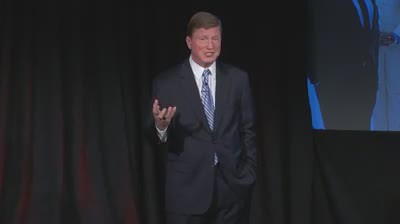
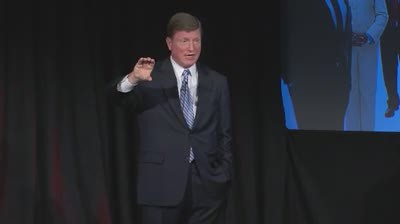
Tom Fanning and Paul Bowers keep bringing that up as if anybody
was arguing with them.
As I’ve
repeatedly said and
written in the local newspaper,
Imagine if we spent all that nuclear boondoogle money on
retrofitting homes and deploying solar power instead! Imagine if we
simply got that 1973 Act out of the way so private financing could
put panels on people’s roofs. You could get a lot more for your
solar power from buyers in Atlanta or points north, and your utility
could take a percentage for carriage: win-win-win.
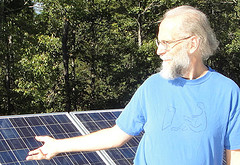
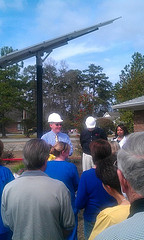
Dr. Sidney Smith of Lower Rates for Customers LLC
has been saying for more than a year
that power companies should take a percentage for carriage,
plus bragging rights, which could be even more valuable.
TF: Otherwise, and what we’ve seen in other
places in the United States, you in effect have a de facto subsidy
of rich people putting solar panels on their roof and having
lower-income families subsidize them.
The flip side is what
Austin Energy discovered:
…the elimination of line losses as well as costs the utility could
avoid by not building, or even delaying, construction on more
generation. “If you put off a billion-dollar decision for one
year, that’s at five percent interest,” said [Karl] Rabago.
“It’s a big savings in cash each year.”
And Georgia Power and SO and all the Georgia EMCs are not taking
that into account, so actually right now my solar panels
are subsidizing old-style power plants because I get only the
avoided cost per kilowatt hour from Colquitt EMC, not the actual
value to CEMC for the power I feed back into their grid;
similarly for anybody who has solar power connected to Georgia Power.
TF: We’ve got to make sure that
it’s fair for everybody. Remember the 48 percent of the families we
serve.

Imagine if those 48% had solar panels on their roofs to
radically reduce their electric bills while supplying power
when they need it most: in the heat of the afternoon when
their air conditioners were running.
Imagine the rural jobs in solar installation, delivery, planning,
and research.
TF: So if we make sure that the economic signals are fair, then
we’ve got to decide how best to deploy those resources. Another way
to think about those resources, John — and we’re just
considering all this right now in this tiger team — is the
idea to think about a rooftop not as a customer-owned or “we
own” kind of resource, but as a potential site. And what we’ll
pay the home is a site lease. Isn’t that interesting?
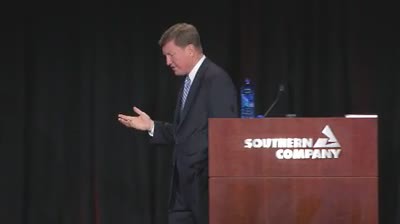
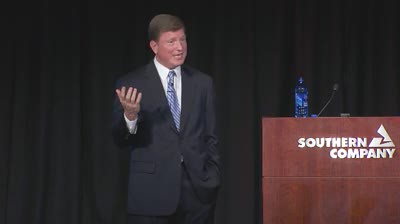
Yes, very interesting.
Imagine Southern Company investing in deploying on each rooftop
more than each house needed, selling the excess power through
to New Jersey or other points north, while Georgia Power takes
a percentage to pay for line maintenance, further deployment,
and more R&D.
TF: So we are
thinking about these things. This is a very exciting kind of
development that we see innovating into the future.
I do believe
that even if we get tremendous progress on distributed generation
you will still need nuclear. Nuclear will remain about 16 percent of
our generating capacity in the decades to come, even as we build
Vogtle and maybe build others some decades in the future.
And when I
think about places like Kemper County, coal with carbon containment
and storage will, I think, augment that baseload facility and give
you cheap energy. Those will run all the time and they will surprise
— supply energy when solar doesn’t run. And when somebody said
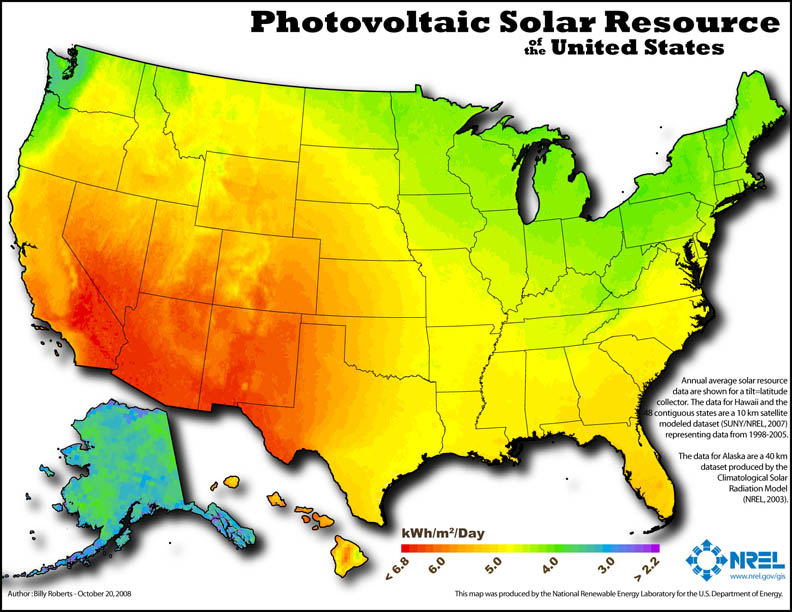
before, even on a cloudy day it produces 60 percent of the energy,
well you know what, we need to provide 100 percent of the need and
so we’ve got to have something else behind that resource.
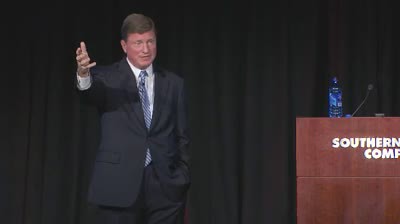
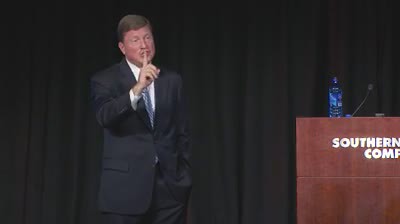
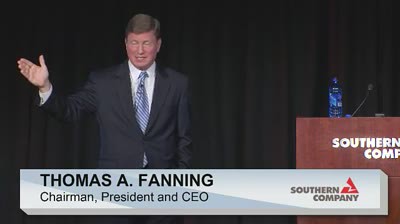
As he and Paul Bowers know, one possibility is simply to over-deploy
solar enough that 60% is 100% of what you need on a cloudy day.

And
as I pointed out to GA PSC,
according to NRC data, SO’s nukes aren’t as reliable as they claim,
what with one of the units at each of Hatch and Vogtle having been
down for almost an entire month this year, and
OK, so it seems to me is what we need is more solar power to act as
a
backup for when those nukes are offline. Because you may have days that
are cloudy, but the cloudy day doesn’t last for an entire month. Even
the night doesn’t last for an entire month.
This is not the way Southern Company or Tom Fanning like to think
of baseload, but the Edison Electric Institute report indicates maybe they should start.
TF: I think
it’s an exciting development. John, I assure you we are on it, but
we’re still going to need the other resources in the portfolio.
Thank you. Appreciate you coming again this year. Next question.

Exciting enough that it made the news a couple days later.
Ray Henry wrote for AP 24 May 2013,
Southern Co. team weighing changes from renewables,
Those technologies could challenge the business models long used by
major power utilities. Southern Co. relies on large, centralized
fossil fuel and nuclear power plants to provide the majority of its
electricity for customers. But in the future, there could be broader
moves to place smaller renewable systems in many places, a strategy
called distributed generation.Distributed generation poses financial questions for utility
monopolies that traditionally make profits as they spend money to
build, operate and maintain the massive infrastructure needed to
generate power.
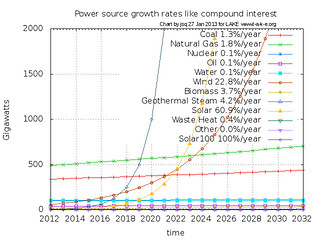
After the meeting, Tom Fanning and Paul Bowers separately
came up to speak to me.
That sort of politeness
is one reason I greeted Tom Fanning before the meeting
by saying it was always a pleasure to meet with a class A CEO
of a class A company: he and Bowers are always polite and
they understand what they’re doing.
They may not agree with everything I said, but they were interested
enough to come see if there was useful further discussion.
I discussed with each of them

the analogy of circuit switching vs. packet switching 20 years ago
with baseload capacity vs. distributed solar and wind today.
They understand the issues.
What they want to do about them,
and what they can convince their boards and investors to do,
is the question.
A question that Edison Electric Institute has made more urgent
for them and for their stockholders,
before the distributed solar disruption tanks SO’s stock price even more.
Thanks to Southern Company for putting up a
transcript which,
while like all transcripts isn’t always 100% accurate
(I’ve made some corrections in punctuation, capitalization [internet -> Internet], and spelling [JP -> jsq, Boer -> Booher]
and added paragraph breaks),
makes blogging a lot easier.
SO’s video is still in opaque brightcove format that,
unlike YouTube or Vimeo, doesn’t permit linking to specific times,
so you’ll have to manually scan to
1 hour, 16 minutes, and 26 seconds
see John S. Quarterman speak.
All stills here are from SO’s video, taken by me as fair use.
-jsq
Pingback: F is for solar in Georgia, #45 in 2013 state solar power rankings | On the LAKE front
Pingback: More solar by Georgia Power –GA PSC | On the LAKE front
Pingback: German wind overpowering? | On the LAKE front