Do you want foreign corporations to be able to sue the U.S.
because your county has implemented restrictions of pipelines
feeding liquid natural gas exports?
Or because your country hasn’t locked up enough people
for unintentional infringement of copyright?
Or because your state has implemented a GMO-labeling law?
Then you oppose the TPP.
After the November
release of
the Intellectual Property Rights Chapter,
in December Wikileaks released
two documents from the secret
closed Salt Lake City TPP chief negotiators’ meeting
of the Trans-Pacific Partnership,
showing deep divisions between the negotiating countries that have
already caused a U.S.-imposed TPP deadline to be missed.
These documents add potential international treaty enforcement of
“mandates” against restrictions on trade to protect national products
or environment or labor to all the reasons
EFF gives for opposing this corporate-power-grab treaty
and the
LNG export pressures for TPP that would drive up the price of fracked
“natural” gas and push pipelines through numerous states for the profit
of a few fossil fuel and utility executives and investors.
The deep divisions among the negotiating countries
exposed in the
Intellectual Property Rights Chapter (Wikileaks 13 November 2013)
apparently have not closed since.
The two documents from the
Salt Lake City TPP chief negotiators’ meeting of 19-24 November 2013
(Wikileaks 9 December 2013) are:
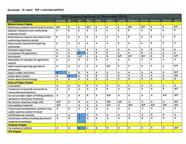
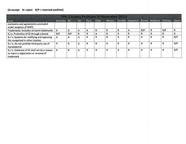
TPP Country Positions
This document is
a table of national positions
on a long list of topics, chapter by chapter.
The extreme breadth of this secret treaty is enough to wonder
why it would ever be proposed in the first place,
and even more why such an extreme trans-national treaty would
be negotiated in secret:
Market Access, Rules of Origin, Customs, SPS,
TBT, Government Procurement, Competition, Investment, Services, E-Commerce, Environment,
Labour issues, Legal,
and
Intellectual Property.
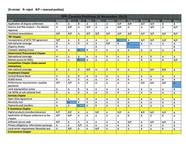
In the Market Access Chapter, apparently Australia, Peru, Singapore,
Brunei and Japan all have reservations about distinctive products.
In the SPS Chapter, apparently New Zealand, Peru, Canada, Malaysia,
and Japan actually want some “Science and Risk Analysis — Pre-Market Approval”.
Technical Barriers to Trade (TBT)
There’s a TPT TBT chapter.
TBT is
Technical Barriers to Trade
as in the
World Trade Organization TBT Agreement, which
“seeks to ensure that technical negotiations and standards, as well as testing and certification procedures, do not create unnecessary obstacles to trade.”
In other words, countries should kow-tow to multi-national corporate trade desires.
That TPP Chapter has an “Organics Annex” which nobody but the U.S. has approved
and which Australia and Japan reject.
What’s in that Annex?
Software secure code
The E-Commerce chapter includes “Software secure code”,
on which Australia, Singapore, Malaysia, and Vietnam have reserved positions.
After the Edward Snowden revelations of NSA spying on pretty much everybody
in the world through software and hardware back doors,
it will be very ironic if autocratic Singapore and Vietnam save the world
from enshrining such tactics in international treaty.
Of course, we don’t know that that’s what’s proposed in that chapter,
because we haven’t seen the text.
Multilateral Environmental Agreements (MEA)
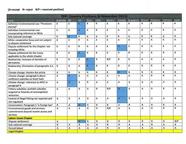
The Environment chapter has several items on
“MEAs”, which presumably
are once again defined by the World Trade Organization, as in its
Doha mandate on multilateral environmental agreements (MEAs):
These negotiations aim to reaffirm how important it is for trade and
environmental policies to work together for the benefit of both.
They focus on how WTO rules are to apply to WTO members that are
parties to environmental agreements, in particular to clarify the
relationship between certain trade measures taken under the
environmental agreements, and WTO rules.
I would bet “for the benefit of both” means for the profit
of multi-national corporate executives.
For example:
There are over 250 multilateral environmental agreements (MEAs)
dealing with various environmental issues which are currently in
force. About 20 of these include provisions that can affect trade.
For instance, they may contain measures that prohibit trade in
certain species or products, or that allow countries to restrict
trade in certain circumstances.
That corporate profit is paramount is spelled out:
On the other hand, WTO rules do allow members to derogate from their
obligations in some cases, for instance where a measure is aimed at
the conservation of natural resources, provided certain conditions
are met.
So by WTO MEA standards trade is an “obligation” while
conserving natural resources such as the air we breathe
and the water we drink are merely to “derogate” under
“certain conditions” determined by multi-national corporations.
Should we let the TPP turn the WTO’s MEA “mandate” into international law?
Biodiversity
Two Environment chapter sections on Biodiversity are each rejected by
different long lists of countries.
Climate change
Three items on Climate change related to the Environment chapter
include one that says “shorten the article” that is rejected by every
country except the U.S.
How about instead we have an international treaty about stopping climate change?
Legal
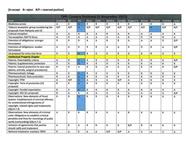
In the Legal chapter, Malaysia and the U.S. want a “Tobacco exception”,
on which each other country has a reserved position.
And all other countries reject the U.S. proposal for “entry into force”.
Intellectual property and prison
The U.S. apparently wants “New elements of Penal System:
Establishment of criminal offenses for unintentional infringements of
copyright,
related rights and trademarks”.
Does that sound like a good idea to you?
Fortunately, every other country rejects that idea.
The U.S. also wants “Pharmaceuticals: Data protection”;
fortunately also rejected by every other country.
And the U.S. and Singapore want
“Patents: extend protection to new uses (plants, animals, surgical procedures)”.
Fortunately, every other country except Japan rejects that,
and Japan has a reserved position.
A TPP state of play
This document is a
set of “excerpts from internal government commentary on the state of the TPP negotiations”.
The U.S. wants corporations to be able to sue governments.
…The most important issue for the majority of members… is the proposal
by the U.S. to apply ISDS to investment Agreements and investment
Authorizations.
The United States, as in previous rounds, has shown no flexibility
on its proposal, being one of the most significant barriers to closing
the chapter, since under the concept of Investment Agreement
nearly all significant contracts that can be made between a State
and a foreign investor are included.…it covers important concessions including mining, administrative
or special operating contracts for hydrocarbon exploration,
public works concessions (roads, highways, bridges, infrastructure, etc.)
and it would override the choice of forum provisions in these contracts…
Investor-state dispute settlement (ISDS) is a provision in
international trade treaties and international investment agreements
that grants an investor the right to initiate dispute settlement
proceedings against a foreign government in their own right under
international law. For example, if an investor invests in country
“A”, which is a member of a trade treaty, but then country A
breaches that treaty, then that investor may sue country A’s
government for the breach.
The
European Commission’s definition:
ISDS is a procedural mechanism provided for in international
agreements on investment. Countries sign such agreements in order to
set out ground rules when foreign companies invest on their
territory, for example by building factories. ISDS allows an
investor from one country to bring a case directly against the
country in which they have invested before an arbitration tribunal.
Do you want Monsanto to be able to sue the U.S. because your state
has implemented a GM-labelling law?
Fortunately, there is great disagreement among the TPP-negotiating countries:
…As an overview, it should be mentioned that the U.S. is exerting
great pressure to close as many issues as possible this week.
However the Chapters that were reviewed by the CNs (Chief
Negotiators) today did not record much progress. This pressure will
increase with every passing day.…[U.S. Chief] met with all twelve countries and said that they
were not progressing according to plan.

The next step of the plan is the
fast track authority in the U.S. Congress
that
you can oppose using a handy form by EFF.
-jsq
Pingback: TPP Environment chapter released by Wikileaks | On the LAKE front
Pingback: U.S. #58 out of 90 in broadband cost | On the LAKE front