Georgia Power tries to continue whistling in the fossil and nuclear fuel
dark while distributed solar power changes the world around it.
The Georgia Public Service Commission can decide differently,
and will decide next week, 11 July 2013.

Joshua Stewart
wrote 2 July 2013,
Decision Looms On Georgia Power Plan,
The state Public Service Commission votes next week on Georgia
Power’s 20-year plan, the road map for providing electricity to 2.4
million customers. That includes the mix of fuels the company will
use and the efforts the company undertakes to get customers to use
less energy. This happens every few years. But this time, Georgia
Power also wants to retire 16 coal- and oil-fired power-generating
units at six power plants.This happens every few years. But this time, Georgia Power also
wants to retire 16 coal- and oil-fired power-generating units at six
power plants.PSC Commissioner Lauren “Bubba” McDonald said at a
hearing in April that this version of Georgia Power’s plan “is
filled with the most-significant issues” of any Integrated Resources
Plan in the last decade.
And Georgia Power avoids actually facing many of those issues:
“Taking into account the impact of MATS, as well as other
pending or potential regulations, the company’s analysis of its
generating capacity has led to the conclusion that it is in the best
interests of customers to retire approximately 2,100 megawatts of
generating resources,” said Kyle Leach, Georgia Power’s director of
resource policy and planning.

What a coincidence!
That’s almost exactly the same amount of power as
the 2,200 MW Southern Company rates the nukes it’s building at Plant Vogtle.
Those retirements completely shutter Plant Branch in Milledgeville,
Plant Kraft in Savannah and Plant McManus in Brunswick.“Such a slate of retirements is unprecedented in the history
of Georgia Power, and the company fully recognizes the impact these
decisions have on employees and the local communities,” Leach said.
Oh, really?
According to
Georgia Power’s own online history,
In 2002, the company retired 11 generating units at three sites
including all of the units at Plant Atkinson and Plant Arkwright and
two units at Plant Mitchell.

Now maybe Georgia Power means this is the most megawatts of coal
retired at one time, and since that was (according to Southern Company)
415 MW in 2002 and Georgia Power now proposes to close 2,100 MW of coal.
But they weren’t clear about that.
Plus they’re converting many of these plants to natural gas,
not closing them completely.
And Georgia Power is also trying to socialize the costs even afterwards
even for the plants they’re really closing:
Observers say these retirements are good news for consumers as well
as the environment. But Georgia Watch’s Liz Coyle has concerns about
Georgia Power still charging ratepayers for the use of the plants,
even after they have shut down.“They propose that those unusable units, their remaining
value, be kept on the rate base books and we would continue to pay
for them long after those units have stopped producing power,”
said Coyle, director of the consumer energy program at Georgia
Watch. That means ratepayers keep paying for those plants as though
they’re still operating.

And instead of closing Plant McIntosh permanently after it
didn’t run at all in 2012, Georgia Power
proposes to change the type of coal used there and to keep it open.
Walter C. Jones wrote for SavannahNow 22 May 2013,
Environmental group has Plant McIntosh in their sights,
Georgia Power is asking the Public Service Commission for permission
to change the type of coal it burns, from Appalachian coal to the
relatively cleaner Powder River Basin variety.
“This is unfortunate for the coastal residents,” she
[Colleen Kiernan, director of the Georgia Chapter of Sierra Club]
said.She argues that the company should shutter McIntosh along with the
15 other units across Georgia it already plans to close. Otherwise,
Kiernan said, it’s making faulty assumptions that the new type of
coal will remain economical.“We know that most of the easy coal to get has already been
mined,” she said.

Meanwhile, Georgia Power wants to stick with the 210 MW of solar power
it agreed to last year, for a total of 270 MW by 2016.
This is far too little to meet
the challenge of disruptive
distributed solar power
spelled out by energy utility think-tank
Edison Electric Institute
that is already
downgrading Southern Company’s stock
while
SO’s biggest part Georgia Power
acts like telephone companies did back when the Internet exploded under them.
Sierra Club members say Southern Company executives are merely
fooling themselves and regulators to try to avoid change.“The assumptions they are making are biased for coal,”
she said.
Kiernan argues the company should instead adapt to the changing
energy landscape for the sake of its shareholders as much as for the
environment.“What we’re seeing is other utilities are moving into a
21st-century business model, and that should concern
shareholders,” she said.

Even
GA PSC Bubba McDonald’s proposal to double the amount of solar power
Georgia Power will be required to buy
is nowhere near enough,
unless GA PSC keeps doubling that requirement every year,
but at least it’s a start in the right direction.
Georgia Power, left to its own proposal, won’t even start,
choosing instead to keep holding Georgia back
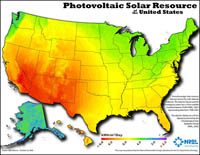
behind much less sunny states such as
Michigan,
Massachusetts,
Maryland, and
New Jersey.
It’s time for GA PSC to act like the Public Service Commission
and require Georgia Power to act like the public utility it is:
more solar now, and even less coal.
Oh, and no new nukes.
-jsq