
BP must be getting desperate about people catching onto what they did to the Gulf.
A BP video ad has been replaying itself every few minutes beside various
news stories since yesterday, claiming two years after the oil disaster
(“spill” doesn’t describe it) “the beaches are open for everyone to enjoy!”
BP’s website
says “We are helping economic and environmental restoration efforts in the Gulf Coast as part of our ongoing commitment to the region following the Deepwater Horizon accident in 2010”.
Neither the ad nor the website says BP actually cleaned up the oil.
Because they didn’t.
It’s still there, as is the even more toxic “dispersant” Corexit BP
dumped on top of the oil to make it sink.
Both are busily poisoning dolphins, fish, birds, and humans.
Antonia Juhasz wrote for The Nation 7 May 2012,
Investigation: Two Years After the BP Spill, A Hidden Health Crisis Festers,
BP released one Exxon Valdez–sized oil spill every three to four days
for the eighty-seven days it took to cap the well, for an estimated total
of 210 million gallons, plus 500,000 tons of natural gas. It applied
some 2 million gallons of Corexit from the air and water. It also
conducted about 410 “controlled burns” of the oil on the surface
of the water. The spill polluted the air with particulate matter and a
visible haze, and polluted the water, exposing Gulf seafood to a host
of harmful toxins….Writing in the American Journal of Disaster Medicine, Dr. Diaz
observed that the ailments appearing among Gulf response workers and
residents mirrored those reported after previous oil spills,
including the Exxon Valdez spill, and warned that chronic adverse
health effects, including cancers, liver and kidney disease, mental
health disorders, birth defects and developmental disorders—a
list that is repeated by several of the NIEHS study
physicians—should be anticipated among sensitive populations
and those most heavily exposed. In an interview, Diaz added that
neurological disorders should also be anticipated.Moreover, John Howard, director of the National Institute for
Occupational Safety and Health, told Congress, “Previous oil
spill response efforts have reported acute and chronic health
effects in response workers. These studies may underestimate the
health effects associated with oil response work since the magnitude
and duration of the Deepwater Horizon response is
unprecedented.”
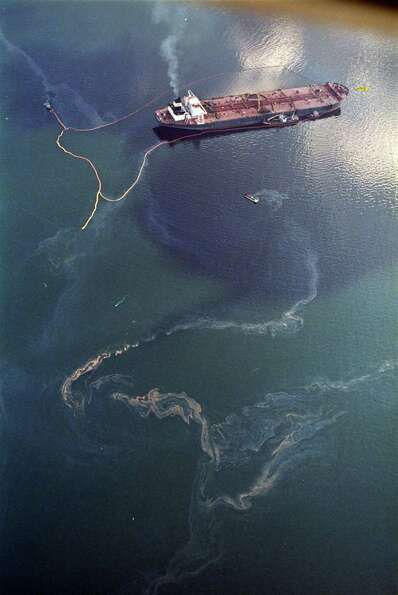
Speaking of the Exxon Valdez oil tanker rupture of 1989 in Alaska,
Exxon put off paying damages for that for 20 years, until,
as the
Houston Chronicle wrote 4 April 2013,
Exxon Mobil Corp. was ordered Monday June 15, 2009 to pay about $500
million in interest on punitive damages for the Exxon Valdez oil spill
off Alaska, nearly doubling the payout to Alaska Natives, fishermen,
business owners and others harmed by the 1989 disaster. The ruling was
issued by the 9th U.S. Circuit Court of Appeals in San Francisco.
The same Exxon that
just spilled oil in wetlands and neighborhoods in Arkansas.
The same oil industry that just
had 13 spills in 30 days.
All 13 of which probably don’t add up to anywhere near
the amount of oil BP spewed into the Gulf of Mexico in 2010.

Is this an industry we want to trust to build a pipeline from Canada to
the same Gulf of Mexico BP already poisoned?
Is this an industry we want to trust to
frack for natural gas in north Georgia?
Why exactly are we paying
far more in federal subsidies to fossil fuel companies
than for clean renewable solar and wind power and energy efficiency
that produce more jobs and promote far more energy independence?
Let’s stop subsidizing poison and get on with clean energy.
Even
electric utilities know it’s going to happen.
Even
Moody’s says the carbon bubble will pop.
Let’s stop pouring more money into poisoning the Gulf and our wetlands
and neighborhoods and air and water.

Nukes are dead, coal is crashing, and
renewables are winning.
Let’s get on with
clean green jobs for community and profit.
-jsq